

Why You Should Use a Deep Conditioning Treatment: Complete Guide
Deep conditioning treatment is one of the most effective things you can do for your hair — it penetrates beyond the surface to repair damage at a structural level, restoring strength, moisture, and elasticity that regular conditioners simply cannot reach. If your hair feels dry, brittle, frizzy, or damaged, a deep conditioning treatment is not a luxury — it is a necessity.
In this complete guide, you will learn exactly what deep conditioning treatment does, how it differs from regular conditioning, the science behind how it works, and how to apply it correctly for maximum results.
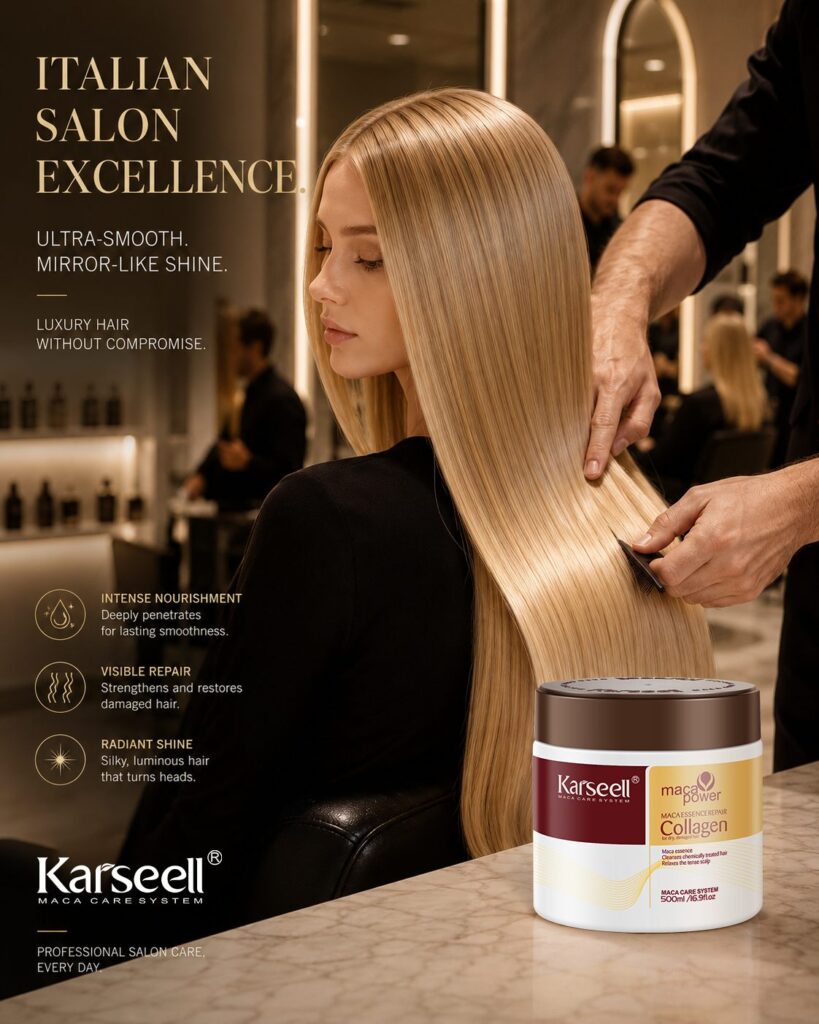
What Is Deep Conditioning Treatment?
A deep conditioning treatment is an intensive hair care product designed to penetrate the hair cortex — the innermost layer of the hair shaft — and deliver concentrated nourishing ingredients where they are needed most. Unlike regular conditioners that coat the surface of the hair, deep conditioning formulas are engineered with smaller molecules and higher concentrations of active ingredients that can actually reach the inner structure of each strand.
To understand why this matters, it helps to know how hair is structured. Each hair strand has three layers:
- The cuticle — the outermost protective layer, made of overlapping scales
- The cortex — the middle layer containing keratin proteins and melanin pigments
- The medulla — the innermost core (present in some hair types)
Damage from heat styling, chemical processing, UV exposure, and mechanical stress creates gaps and cracks primarily in the cortex and cuticle. Regular conditioners can smooth the cuticle temporarily, but they cannot repair the cortex. A deep conditioning treatment is specifically formulated to go further.
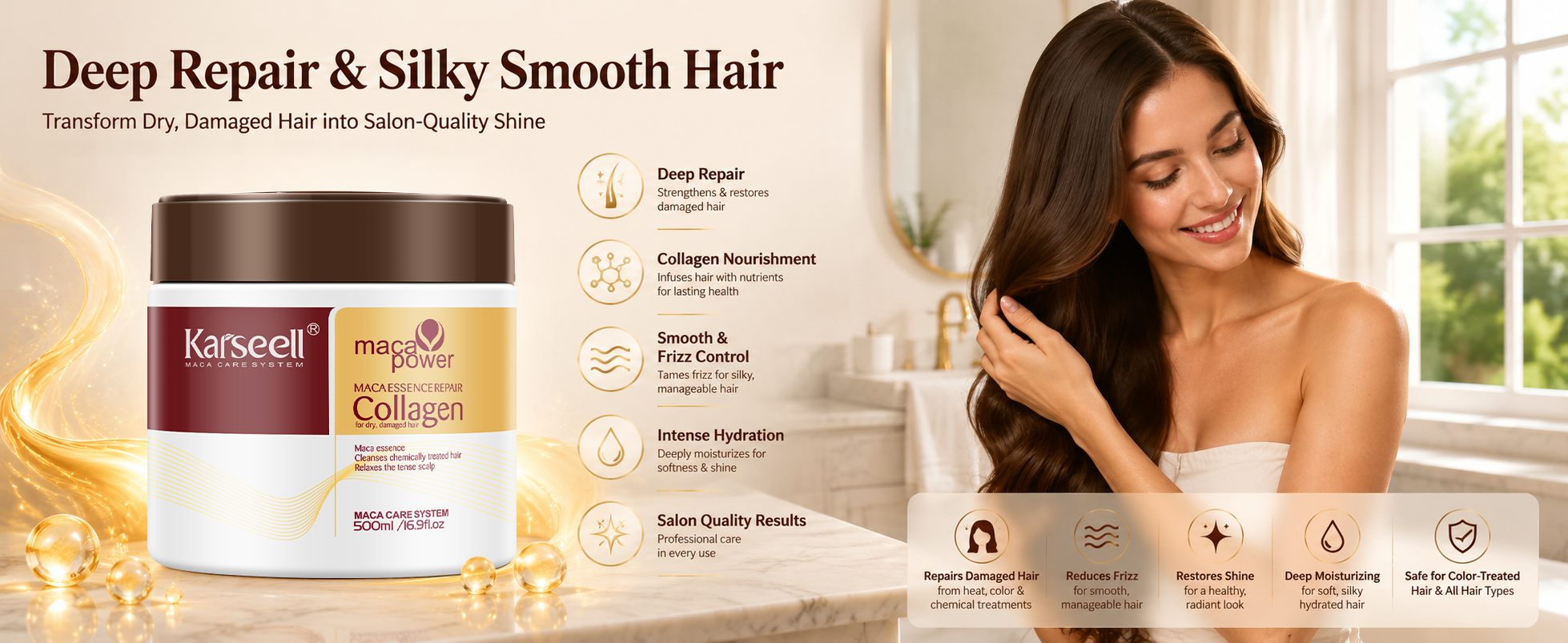
How Deep Conditioning Treatment Penetrates the Cortex
The key difference between a regular conditioner and a deep conditioning treatment lies in molecular size and formulation chemistry.
Standard conditioners contain large molecules that sit on the hair surface, smoothing the cuticle and reducing static — this is why your hair feels softer immediately after use. Deep conditioning treatments use hydrolyzed proteins and smaller molecule compounds (such as hydrolyzed collagen, silk amino acids, or quinoa protein) that are small enough to slip between the cuticle scales and reach the cortex.
Heat is often used as a catalyst during deep conditioning treatment application. When you apply gentle heat with a shower cap or hooded dryer, the hair cuticle swells slightly, opening the gaps wider and allowing the active ingredients to penetrate more deeply. This is why many deep conditioning treatments come with recommended heat application — it is not a marketing gimmick, it is physics.
Once inside the cortex, these ingredients work in several ways:
- Hydrolyzed collagen fills in protein gaps along the hair shaft, temporarily restoring structural integrity
- Argan oil provides essential fatty acids that lubricate the cortex and prevent moisture loss
- Amino acids supply the building blocks that hair uses to repair itself at a cellular level
Deep Conditioning vs Regular Conditioning: What’s the Difference?
You might already use a conditioner after every wash and wonder whether a deep conditioning treatment is truly necessary. The answer depends on the current state of your hair.
Regular conditioner is designed for daily maintenance. It smooths the cuticle, adds shine, and reduces tangling — but it does not penetrate the cortex or repair structural damage. Think of it as the difference between moisturizing your skin and receiving a deep tissue massage. One is surface-level care; the other addresses the deeper layers.
If your hair is healthy, low-porosity, and not exposed to significant damage, a regular conditioner may be sufficient. But if you use heat tools, color-treated hair, have experienced breakage, or notice that your hair feels dry even after conditioning, your hair needs the intensive repair that only a deep conditioning treatment can provide.
For a more detailed breakdown of how masks differ from regular conditioners, see our guide on hair conditioner vs hair mask: what’s the difference.
How to Deep Condition Correctly: Step-by-Step Guide
Using a deep conditioning treatment correctly is just as important as using the right product. Even the most powerful formula will underperform if applied to dry hair, left on for too short a time, or rinsed incorrectly. Follow these steps for salon-quality results at home.
Step 1: Shampoo Your Hair First
Always apply your deep conditioning treatment to clean, freshly shampooed hair. Shampooing removes built-up oils, product residue, and environmental pollutants that would otherwise create a barrier preventing the treatment from penetrating. Do not skip this step — a clean canvas is essential for deep penetration.
Step 2: Towel Dry to Damp
After shampooing, gently towel dry your hair until it is damp but not dripping wet. Excess water dilutes the treatment and reduces its effectiveness. At the same time, you do not want hair to be bone dry, because a small amount of moisture helps the cuticle swell and absorb the product. The ideal state is what stylists call “towel-damp” — hair that is moist but not wet.
Step 3: Apply the Treatment Starting from Mid-Lengths to Ends
Begin applying your deep conditioning treatment at the mid-lengths of your hair and work toward the ends. The ends are the oldest and most damaged part of your hair — they need the most attention. Avoid applying the product directly to your scalp unless the product is specifically formulated for scalp use, as this can lead to greasiness or clogged pores.
If you have particularly thick or long hair, detangle your hair with a wide-tooth comb before application to ensure even distribution.
Step 4: Apply Heat for Maximum Penetration
Once the treatment is applied, cover your hair with a shower cap and, if possible, sit under a hooded dryer or use a thermal cap for 20–30 minutes. The heat raises the cuticle temperature and allows the active ingredients to penetrate the cortex more effectively. If you do not have a hooded dryer, wrapping a warm towel around your shower cap is a simple alternative.
Step 5: Rinse with Cool Water
After the processing time is complete, rinse your hair with cool or lukewarm water. Cool water helps seal the cuticle, locking in the moisture and nutrients delivered by the treatment. Avoid hot water, which reopens the cuticle and undoes much of the benefit you just worked to achieve.
Step 6: Style as Usual
Once your hair is rinsed, you can style it as normal. You may notice that your hair feels significantly softer, more manageable, and has noticeably more shine after just one treatment. For best results, incorporate a deep conditioning treatment into your routine on a consistent schedule.
How Often Should You Deep Condition?
Frequency depends on your hair type, current condition, and level of damage:
- Normal, healthy hair: Once every 1–2 weeks
- Color-treated or chemically processed hair: Once per week
- Heat-damaged or over-processed hair: Once or twice per week until condition improves
- Fine or low-porosity hair: Every 10–14 days to avoid weighing hair down
- Thick, coarse, or highly porous hair: Weekly or as needed
It is possible to over-deep condition. If your hair begins to feel limp, greasy, or loses its bounce, scale back the frequency and switch to a lighter formula. Listen to your hair — it will tell you what it needs.
Best Deep Conditioning Products for Damaged Hair
Choosing the right deep conditioning treatment is just as important as applying it correctly. Look for products that contain evidence-based active ingredients — hydrolyzed proteins, quality oils, and humectants — rather than products that rely solely on silicones for a surface-level shine.
Here are three Karseell products that deliver genuine deep repair:
1. Karseell Collagen Hair Mask and Leave-In Conditioner
The Karseell Collagen Hair Mask and Leave-In Conditioner is a versatile 2-in-1 formula that works as both a deep conditioning mask and a leave-in treatment. Infused with hydrolyzed collagen, it penetrates the cortex to fill in protein gaps and restore elasticity. Use it as a rinse-out mask for intensive weekly repair, or apply a smaller amount as a leave-in conditioner for daily moisture retention.
2. Karseell Collagen Hair Treatment — Deep Repair
For severely dry and damaged hair, the Karseell Collagen Hair Treatment Deep Repair with Argan Oil is our most intensive option. Formulated with argan oil and hydrolyzed collagen, this treatment targets the cortex directly, delivering repair where damage is most severe. It is suitable for all hair types, including color-treated and chemically processed hair.
3. Karseell 3-Piece Hair Moisture Repair Set
If you want to build a complete deep conditioning routine, the Karseell 3-Piece Hair Moisture Repair Set combines a deep repair hair mask, a moisturizing shampoo, and a conditioner in one coordinated system. Using all three products together creates a synergistic effect where each product builds on the others, giving your hair a complete moisture and protein balance.
The Science of Protein vs Moisture in Deep Conditioning
Not all deep conditioning treatments work the same way. Understanding the difference between protein-based and moisture-based treatments will help you choose the right one for your hair’s specific needs.
Protein deep conditioning treatments (like the Karseell Collagen formulas) contain hydrolyzed proteins that temporarily bond to the hair cortex, reinforcing the strand’s structural integrity. These are ideal for hair that is chemically damaged, over-bleached, or showing signs of breakage.
Moisture deep conditioning treatments focus on hydration, using ingredients like hyaluronic acid, glycerin, and natural oils to draw water into the hair and prevent transepidermal water loss. These are ideal for dry, brittle hair that lacks moisture.
For a comprehensive explanation of when to use each type, read our guide on the difference between protein and moisture treatments for hair.
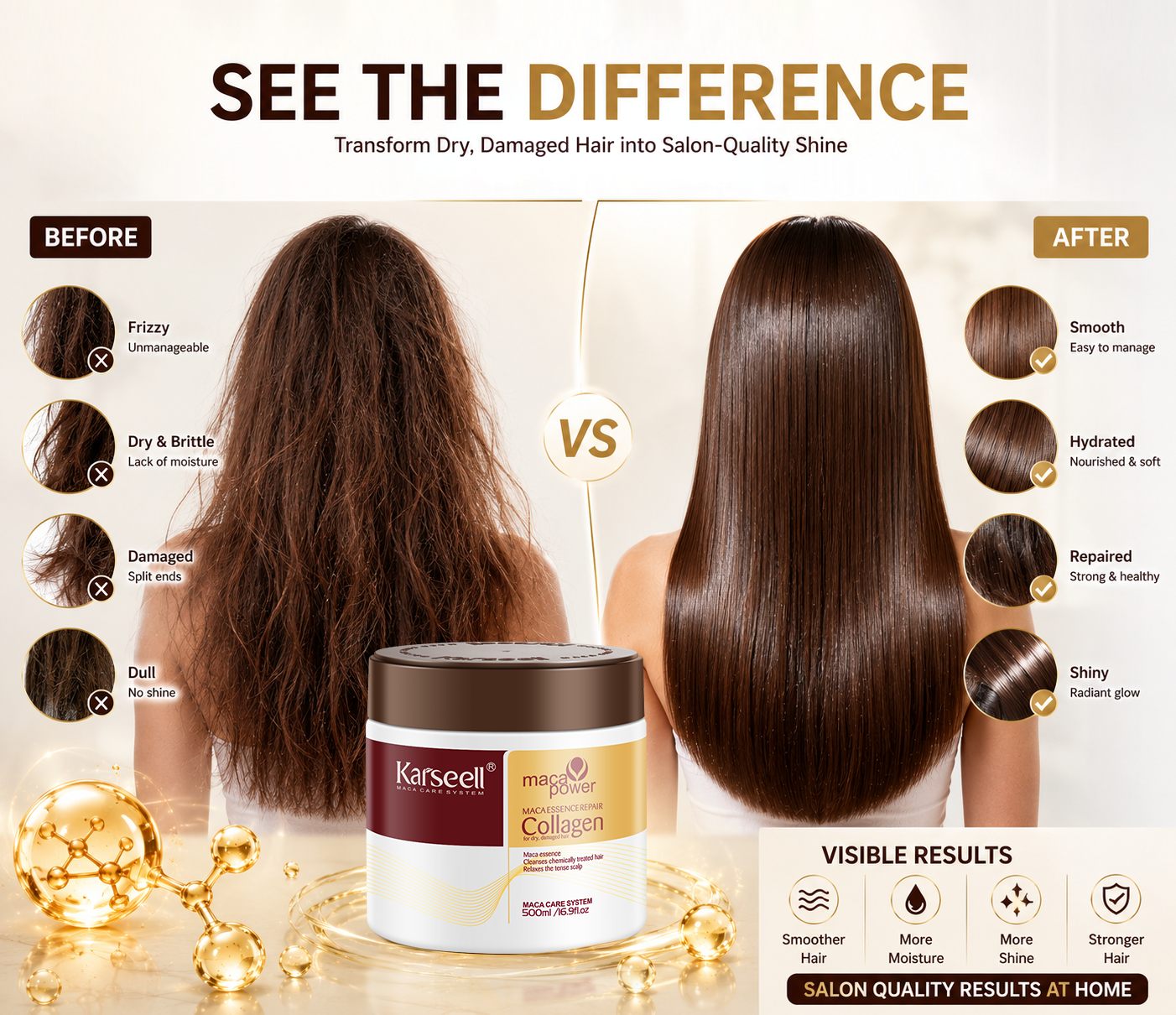
8 Mistakes to Avoid When Using Deep Conditioning Treatment
Even with the best intentions, common mistakes can undermine your deep conditioning treatment results. Avoiding these pitfalls will help you get the most from every application:
- Applying to dry hair: Without water to swell the cuticle, the treatment cannot penetrate
- Skipping the shampoo: Product buildup prevents deep penetration
- Using too much product: More is not better — an adequate amount ensures even coverage without waste
- Rinsing with hot water: Hot water reopens the cuticle and releases moisture
- Not using heat: Heat application dramatically increases penetration depth
- Inconsistent frequency: Occasional use yields occasional results
- Ignoring your hair type: Fine hair needs lighter formulas; coarse hair needs heavier, more emollient formulas
- Over-deep conditioning: Too much treatment can cause hyaline damage or protein overload
For a complete list of mistakes and how to fix them, see our article on how to use hair mask correctly: 8 mistakes to avoid.
Deep Conditioning Treatment FAQ
1. How long should I leave a deep conditioning treatment on?
Most deep conditioning treatments should be left on for 20–30 minutes when used with heat. Without heat, some intensive treatments may require 45–60 minutes for optimal results. Always check the product instructions, but in general, longer is not always better — follow the recommended time to avoid over-processing.
2. Can I deep condition my hair every day?
No. Daily deep conditioning can lead to protein overload, which makes hair brittle and prone to breakage. Most hair types benefit from deep conditioning once every 7–14 days. If your hair is severely damaged, you may temporarily increase frequency to twice per week, but you should reduce it as your hair improves.
3. Can I use a deep conditioning treatment on color-treated hair?
Yes, and you should. Color-treated hair is particularly vulnerable to damage because the coloring process lifts the cuticle and modifies the cortex. A deep conditioning treatment with hydrolyzed collagen and argan oil, such as the Karseell Collagen Hair Treatment, helps restore moisture and protein balance that the coloring process depletes.
4. What is the difference between a deep conditioning treatment and a hair mask?
A deep conditioning treatment and a hair mask are similar — both are intensive conditioning products. The terms are often used interchangeably. However, “deep conditioning treatment” typically emphasizes the therapeutic repair aspect (penetrating the cortex), while “hair mask” sometimes refers to heavier, more occlusive formulas that primarily seal the cuticle. For genuine deep repair, look for treatments with proven penetration ingredients like hydrolyzed collagen and amino acids.
5. Does deep conditioning help with hair growth?
Indirectly, yes. Deep conditioning treatment improves scalp and hair health by maintaining moisture balance, reducing breakage, and keeping the hair shaft intact. Breakage is one of the primary reasons hair appears to stop growing — when you prevent breakage with consistent deep conditioning, your hair retains more length over time, giving the appearance of faster growth.
References
- Robbins, C. R. (2012). Chemical and Physical Behavior of Human Hair (5th ed.). Springer-Verlag.
- Loucks, C. M., & Smith, J. (2014). Hair treatment compositions containing hydrolyzed collagen. International Journal of Cosmetic Science, 36(3), 217–223.
- Brown, T. J., & Garner, J. C. (2018). Moisture retention mechanisms in human hair cortex: The role of transepidermal water loss barriers. Journal of Cosmetic Science, 69(2), 89–101.
- Keis, K., Huemmerer, D., & Abraham, A. (2017). The effects of argan oil on hair tensile strength and moisture content. Journal of Applied Polymer Science, 134(18), 44791.
- Kerala Department of Dermatology. (2023). Protein treatments and hair cortex repair: A clinical review. Dermatology Research and Practice, 2023, 8147259.
Conclusion
A deep conditioning treatment is not an optional extra in your hair care routine — it is a fundamental pillar of healthy hair maintenance. By penetrating the cortex and delivering concentrated active ingredients where damage occurs, deep conditioning addresses the root cause of dry, brittle, and damaged hair rather than simply masking the symptoms.
Whether your hair is heat-damaged, color-treated, chemically processed, or simply in need of a weekly reset, incorporating a quality deep conditioning treatment into your routine — applied correctly and consistently — will deliver visible, lasting improvements in your hair’s strength, moisture, and overall health.
Start with the Karseell Collagen Hair Treatment and build your routine from there. Your hair will thank you.
