

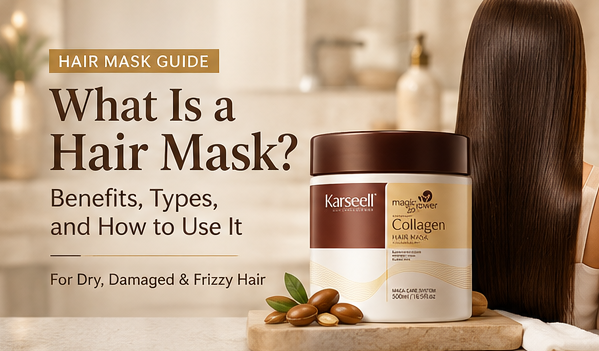
A hair mask is a rich conditioning treatment designed to help hair feel softer, smoother, shinier, and easier to manage. If your hair feels dry, rough, frizzy, dull, or damaged-looking, adding a hair mask to your weekly routine can be one of the simplest ways to give your hair extra care.
Unlike shampoo, which cleanses the hair, or regular conditioner, which gives quick softness after washing, a hair mask usually has a richer texture and stays on the hair longer. It is often used once a week or whenever your hair needs more moisture, smoothness, and manageability.
In this guide, you will learn what a hair mask does, how it is different from conditioner, who should use one, what ingredients to look for, how to use a hair mask correctly, and how to build a simple routine for dry, damaged, frizzy, or color-treated hair.
If you are already looking for a product, you can also explore the Karseell Hair Mask Collection for hair masks designed for dry, damaged-looking, and frizzy hair routines.
What Does a Hair Mask Do for Your Hair?
A hair mask gives your hair extra conditioning support. The exact result depends on your hair type, how often you use it, and the formula you choose.
For most people, the main benefit of a hair mask is that it helps hair feel better after washing. If your hair normally feels dry, stiff, tangled, or rough, a mask can make it feel smoother and easier to manage.
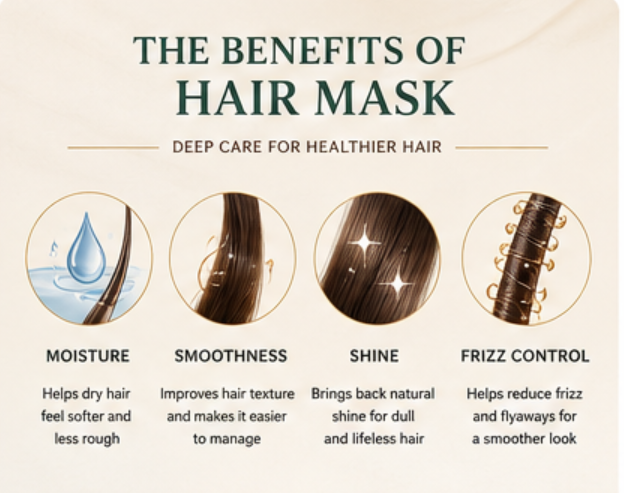
Here are the most common benefits of using a hair mask:
| Hair Mask Benefit | What It Means |
|---|---|
| Adds moisture | Helps dry hair feel softer and less rough |
| Reduces the look of frizz | Helps hair look smoother and more polished |
| Improves shine | Helps dull hair look healthier and glossier |
| Supports damaged-looking hair | Helps improve the appearance of dryness and rough texture |
| Makes detangling easier | Helps reduce pulling and rough brushing after washing |
| Improves manageability | Makes hair easier to style, blow-dry, or comb |
For example, if your hair feels dry after shampooing, a moisturizing hair mask can give your hair more softness than conditioner alone. If your hair is frizzy, a smoothing mask can help the surface of the hair look more controlled. If your hair is damaged-looking from coloring, bleaching, or heat styling, a mask can help the hair feel more conditioned and easier to handle.
Hair Mask vs Conditioner: What Is the Difference?
Many people wonder whether a hair mask is the same as conditioner. They are similar, but they are not the same.
Conditioner is usually a quick step used after shampoo to soften the hair and make it easier to detangle. A hair mask is usually richer and is left on the hair longer. It is designed for deeper weekly care.
| Comparison | Conditioner | Hair Mask |
| Main purpose | Quick softness and detangling | Deeper conditioning and weekly care |
| Texture | Usually lighter | Usually richer and creamier |
| Time on hair | Usually 1-3 minutes | Usually 5-15 minutes, depending on instructions |
| Use frequency | Most wash days | Usually once or twice weekly |
| Best for | Regular maintenance | Dry, frizzy, damaged-looking, or treated hair |
If your hair already feels soft, smooth, and easy to manage, conditioner may be enough for most wash days. But if your hair still feels dry, frizzy, rough, or difficult to brush after using conditioner, a hair mask can be a useful extra step.
A simple way to understand it is:
Shampoo cleans. Conditioner softens. Hair mask gives deeper care.
If you want to learn more about this topic later, you can link this section to a dedicated guide about hair mask vs conditioner once that article is published.
Who Should Use a Hair Mask?
Not everyone needs a hair mask every day, but many hair types can benefit from using one weekly. A hair mask is especially useful if your hair needs more moisture, softness, shine, or smoothness.
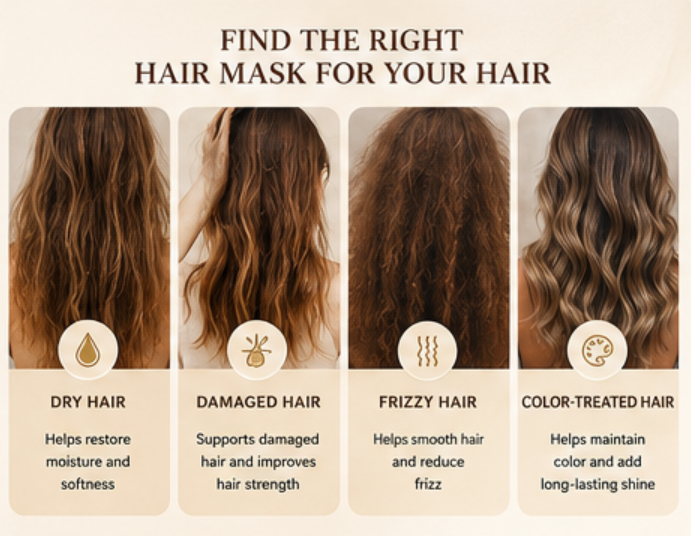
Hair Mask for Dry Hair
If your hair feels rough, stiff, straw-like, or dry after washing, a hair mask for dry hair may help your hair feel softer and smoother.
Dry hair often needs ingredients that help add moisture and conditioning support. Look for masks with ingredients such as argan oil, shea butter, plant oils, and other moisturizing agents.
A dry hair mask is especially helpful if your hair:
- Feels rough after shampooing.
- Looks dull or lacks shine.
- Tangles easily.
- Feels stiff or hard to style.
- Needs more softness than conditioner provides.
For this type of routine, you can explore the Karseell Hair Mask Collection and choose a mask designed for dry or damaged-looking hair.
Hair Mask for Damaged-Looking Hair
Hair can look damaged for many reasons, including heat styling, bleaching, coloring, brushing, sun exposure, or chemical treatments. Damaged-looking hair often appears rough, dry, dull, or frizzy.
A hair mask cannot permanently repair every type of damage, but it can help improve the appearance and feel of damaged-looking hair. It can make the hair feel smoother, softer, and easier to manage.
For damaged-looking hair, look for hair masks with conditioning ingredients such as collagen, keratin, amino acids, argan oil, or other smoothing ingredients.
If your main concern is dry, rough, or damaged-looking hair, the Karseell Collagen Hair Treatment can be used as part of a weekly conditioning routine.
Hair Mask for Frizzy Hair
Frizz usually happens when hair lacks moisture, has a rough surface, or reacts strongly to humidity. A hair mask can help frizzy hair look smoother by conditioning the hair surface and making the strands feel softer.
If your hair becomes puffy, messy, or hard to control after drying, a smoothing hair mask may help.
For frizzy hair, look for ingredients such as:
- Argan oil
- Collagen
- Keratin
- Shea butter
- Smoothing conditioning agents
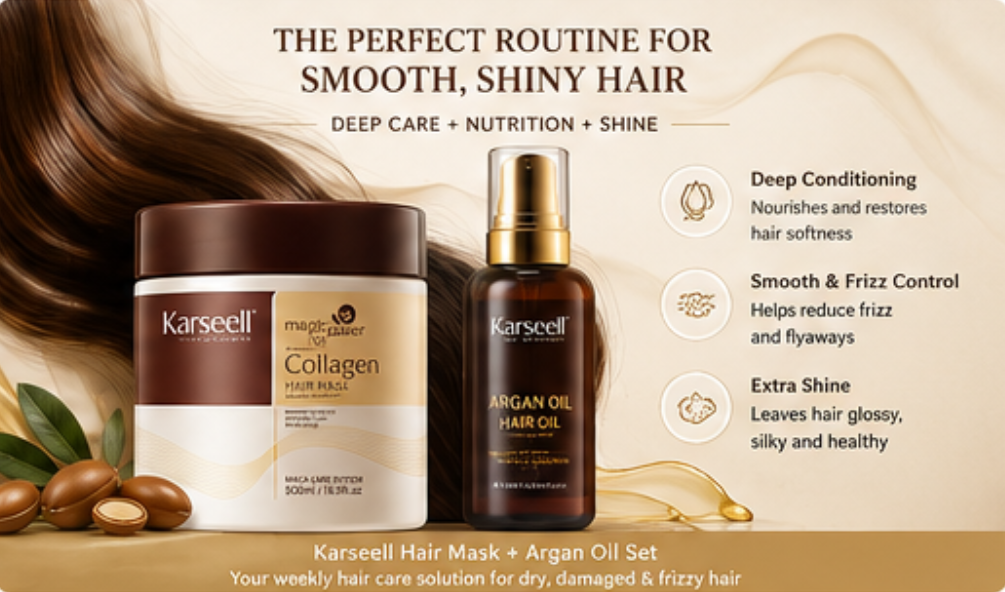
For a more complete routine, you can pair a mask with hair oil. The Karseell Hair Mask + Argan Oil Set is a useful option for people who want both deep conditioning and extra shine.
Hair Mask for Color-Treated or Bleached Hair
Color-treated or bleached hair can become dry, dull, or fragile-looking over time. This type of hair often needs extra care because coloring and bleaching can make the hair feel rougher and more difficult to manage.
A hair mask can help color-treated hair feel softer and look shinier. If your hair is blonde, highlighted, bleached, or dyed, use a mask that supports moisture and smoothness.
If your hair is color-treated and also dry or frizzy, choose a mask that focuses on conditioning rather than harsh cleansing.
What Ingredients Should You Look for in a Hair Mask?
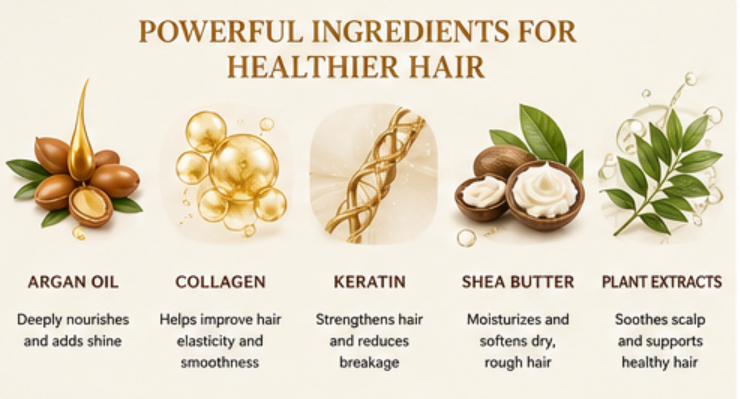
The best hair mask for you depends on your hair concern. You do not need every ingredient in one product. What matters is choosing a formula that matches what your hair needs.
| If Your Hair Needs… | Look for Ingredients Like… | Why They Help |
| More moisture | Argan oil, shea butter, plant oils | Help dry hair feel softer and more conditioned |
| Smoother texture | Collagen, keratin, amino acids | Help hair look smoother and easier to manage |
| Frizz control | Argan oil, smoothing agents | Help reduce the appearance of roughness and flyaways |
| Shine | Oils and conditioning ingredients | Help dull hair look glossier |
| Support for damaged-looking hair | Collagen, keratin, amino acids | Help improve the look and feel of rough or over-processed hair |
| Color-treated hair care | Gentle moisturizing ingredients | Help treated hair feel softer and look healthier |
Argan Oil
Argan oil is commonly used in hair care because it helps hair feel softer and look shinier. It is especially useful for dry, frizzy, or dull-looking hair.
If your hair needs extra shine after using a mask, you can apply a small amount of oil to the ends after styling. This is why a routine like the Karseell Hair Mask + Argan Oil Set can work well for dry or frizzy hair.
Collagen
Collagen is often used in hair masks to help hair look smoother, fuller, and more conditioned. It is a popular ingredient in masks for dry or damaged-looking hair.
A collagen hair mask is a good option if your hair feels rough, dull, or difficult to manage.
Keratin
Keratin is commonly used in smoothing and repair-focused hair care formulas. In a hair mask, keratin can help improve the look of rough texture and make the hair feel easier to manage.
Shea Butter and Plant Oils
Shea butter and plant oils are often used in moisturizing hair masks. They are helpful for hair that feels dry, coarse, or rough.
How to Use a Hair Mask Step by Step
Using a hair mask correctly matters. If you apply too much, use it too often, or rinse it too quickly, you may not get the best result.
Here is a simple routine you can follow.
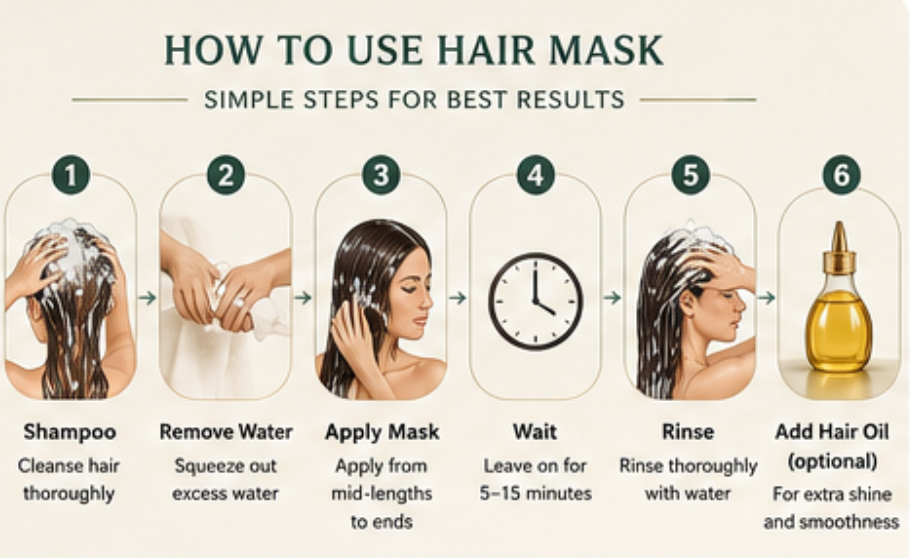
Step 1: Shampoo Your Hair
Start with clean hair. Shampoo helps remove oil, sweat, styling product, and buildup so the hair mask can spread more evenly.
Most rinse-out hair masks are used after shampoo, not before.
Step 2: Remove Excess Water
After shampooing, gently squeeze out extra water. Your hair should be damp but not dripping wet.
If your hair is too wet, the mask may slide off or become diluted.
Step 3: Apply the Hair Mask from Mid-Lengths to Ends
Apply the mask mainly from the mid-lengths to the ends of your hair. These areas are usually the driest and most damaged-looking.
If your scalp is oily, avoid applying a heavy amount directly to the roots.
Step 4: Distribute Evenly
Use your fingers or a wide-tooth comb to spread the mask evenly. This helps make sure the product reaches the areas that need care.
Be gentle, especially if your hair is fragile, bleached, or tangled.
Step 5: Leave It On for the Recommended Time
Most hair masks are left on for 5-15 minutes, depending on the formula. Always follow the instructions on the product.
Leaving a mask on much longer than directed does not always mean better results.
Step 6: Rinse Thoroughly
Rinse your hair well until it feels smooth and clean. If you leave too much product behind, your hair may feel heavy, greasy, or flat.
Step 7: Follow with Conditioner If Needed
Some people like to use conditioner after a hair mask to add extra softness. Others find that the mask alone is enough.
If your hair is fine or easily weighed down, you may not need conditioner after every mask use.
Step 8: Style Gently
After rinsing, avoid rough towel-drying. Gently squeeze out water with a towel and style as usual.
If your hair is frizzy or dry at the ends, you can finish with a small amount of hair oil.
How Often Should You Use a Hair Mask?
Most people can start by using a hair mask once a week. If your hair is very dry, damaged-looking, bleached, or frizzy, you may use it 1-2 times per week.
The right frequency depends on your hair type and how your hair feels after using the mask.
| Hair Type or Concern | Suggested Frequency |
| Normal hair | Once a week or as needed |
| Dry hair | 1-2 times per week |
| Damaged-looking hair | 1-2 times per week, depending on hair condition |
| Frizzy hair | Once weekly, then adjust as needed |
| Fine hair | Use less product, mainly on the ends |
| Oily scalp | Focus on mid-lengths and ends, not the scalp |
| Color-treated hair | Once weekly or as needed for softness and shine |
If your hair feels heavy, greasy, or flat after using a mask, you may be using too much product or applying it too often. If your hair still feels dry, use the mask consistently for several weeks and make sure your full routine is not too harsh.
Should You Use a Hair Mask Before or After Shampoo?
Most rinse-out hair masks are used after shampoo.
The usual order is:
- Shampoo
- Hair mask
- Conditioner, if needed
- Leave-in product or hair oil, if used
Shampoo cleans the hair. The hair mask adds deeper conditioning care. Conditioner can be used after the mask if your hair still needs extra softness or smoothness.
However, always follow the instructions on your specific product because some formulas may be designed differently.
Can You Use a Hair Mask and Conditioner Together?
Yes, you can use a hair mask and conditioner together. But not every hair type needs both every time.
If your hair is thick, coarse, dry, or damaged-looking, using conditioner after a mask may help your hair feel even smoother. If your hair is fine or easily weighed down, the hair mask alone may be enough.
A good approach is to test both methods:
- Use hair mask only and see how your hair feels.
- Use hair mask followed by conditioner and compare the result.
- Choose the routine that leaves your hair soft but not heavy.
Best Hair Mask Routine for Dry, Damaged, or Frizzy Hair
If your hair is dry, damaged-looking, or frizzy, your routine should focus on gentle cleansing, deep conditioning, and smoothing care.
Here is a simple weekly routine:
- Use shampoo to cleanse your hair.
- Apply a hair mask from mid-lengths to ends.
- Leave the mask on for the recommended time.
- Rinse thoroughly.
- Use conditioner if your hair still needs more softness.
- Apply a small amount of argan oil to the ends if your hair needs extra shine or frizz control.
For this type of routine, you can use a product like the Karseell Collagen Hair Treatment as your weekly mask step.
If you want both a mask and finishing oil, the Karseell Hair Mask + Argan Oil Set is a good routine option for dry, frizzy, or dull-looking hair.
Common Hair Mask Mistakes to Avoid
A hair mask is simple to use, but these mistakes can reduce the result.
Using Too Much Product
More product does not always mean better results. Too much mask can make hair feel heavy or greasy.
Start with a moderate amount and add more only if your hair is thick, long, or very dry.
Applying It Only to the Scalp
Most dryness and damage appear on the mid-lengths and ends, not the scalp. If your scalp is oily, applying too much mask near the roots may make your hair feel flat.
Focus on the ends first.
Rinsing Too Quickly
A hair mask usually needs more time than conditioner. If you rinse it out immediately, your hair may not get the full conditioning benefit.
Follow the recommended time on the product.
Leaving It On Too Long
Longer is not always better. Some formulas are designed for a specific use time. Leaving a rinse-out mask on much longer than directed may make hair feel heavy.
Using It Every Day
Most hair masks are not meant for daily use. For most people, once weekly is enough.
Expecting Permanent Repair
A hair mask can help improve the look and feel of damaged-looking hair, but it cannot permanently reverse all damage. Consistent care, gentle brushing, less heat styling, and regular trims are also important.
How to Choose the Right Hair Mask for Your Hair Type
The best hair mask depends on your main hair concern.
If Your Hair Is Dry
Choose a moisturizing mask with ingredients such as argan oil, shea butter, plant oils, or conditioning agents.
Goal: softness, moisture, and smoother texture.
If Your Hair Is Damaged-Looking
Choose a mask with conditioning ingredients such as collagen, keratin, amino acids, and argan oil.
Goal: smoother-looking hair, less roughness, better manageability.
If Your Hair Is Frizzy
Choose a mask that supports smoothing and shine.
Goal: less visible frizz, smoother finish, easier styling.
If Your Hair Is Color-Treated
Choose a gentle conditioning mask that helps hair feel soft and look shiny.
Goal: softness, shine, and support for treated hair.
If Your Hair Is Fine
Use a smaller amount and apply mainly to the ends.
Goal: softness without heaviness.
If Your Hair Is Thick or Coarse
Use a richer mask and apply enough product to cover the mid-lengths and ends evenly.
Goal: deep conditioning and better control.
Is a Hair Mask Worth Adding to Your Routine?
A hair mask is worth adding to your routine if your hair often feels dry, rough, frizzy, dull, or difficult to manage.
It is not a replacement for shampoo or conditioner. Instead, it is an extra weekly care step that gives your hair more conditioning support when regular conditioner is not enough.
The best way to use a hair mask is simple:
- Use it after shampoo.
- Apply it mainly from mid-lengths to ends.
- Leave it on for the recommended time.
- Rinse thoroughly.
- Use it once a week to start.
- Adjust based on how your hair feels.
If you are building a routine for dry, damaged-looking, or frizzy hair, start with the Karseell Hair Mask Collection. If you want a complete smoothing routine, consider pairing a mask with argan oil.

FAQ About Hair Masks
What does a hair mask do?
A hair mask helps hair feel softer, smoother, shinier, and easier to manage. It is especially useful for dry, frizzy, color-treated, or damaged-looking hair.
Is a hair mask the same as conditioner?
No. Conditioner is usually a quick softening step after shampoo. A hair mask is richer and is usually left on longer for deeper conditioning.
Should I use a hair mask before or after shampoo?
Most rinse-out hair masks are used after shampoo, when the hair is clean and damp. Always follow the instructions on your specific product.
How often should I use a hair mask?
Most people use a hair mask once a week. Dry or damaged-looking hair may benefit from using it 1-2 times per week.
Can I use conditioner after a hair mask?
Yes, you can use conditioner after a hair mask if your hair still needs extra softness. Fine hair may not need both every time.
Is a hair mask good for dry hair?
Yes. A moisturizing hair mask can help dry hair feel softer, smoother, and easier to manage.
Can a hair mask repair damaged hair?
A hair mask can help improve the look and feel of damaged-looking hair, but it should not be seen as a permanent repair for all types of damage. Consistent care and gentle styling are still important.
What is the best hair mask for frizzy hair?
The best hair mask for frizzy hair usually contains moisturizing and smoothing ingredients such as argan oil, collagen, keratin, shea butter, or other conditioning agents.
Can I leave a hair mask on overnight?
Only leave a hair mask on overnight if the product instructions say it is safe to do so. Many rinse-out masks are designed to be used for a shorter time, such as 5-15 minutes.
