

Heat styling damage is the single most common cause of dry, brittle, frizzy hair—and it’s almost entirely preventable. Flat irons, curling wands, and blow dryers subject your hair to temperatures that rival a baking oven, literally cooking the proteins that give hair its strength and elasticity. If you’ve ever wondered why your hair looks and feels damaged despite never coloring or chemically treating it, the answer is almost always heat. Let’s dive into heat damage hair repair and how to prevent heat damage hair in the future.
How Heat Damages Hair: The Science
Hair is made primarily of keratin—a protein that gives hair its strength and structure. When exposed to high heat, the hydrogen bonds in keratin break and reform in new positions. This is how heat styling temporarily reshapes hair. But when temperatures exceed what hair can tolerate, the damage becomes permanent.
The damage happens in stages:
- At 200°F (93°C) — Hair cuticle begins to crack and lift
- At 300°F (149°C) — Keratin begins to break down, causing irreversible damage
- At 400°F (204°C) — Severe damage: bubbling, pitting, and complete breakdown of the hair shaft
Most flat irons reach 400–450°F. Even blow dryers on high heat can hit 200°F or more. The instant gratification of sleek, straight hair or perfect curls comes at a real cost to your hair’s structural integrity.
Signs You Have Heat Damage
How do you know if your hair is suffering from heat styling damage? Look for these tell-tale signs:
- Frizz that won’t quit — Even with product, hair won’t lay smooth
- Lack of shine — Hair looks dull, flat, and lifeless
- Split ends that appear immediately after trimming — Damage is traveling up the shaft
- Hair that feels different when wet — Gummy, mushy, or rubbery texture
- Breakage near the crown — Where heat exposure is typically highest
- Loss of curl pattern — Previously curly hair won’t hold a curl anymore
- Changes in porosity — Hair absorbs water instantly but dries oddly
If you’re experiencing any of these symptoms and you regularly use heat tools, heat damage is very likely the culprit. Understanding why hair breaks is the first step to fixing it.
How to Repair Heat Damage
Step 1: Stop the Damage
Before you can repair heat damage, you must stop causing more. This means going cold turkey on heat styling—at least for a while. Your hair needs a break to recover whatever structural integrity it has left. This is non-negotiable if your damage is significant.
I know this isn’t what anyone wants to hear. But continuing to heat style damaged hair is like continuing to scratch a wound—it will never heal. Accept the temporary inconvenience of air-drying and styling without heat while your hair recovers.

Step 2: Trim Strategically
Here’s the hard truth: heat-damaged hair cannot be fully repaired. Once the hair shaft has been physically altered—bubbling, pitting, or breaking of the cuticle—no product can reverse it. The only real fix is cutting off the damaged portion.
Get a good haircut that removes the most visibly damaged hair. Don’t try to “save length” by keeping fried ends—they’ll only continue to split and break, making your hair look worse in the long run. Better to cut it into a healthy lob (long bob) than to cling to damaged lengths.
Step 3: Deep Condition with Repair-Focused Masks
While you can’t reverse structural damage, you can improve the appearance and feel of heat-damaged hair with intensive conditioning treatments. Look for masks containing:
- Hydrolyzed keratin or protein — Temporarily fills gaps in the cuticle
- Collagen — How collagen boosts hair health by coating the shaft and adding shine
- Argan oil — Deep moisture that combat the dryness of damaged hair
- Silk proteins — Smooth the cuticle and add luminosity
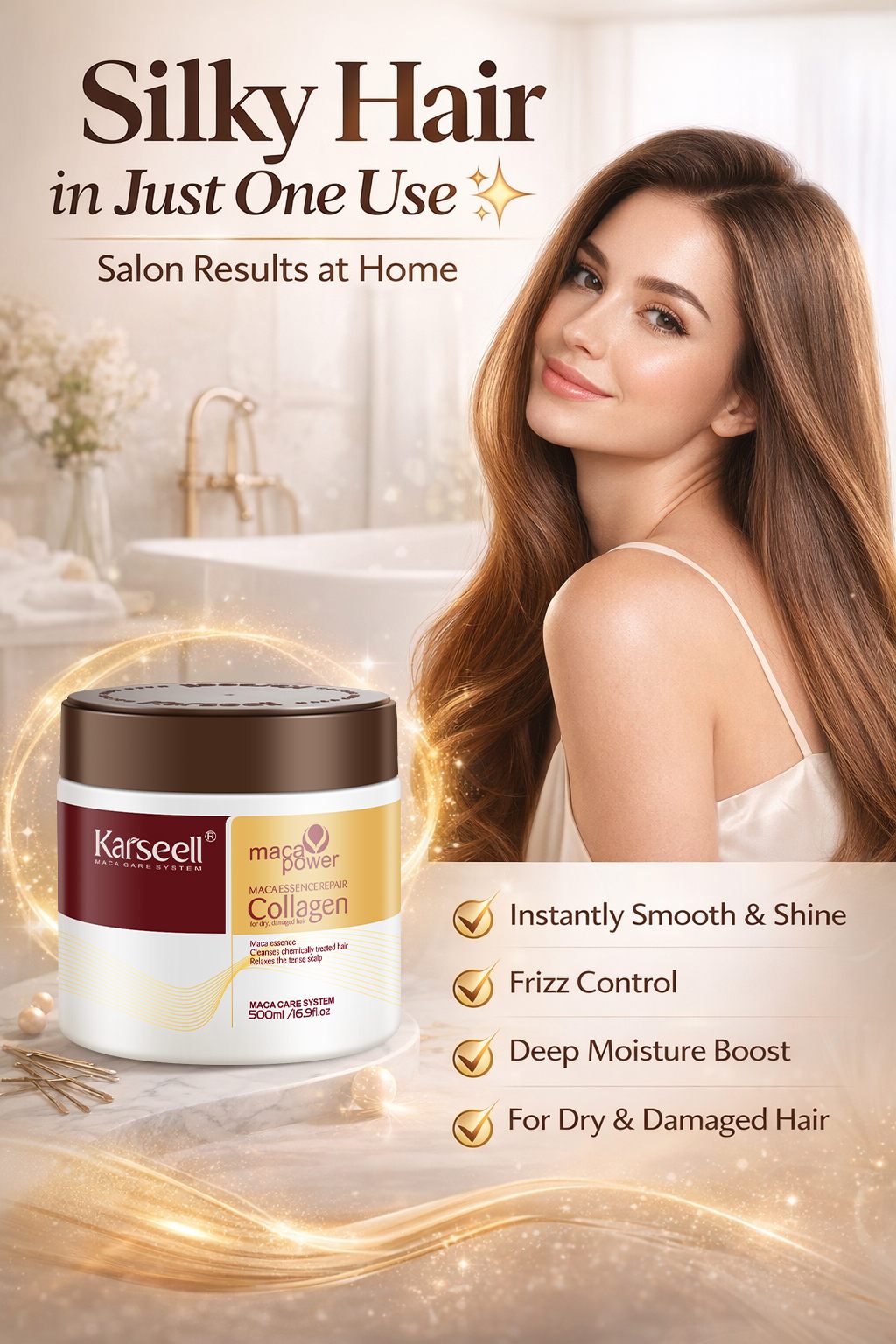
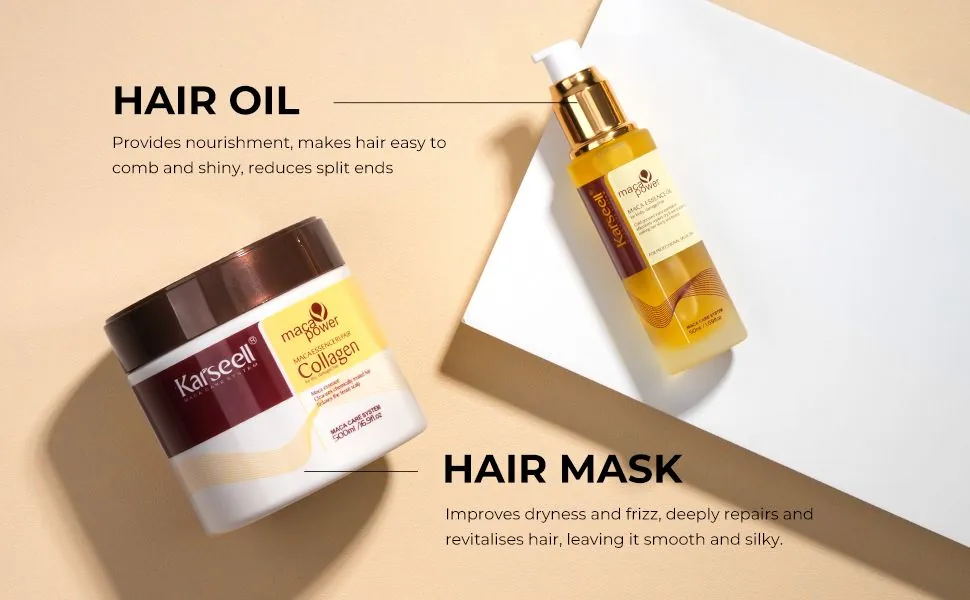
The Karseell Collagen Hair Mask is specifically formulated for damaged hair, combining collagen and argan oil for both repair and moisture.
Step 4: Focus on Moisture
Heat-stripped hair is always deficient in moisture. After stopping heat styling, establish a rigorous moisture routine: moisturizing shampoo, regular deep conditioning, and a daily leave-in conditioner. Argan oil is exceptional for nourishing damaged locks because it replenishes lipids and fatty acids that heat has depleted.
Step 5: Protect While Sleeping
Damaged hair is fragile hair. Sleep on a silk or satin pillowcase to reduce friction that causes breakage. Consider a silk scarf or bonnet for additional protection, especially if you toss and turn.
How to Prevent Heat Damage Hair: Best Practices
Prevention is always better than cure—especially with heat damage, which is cumulative and irreversible. Here’s how to protect your hair from heat styling damage going forward:
Rule #1: Always Use Heat Protection
This should be non-negotiable. Every single time you use any heat tool—blow dryer, flat iron, curling iron, or hot rollers—apply a heat protectant product first. Heat protectants create a barrier between your hair and the high temperatures, reducing damage by up to 80%.
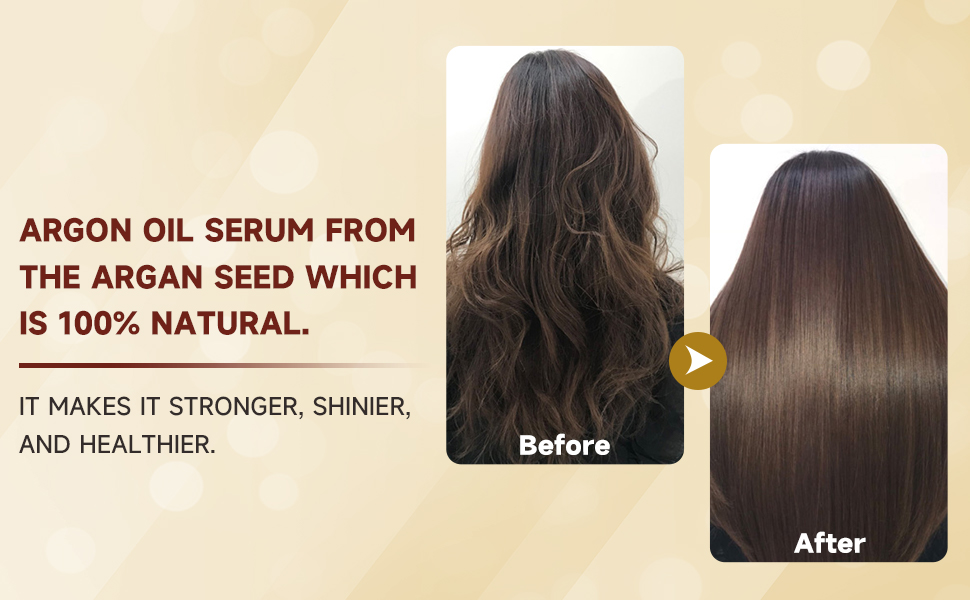
Apply to damp hair before heat styling, focusing on the mid-lengths and ends. For extra protection, layer a serum like Moroccan Argan Oil under or over your heat protectant for nourishment alongside protection.
Rule #2: Lower Your Temperature
Most people use heat tools at temperatures that are far too high for their hair type. Here’s a guide:
- Fine or thin hair: 250–300°F maximum
- Medium or normal hair: 300–350°F maximum
- Thick or coarse hair: 350–400°F maximum
Start at the lowest effective temperature and only increase if you can’t achieve your desired result. Your flat iron doesn’t need to be on 450°F to straighten medium hair—it really doesn’t.
Rule #3: Reduce Frequency
You don’t need to heat style every day. Train your hair to look good with less heat: embrace your natural texture some days, use heatless curling techniques (braids, buns, flexi rods), and reserve heat for special occasions.
The goal is to reduce heat styling frequency to 2–3 times per week maximum. Your hair will thank you with better health, more shine, and less breakage over time.
Rule #4: Invest in Quality Tools
Not all heat tools are created equal. Professional-grade flat irons and blow dryers often have better temperature controls, more even heat distribution, and materials (like ceramic, tourmaline, or titanium plates) that are gentler on hair than cheap metal plates.
If you’re using a $20 flat iron from a drugstore, you’re probably doing more damage than someone using a $200 professional iron at a lower temperature. Invest in quality tools, and they’ll pay for themselves in healthier hair.
Rule #5: Never Use Heat on Already-Damaged Hair
If your hair is already showing signs of heat damage, stop using heat tools entirely until you’ve had a trim and established a repair routine. Continuing to apply heat to already-compromised hair accelerates the damage exponentially.

Heat Damage and Hair Porosity
Heat damage often increases hair porosity. When the cuticle is damaged by heat, hair becomes more porous—absorbing water and product easily but also losing moisture just as easily. Understanding hair porosity helps you choose the right products for your heat-damaged hair.
High porosity hair from heat damage needs heavy, occlusive products (shea butter, oils, silicones) to seal the cuticle and prevent moisture loss. Without these sealants, high porosity hair will always feel dry and frizzy no matter how much conditioner you use.
Heatless Styling: Protecting Your Hair While Still Looking Great
The good news: you don’t need heat to have beautiful hair. Here are heatless styling methods that can give you gorgeous results without the damage:
- Braids or twists — Sleep in braids for natural waves the next day
- Flexi rods or foam rollers — Create curls without heat
- Low bun — Sleek style with no heat required
- Velcro rollers — Volume and curl without damage
- Hair mousse and air drying — Embrace and enhance natural texture
The key to successful heatless styling is starting with well-conditioned, moisturized hair. The better condition your hair is in, the better it will look without any heat at all.

Protein Treatments for Heat-Damaged Hair
Heat damage often depletes hair’s protein, leaving it weak and fragile. Periodic protein treatments can temporarily restore strength to heat-damaged hair by filling in gaps in the cuticle. Use protein treatments sparingly (every 2–4 weeks) and always follow with a moisturizing conditioner, as too much protein can make hair stiff and brittle.
Final Thoughts
Heat styling damage is one of the most preventable forms of hair damage—and one of the most commonly accepted. We accept fried hair as the price of looking good. But it doesn’t have to be. With proper heat protection, lower temperatures, reduced frequency, and quality tools, you can style your hair beautifully without cooking your strands in the process.
If you’re already dealing with heat damage: stop, repair, trim, and protect. There’s no quick fix, but there is a path forward. And if you’re not yet damaged: this is your reminder that the flat iron at 450°F is not your friend. Treat your hair with the respect it deserves.
Frequently Asked Questions
Can heat-damaged hair be permanently repaired?
No. Once the hair shaft has been physically damaged by heat—bubbling, pitting, cracking of the cuticle—the damage is permanent and can only be removed by cutting off the damaged portion. Products can improve the appearance and feel of heat-damaged hair by smoothing the cuticle and adding moisture, but they cannot reverse structural damage.
What temperature is safe for hair heat styling?
For fine or thin hair: 250–300°F maximum. For medium hair: 300–350°F. For thick or coarse hair: 350–400°F maximum. Always start at the lowest effective temperature and only increase if needed. Most people overheat their tools unnecessarily.
How long does it take to recover from heat damage?
Visible recovery from heat damage takes about 3–6 months with consistent care. This is roughly one full hair growth cycle. During this time: stop all heat styling, get regular trims to remove damaged portions, deep condition weekly, and protect your hair while sleeping. Full recovery depends on how much damage existed and how committed you are to the recovery process.
Does air-drying cause heat damage too?
Air drying itself does not cause heat damage. However, rubbing wet hair aggressively with a towel causes mechanical damage—broken bonds within the hair shaft that lead to frizz and breakage. The safest method is to gently squeeze out excess water with a microfiber towel or an old cotton t-shirt, then let it air dry.
What’s the best product for heat-damaged hair?
Karseell Collagen Hair Mask combines hydrolyzed collagen for structural repair with argan oil for deep moisture—two things heat-damaged hair desperately needs. Use it weekly for best results.
Recovering from heat damage? Shop the complete Karseell repair collection for damaged hair and start your recovery journey today.
