

How to apply purple mask correctly is a skill every blonde, platinum, or silver-haired person needs to master. Purple hair masks are powerful toning treatments that neutralize unwanted yellow and orange tones in lightened hair—but they only work their magic when applied properly. Get it wrong, and you risk uneven toning, a purple cast, or simply wasted product. This guide covers everything you need to know about purple hair mask application for salon-worthy blonde results at home.
Why Purple? The Science Behind Toning
Here’s a quick color theory lesson: on the color wheel, purple is directly opposite of yellow. This means purple and yellow are complementary colors that cancel each other out. When your blonde hair has warm, brassy yellow or orange tones, a purple-toned mask neutralizes them—leaving your hair looking cooler, brighter, and more ash-toned.
But purple masks don’t just work on yellow. Different levels of lift produce different undertones: yellow (lightest), orange (medium), and red (darkest). Understanding which tones you need to neutralize is the first step to choosing and applying the right purple mask.
Who Should Use a Purple Hair Mask?
Purple masks aren’t just for dramatic platinum blondes—they’re for anyone with lightened or color-treated hair that has developed brassy tones. This includes:
- Platinum and white blonde — Prevents and corrects yellow tones
- Ash blonde and beige blonde — Maintains cool undertones
- Silver and grey — Keeps tones from warming or yellowing
- Balayage and ombre — Evenly tones different levels of lift
- Highlights and lowlights — Maintains consistent tone between sessions
Even natural dirty blonde hair that has been lightened can benefit from occasional purple masking to keep tones balanced and prevent brassiness from creeping in.

How to Apply Purple Mask: Step by Step
Step 1: Start with Clean, Damp Hair
Never apply a purple mask to dirty, product-laden hair. Clarify your hair 1–2 days before masking (not the same day) to remove buildup that can prevent even absorption. Your hair should be clean and damp—about 70% dry—when you apply the mask.
If you’ve just washed your hair, towel-dry gently until it’s damp but not dripping. Wet hair dilutes the purple pigment, making the mask less effective. Too dry, and the mask won’t distribute evenly.
Step 2: Section Your Hair
Just like with any hair mask, sectioning is essential for purple mask blonde hair application. Divide your hair into 4–6 sections using duckbill clips. This ensures every strand gets equal coverage—which is especially important with purple masks because missed spots lead to uneven toning.
Don’t skip this step even if you have short hair. Sectioning helps you work methodically and prevents you from accidentally missing areas around your ears, nape, or the back of your head.

Step 3: Apply Purple Mask Evenly from Roots to Tips
For most blonde hair, apply the purple mask from roots to tips. Some stylists recommend focusing on the mid-lengths and ends (where brassiness is most common), but if your roots are also lightened and prone to yellowing, cover them too.
Use a generous but controlled amount. The goal is complete saturation—every strand should be coated with purple. If your hair is very thick or long, you may need to double the amount you’d normally use.
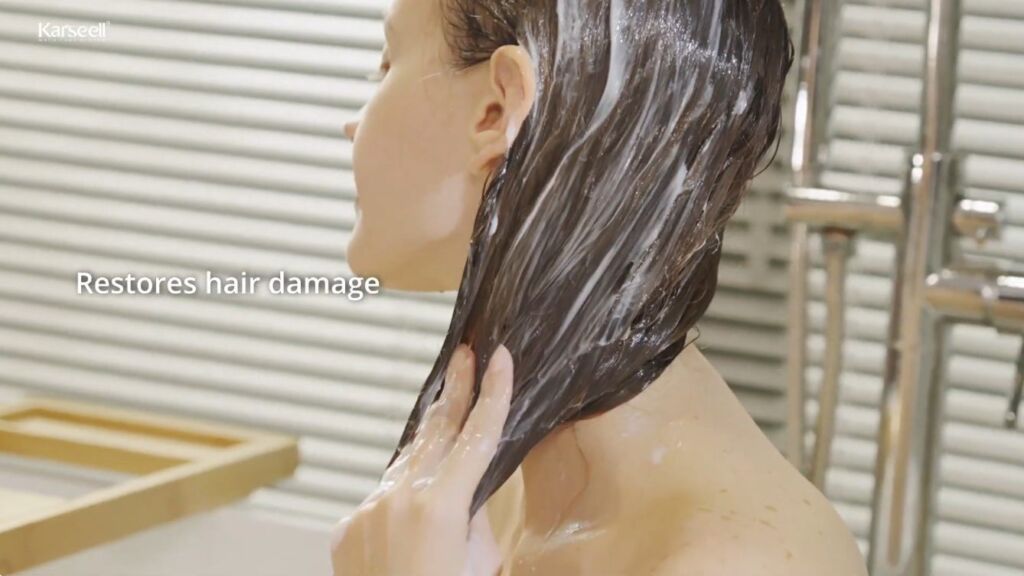
Work through each section systematically using a wide-tooth comb to ensure even distribution. Pay extra attention to areas that are most prone to brassiness: around the face, the nape of the neck, and the back of the head.
Step 4: Time It Correctly
Timing is critical with purple masks. Leave it on too short, and you get no toning effect. Leave it on too long, and you risk a purple or violet cast that’s difficult to remove (though it’s temporary—it will fade with washing).
General guidelines:
- Light brassiness: 3–5 minutes
- Moderate brassiness: 5–10 minutes
- Severe brassiness or grey/silver hair: 10–20 minutes
- Maximum toning for platinum: 15–30 minutes (check every 5 minutes)
Never leave a purple mask on for more than 30–45 minutes unless the product specifically directs otherwise. The purple pigment can over-deposit and create an unwanted violet tone.

Step 5: Rinse Thoroughly with Cool Water
Rinse with cool or lukewarm water—never hot. Hot water opens the cuticle and can cause the purple pigment to deposit unevenly or too deeply. Cool water helps seal the cuticle, setting the tone and locking in the conditioning benefits of the mask.
Rinse until the water runs completely clear. If it runs purple, keep rinsing—this means excess pigment is still coming out. Don’t panic if your hair looks slightly purple immediately after rinsing; this usually fades to a beautiful ash tone as your hair dries.
Common Purple Mask Mistakes to Avoid
Mistake #1: Using Purple Mask on Dry Hair
Dry hair doesn’t absorb the purple pigment evenly, leading to patchy, splotchy toning. Always apply to clean, damp hair for consistent, even results.
Mistake #2: Over-Applying on Light Brown or Caramel Hair
If your hair hasn’t been fully lightened to blonde, a purple mask may not be the right product. Purple is most effective on very light blonde to platinum. For orange or copper tones in darker lightened hair, a blue mask is actually more effective. Blue neutralizes orange; purple neutralizes yellow.
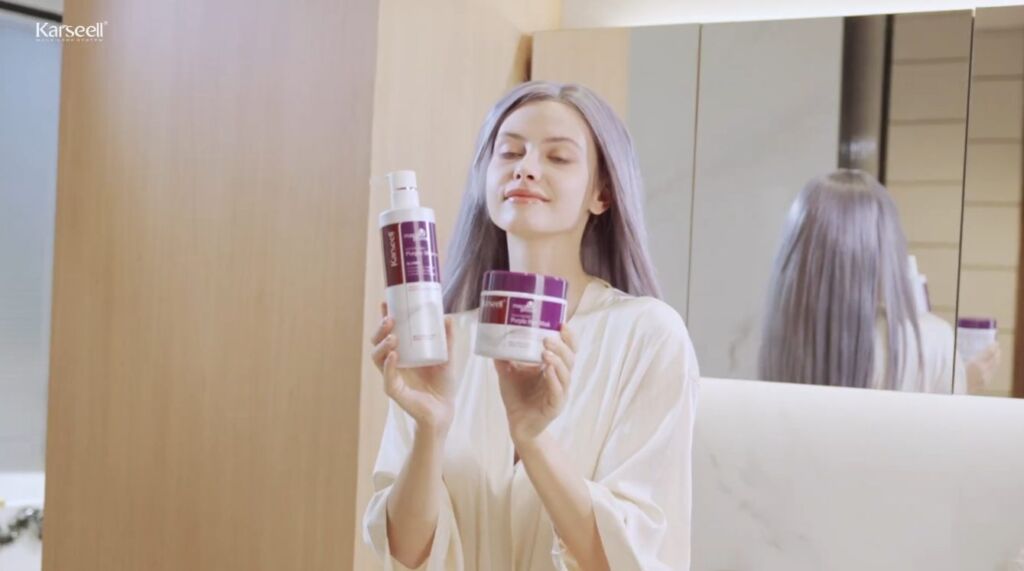
For why Karseell Purple Hair Mask is ideal for blonde hair, the carefully balanced purple pigment is specifically calibrated for light blonde and platinum tones without over-depositing.
Mistake #3: Leaving It On Too Long
More time does not mean better results with purple masks. Leaving it on for hours “for maximum effect” will almost certainly result in a purple or violet cast that takes multiple washes to fade. Set a timer and check your hair every 5 minutes once you’ve passed the 10-minute mark.
Mistake #4: Skipping the Conditioner After
Purple masks can be slightly drying because the pigments and clarifying agents used in them can strip moisture. Always follow with a moisturizing conditioner, or choose a purple mask that also contains nourishing ingredients like Karseell Purple Hair Mask which includes conditioning agents to prevent dryness.

How Often Should You Use a Purple Mask?
How often you use a purple mask depends on several factors:
- Freshly colored platinum: Once a week for the first month to maintain tone
- Established blonde with minor brassiness: Every 2–3 weeks as maintenance
- Silver or grey hair: Every 1–2 weeks to prevent yellowing
- Balayage with darker roots: Focus application on the lightened ends only, every 2 weeks
The key is to use purple masks preventatively rather than reactively. It’s much easier to maintain cool-toned blonde than to correct severely brassy hair. Build purple masking into your regular routine before brassiness becomes noticeable.
Purple Mask vs. Purple Shampoo: Which Should You Use?
Both purple shampoos and purple masks serve the same purpose—neutralizing brassy tones—but they work differently. Understanding when to use each is key:
Purple Shampoo:
- Use with every wash (or every other wash) for maintenance
- Subtle toning effect—gradual, not dramatic
- Good for preventing brassiness before it starts
- Can be drying if used too frequently
Purple Mask:
- Use 1–2 times per week for intensive toning
- More concentrated and powerful than shampoo
- Good for correcting existing brassiness
- Also conditions and nourishes while toning
For best results, use both: a purple shampoo for daily or every-other-day maintenance, and a purple mask once weekly for deep toning and conditioning. This two-pronged approach keeps blonde hair consistently cool and vibrant.
Caring for Your Blonde Hair Beyond the Purple Mask
Purple masking is just one part of maintaining beautiful blonde hair. For the healthiest, most vibrant blonde possible, your routine should also include:
- Sulfate-free, color-safe shampoo — Prevents premature fading
- Deep conditioning — Lightened hair is always more dry and damaged; use a mask weekly
- Heat protection — Essential before any heat styling
- UV protection — Sun exposure is a major cause of brassiness and fading
- Regular trims — Prevents split ends from traveling up the hair shaft
For comprehensive blonde care, explore before and after results with Karseell Purple Hair Mask to see what kind of transformation is possible with consistent use.
What to Do If Your Hair Turns Purple
It happens to the best of us. If you’ve over-done the purple mask and your blonde has turned violet, don’t panic. Here’s how to fix it:
- Wash immediately with a clarifying shampoo to strip some of the pigment
- Use a lemon juice or vitamin C treatment — These are natural clarifiers that can help lift purple pigment
- Wait it out — The purple will fade with 3–5 washes, especially if you use a gentle sulfate shampoo
- Seek professional help — For severe purple overtones, visit a colorist who can correct the tone
To avoid this in the future: always start with less time than you think you need, check your hair every 5 minutes, and never leave a purple mask on for more than 45 minutes.
Final Tips for Perfect Purple Mask Application
Mastering how to apply purple mask is a learnable skill. With practice, you’ll develop an instinct for timing, amount, and frequency that works perfectly for your unique hair. Remember these final tips:
- Start with less time and work up—you can always add more
- Use a timer every time—it’s too easy to lose track
- Apply to damp, not wet or dry, hair
- Section your hair without exception
- Focus on the areas most prone to brassiness
- Always follow with a moisturizing conditioner
- Use consistently—prevention is easier than correction
With the right technique and a quality product like Karseell Purple Hair Mask, you can maintain gorgeous, cool-toned blonde hair at home without constant salon visits.
Frequently Asked Questions
How long should I leave a purple hair mask on my blonde hair?
For light brassiness, 3–5 minutes is sufficient. For moderate brassiness or grey/silver hair, 5–10 minutes is ideal. For severe brassiness or to maintain platinum tones, 10–20 minutes maximum. Never exceed 30–45 minutes, as this risks over-depositing purple pigment and creating an unwanted violet cast.
Can I use a purple mask on brown hair?
Purple masks work best on light blonde to platinum hair. On brown hair that hasn’t been lightened, purple masks won’t produce noticeable toning results because there’s no yellow tone to neutralize. For orange or copper tones in lightened brown hair, a blue mask is more effective than purple. Purple specifically targets yellow undertones.
Will a purple mask stain my skin or clothes?
Purple masks can temporarily stain skin (especially around the hairline) and fabric. Apply a thin layer of regular moisturizer or barrier cream around your hairline before applying the mask to protect your skin. Wear an old dark shirt during application. Any skin staining will wash off within a day or two.
Can I leave a purple hair mask on overnight?
It’s not recommended to sleep in a purple mask unless the product is specifically designed for overnight use. Leaving a standard purple mask on overnight will almost certainly result in an over-toned purple or violet cast that takes multiple washes to fade. If you want overnight treatment benefits, use a clear deep conditioner and apply your purple mask only for the directed time.
What’s the difference between a purple shampoo and a purple mask?
Purple shampoo is a daily or every-other-day maintenance product with subtle toning power, while a purple mask is a weekly intensive treatment with concentrated pigment and conditioning agents. Use both together: purple shampoo prevents brassiness, and purple mask corrects existing tones and deeply conditions at the same time.
Ready to neutralize brassiness and maintain gorgeous blonde? Try Karseell Purple Hair Mask — the professional-grade toning treatment designed for blonde, platinum, and silver hair.
