

Leave-in conditioner and regular conditioner serve different purposes in your hair care routine — and knowing which to use (and when) can transform the health and manageability of your hair. Leave-in conditioner stays in your hair all day providing continuous moisture, while regular conditioner is rinsed out after a few minutes for deeper, short-term conditioning. Neither is better than the other — the right choice depends entirely on your hair type, condition, and styling goals.
What Is Leave-In Conditioner?
A leave-in conditioner is a lightweight conditioning product applied to clean, towel-dried hair and left in without rinsing. Unlike traditional conditioners, it is designed to remain in your hair throughout the day, providing continuous moisture, heat protection, and detangling benefits. Think of it as the bridge between your rinse-out conditioner and your styling products.
Leave-in conditioners come in several forms:
- Sprays: Lightweight, easy to distribute on fine or thin hair
- Creams: More concentrated, ideal for thick or coarse hair
- Milks/Lotions: Balanced hydration for medium-textured hair
- Serums: Targeted frizz control and shine enhancement
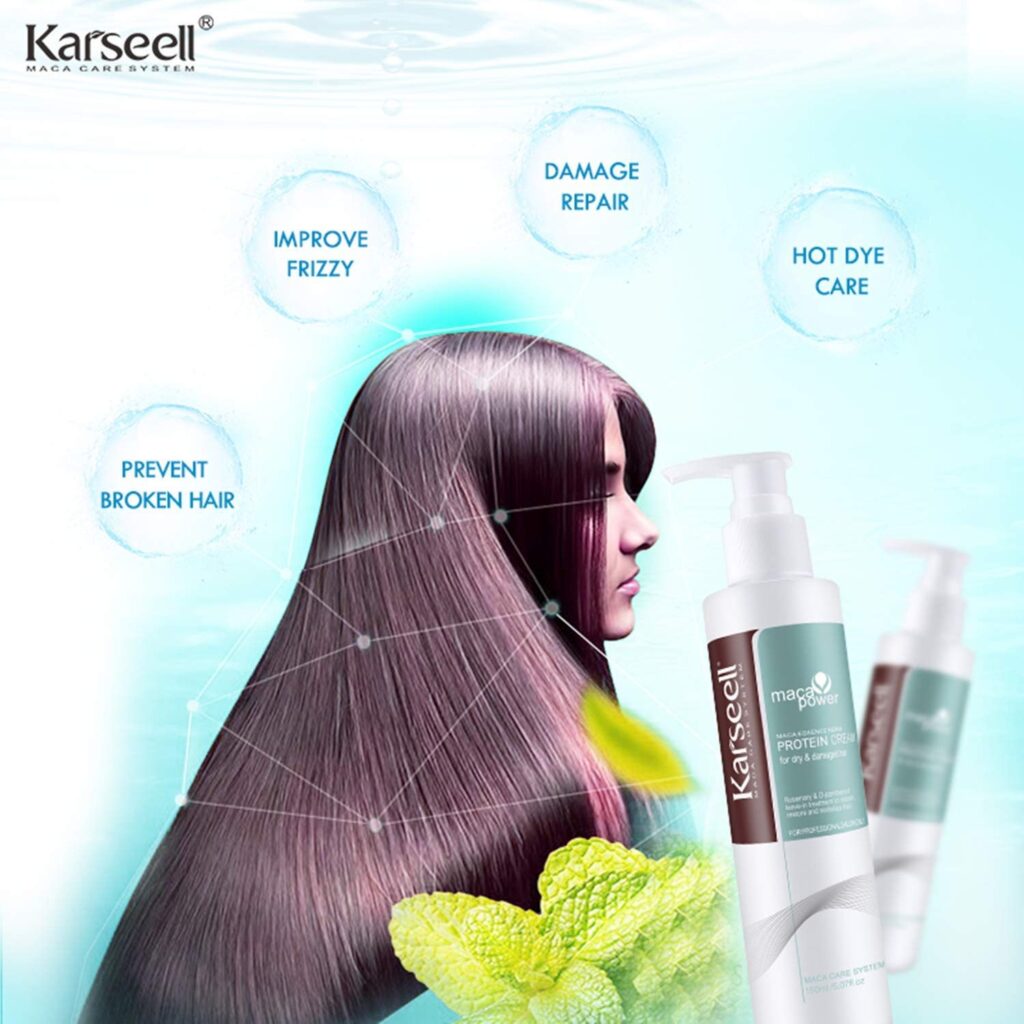
Products like the Karseell Repair Protein Cream Leave-In Conditioner combine hydrolyzed protein with Maca essences to repair and protect dry damaged hair between washes. These formulas reinforce the hair cuticle, smooth frizz, and create a protective barrier against heat styling and environmental stressors.
What Is Regular Conditioner?
Regular conditioner (also called rinse-out conditioner) is applied after shampooing and left on the hair for 1–5 minutes before being thoroughly rinsed away. Its primary function is to restore moisture, smooth the cuticle layer, and reduce static and tangling immediately after washing.
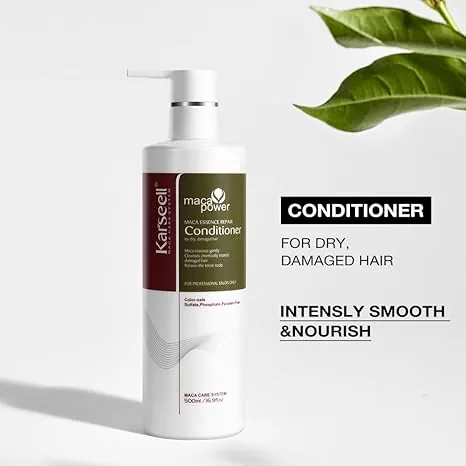
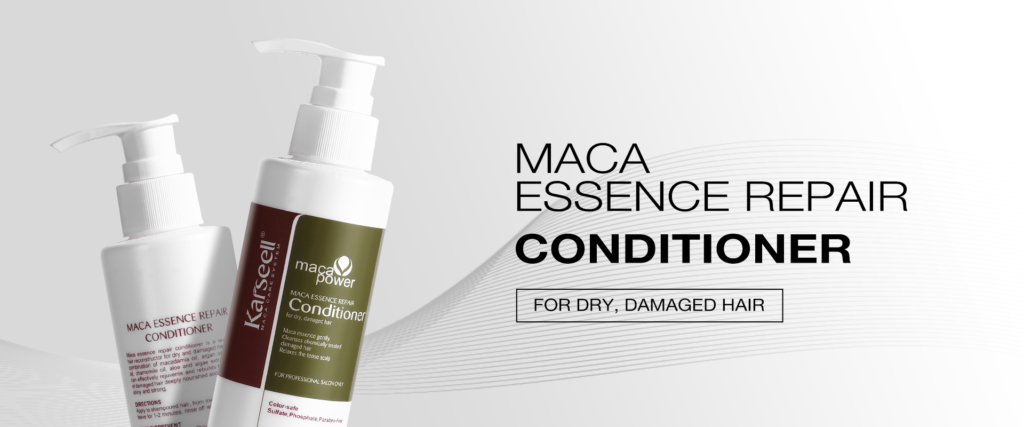
Regular conditioners tend to be thicker and more concentrated than leave-in conditioners because they are designed for short-term use. They work by coating the outer hair cuticle, filling in gaps and cracks caused by shampooing and environmental damage. For those with dry and damaged hair, a deep-restoring option like Karseell Deep Restores Argan Oil Conditioner provides intensive hydration with organic argan oil and Maca essences.
Key Differences: Formulation and How Each Works
The fundamental difference between leave-in conditioner and regular conditioner lies in their formulation chemistry and how long they are designed to remain on the hair.
Regular Conditioner: How It Works
Regular conditioner relies on cationic surfactants (like behentrimonium chloride) that bond with the negatively charged hair cuticle. Because it is rinsed out, it can use a higher concentration of occlusive ingredients (like silicones and oils) without worrying about buildup. These ingredients work during the short contact time to:
- Smooth and seal the cuticle layer
- Reduce static electricity and flyaways
- Add weight to the hair for manageability
- Temporarily repair protein bonds in damaged hair
Leave-In Conditioner: How It Works
Leave-in conditioner uses lighter-weight ingredients that won’t weigh down the hair over extended wear. Its formulation focuses on:
- Humectants: Attract and retain moisture from the air (e.g., glycerin, panthenol)
- Lightweight proteins: Penetrate the hair shaft for gradual repair (e.g., hydrolyzed silk, wheat, or collagen)
- Heat protection agents: Shield hair from thermal damage during styling
- Detangling polymers: Provide slip without heaviness
Understanding the difference between protein and moisture treatments helps contextualize how both conditioner types work: regular conditioners lean heavier on occlusive moisture, while leave-in conditioners often incorporate protein for daytime reinforcement.
Leave-In vs Regular Conditioner: Detailed Comparison
Both products complement each other and can — and often should — be used together in a complete hair care routine. Here is a practical side-by-side comparison:
| Feature | Leave-In Conditioner | Regular Conditioner |
|---|---|---|
| Duration on Hair | Days (until next wash) | 1–5 minutes (rinsed out) |
| Formula Weight | Lightweight, non-greasy | Thicker, more concentrated |
| Primary Function | Continuous moisture, detangling, heat protection | Deep conditioning, cuticle smoothing |
| Best for Hair Type | Fine, medium, curly, color-treated | Thick, coarse, very dry, damaged |
| Application Timing | After towel-drying, before styling | After shampooing, before rinsing |
| Protein Content | Often includes lightweight proteins | May include heavier proteins |
| Heat Protection | Typically includes UV/heat shields | Minimal to none |
| Frequency of Use | After every wash or multiple times/week | After every wash |
| Risk of Buildup | Low if used as directed | Minimal (rinsed out) |
| Detangling Power | Excellent (ongoing slip) | Good (short-term) |
When to Use Leave-In Conditioner vs Regular Conditioner
The choice between leave-in conditioner and regular conditioner (or both) comes down to your specific hair needs. Here is a practical guide by hair type:
Fine or Thin Hair
Fine hair gets weighed down easily. A leave-in conditioner spray is ideal — it provides moisture without heaviness. Avoid thick, heavy regular conditioners unless your fine hair is also extremely dry. Apply a light leave-in conditioner from mid-length to ends only.
Curly or Coily Hair (Type 3–4)
Curly and coily hair types have the most to gain from leave-in conditioners. Because curls struggle to distribute natural oils from root to tip, leave-in conditioner provides the ongoing moisture that these textures desperately need. Many curl routines layer a regular conditioner (cowashing) with a leave-in conditioner for maximum hydration. The Karseell Collagen Hair Mask & Leave-In Conditioner is specifically formulated to meet this dual need.

Color-Treated or Chemically Processed Hair
Color-treated, bleached, or permed hair is structurally compromised and needs both types of conditioning. Use a protein-enriched regular conditioner after every wash to rebuild the cuticle, and follow with a leave-in conditioner to protect color-treated strands from UV damage and heat styling between washes.
Thick or Coarse Hair
Thick, coarse, and frizzy hair benefits most from a rich regular conditioner applied generously after shampooing, followed by a small amount of leave-in conditioner to tame frizz and maintain smoothness throughout the day. Look for ingredients like argan oil, shea butter, and keratin in your regular conditioner for maximum hydration.
Damaged or Heat-Styled Hair
If your hair is regularly exposed to heat tools, chemical treatments, or environmental damage, both conditioner types are non-negotiable. Deep conditioning with a regular conditioner after each wash provides restorative sessions, while a leave-in conditioner with heat protection active ingredients (like those found in the Karseell Repair Protein Cream) shields your hair during every styling session.
How to Use Both in Your Routine
The most effective approach is to use both products together, not as an either-or choice. Here is a simple routine:
- Step 1: Shampoo with a gentle, sulfate-free shampoo
- Step 2: Apply regular conditioner from mid-length to ends. Leave for 2–3 minutes. Rinse thoroughly.
- Step 3: Towel-dry hair gently (never rub aggressively)
- Step 4: Apply leave-in conditioner evenly through damp hair, focusing on ends and damaged areas
- Step 5: Proceed with your usual styling routine
FAQ: Leave-In Conditioner vs Regular Conditioner
Can I use leave-in conditioner every day?
Yes, most leave-in conditioners are safe for daily use. Because they are lightweight and designed for extended wear, applying them after every wash or even between washes (on non-wash days) is perfectly acceptable. Just be mindful of the amount — a little goes a long way. Over-applying can lead to product buildup, especially on fine hair.
Do I still need regular conditioner if I use leave-in conditioner?
Absolutely. Leave-in conditioner and regular conditioner serve different functions. Regular conditioner provides deep, concentrated conditioning that is rinsed out — this allows for thicker, more intensive moisturizing ingredients. Leave-in conditioner cannot replicate this depth because it must be light enough to wear for days. For best results, use both: regular conditioner after each wash, leave-in conditioner on damp hair before styling.
Can leave-in conditioner cause hair loss?
No, leave-in conditioner does not cause hair loss when used as directed. However, excessive buildup from over-application can clog hair follicles on the scalp, potentially leading to weak hair growth over time. If you have an oily scalp or fine hair, apply leave-in conditioner only from the mid-lengths downward, avoiding the roots entirely.
What is the difference between a leave-in conditioner and a deep conditioner?
Deep conditioners (or hair masks) are ultra-concentrated treatments designed for occasional use — typically once per week — to deliver intensive repair. They are rinsed out after 10–30 minutes of contact time. Leave-in conditioners are for daily or post-wash use and provide lighter, ongoing maintenance between deep conditioning sessions. Think of deep conditioners as the emergency repair treatment, and leave-in conditioners as the daily health maintenance.
Should I apply leave-in conditioner to wet or dry hair?
Leave-in conditioner works best on clean, towel-dried (damp) hair. Damp hair has open cuticles that allow the conditioning ingredients to penetrate more effectively. Applying it to soaking wet hair dilutes the product, while applying it to dry hair may result in uneven distribution. After washing, gently towel-dry your hair until it is damp but not dripping, then apply your leave-in conditioner evenly.
The Bottom Line
Both leave-in conditioner and regular conditioner are essential tools in a well-rounded hair care routine. They are not competitors — they are teammates. Regular conditioner delivers deep, short-term restoration with every wash, while leave-in conditioner extends those benefits throughout the day, protecting against heat, humidity, and friction. The key to healthy, manageable hair is using both strategically, based on your hair type and specific needs.
Explore Karseell’s full range of conditioning solutions — from intensive deep-restoring conditioners to daily leave-in treatments — to build the perfect routine for your hair.
References
American Academy of Dermatology. “Hair Care Tips.” AAD, 2024. https://www.aad.org/
Board, T. H. S. “The Science of Hair Conditioning.” International Journal of Trichology, vol. 11, no. 2, 2019, pp. 45–52.
Franzke, A., et al. “Protein Hydrolysates for Hair Treatment: A Review.” Journal of Cosmetic Science, vol. 70, no. 4, 2019, pp. 213–228.
Madnani, N., and K. Khan. “Hair Cosmetics.” Indian Journal of Dermatology, Venereology and Leprology, vol. 79, no. 5, 2013, pp. 654–660.
Board, The Hair S. “Leave-In Conditioners: Ingredient Science and Application Guide.” International Journal of Cosmetic Science, vol. 43, no. 1, 2021, pp. 12–19.
