

Good gray hair care is not one routine, it is two, and mixing them up is why so many people end up with grey hair that looks dull, yellow or orange instead of bright silver. Natural grey and white hair behaves differently from blonde hair that was bleached and then toned. The products that make one of those look fantastic can do nothing for the other, or make it worse.
This guide separates the two, explains how toning masks work on grey and silver hair, then walks through the four Karseell options in the range so you can pick the one that matches your hair.

Two Very Different Jobs Under One Name
When someone says their grey hair looks dull, the cause is usually one of two things, and the two need opposite treatment.
- Natural grey or white hair. The pigment is simply gone. What is left is pale, slightly transparent hair that picks up whatever the environment puts on it: sun, hard water, chlorine, cigarette smoke, hot tools. It needs protection and toning, because there is no pigment left to hold a colour.
- Bleached blonde hair going silver. This is deliberate colour that has been lifted past its natural tone, then cooled down with a toner. It needs the same toning work, but it also needs damage control, because bleach has stripped and weakened the hair underneath.
Products built for blonde — including every purple and blue toning mask in the Karseell range — work on both. Products built for natural grey are a much narrower category, and they are usually about keeping the hair soft and bright rather than changing a tone.
Natural Grey and White vs Bleached Blonde
Two Hair Types, Two Sets of Rules
With natural grey and white hair, the goal is to keep the colour clean and neutral and to stop the hair from looking straw-dry. Grey hair tends to be coarser and drier than the colour it grew in, so the hair needs conditioning work more than colour work. A weekly mask, a leave-in oil and some heat protection will do more for you than any amount of toning.
With bleached blonde or silver-blonde hair, you are maintaining a colour you paid for. The brassiness shows up fast, and the hair is chemically processed, so it needs both regular toning and regular conditioning. This is where a purple or blue mask earns its place, and where skipping the conditioning step causes the split ends that make people think the toner dried their hair out.
One practical test before you buy anything: look at your hair in daylight near a window. If it has warm yellow or orange patches that come back a few days after washing, you have a toning problem. If it is simply dull, coarse and dry with no colour cast, you have a conditioning problem, and a mask will fix it faster.
How Toning Masks Actually Work
Toning masks deposit a small amount of colour pigment onto the outer surface of the hair shaft, then you rinse it off. The pigment cancels out the warm tone in your hair, so the two balance visually and the hair reads as cooler. It is a temporary deposit that washes out over the following washes.
It is important to be precise here, and the Karseell Purple Hair Mask product page is unusually clear about it: the mask is not a hair colorant and it cannot dye the hair. It neutralises tone; it does not give you a new colour. If you want a genuinely different colour — a warmer blonde, a darker brunette, a peachy tone — that is a permanent colour process, not a toning mask.
Pigment only neutralises on hair light enough to show it. On natural dark hair the deposit is invisible, which is why the purple mask is designed for bleached hair at level 8 and above, plus light blonde, silver and grey hair. Natural dark hair will not show results. Our guide to how purple hair masks work covers the colour theory behind it.

Purple or Blue: Which One You Need
When Purple Is the Right Call
Purple is the warmer counterweight, and it neutralises yellow and orange tones. Blonde hair bleached with a yellow or golden toner goes brassy, and that brassy orange is exactly what purple cancels out. If your silver or blonde hair looks brassy, brondish or like it has a warm beige cast, purple is the right tool.
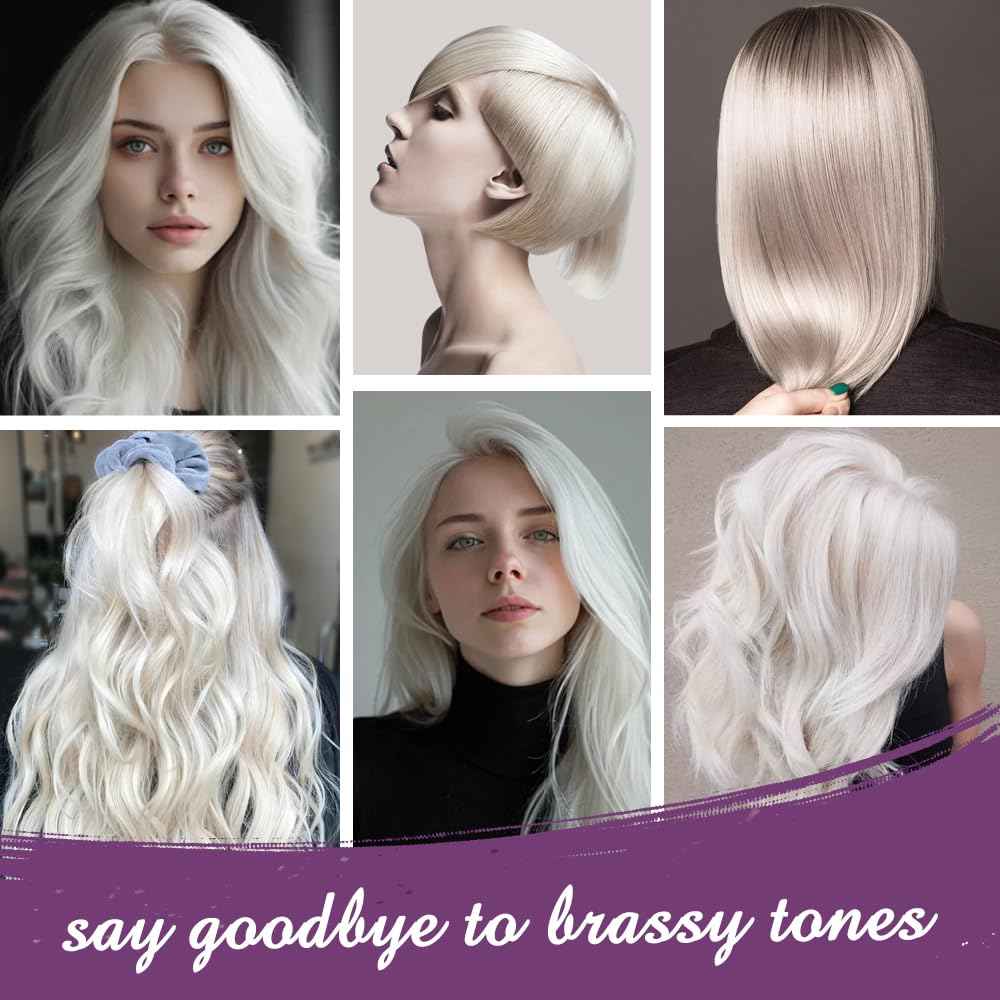
When Blue Is the Right Call
Blue sits colder on the colour wheel, and it is the counterweight for silver, ash and cool tones. It neutralises orange and warm brassy tones as well, but it pushes the finish cooler, which is what you want when the goal is a genuinely icy or smoky result. The color depositing category is the easiest place to see the range of tones side by side.
A practical rule: if your hair is brassy yellow, go purple. If it is warm orange or brondish and you want it to look icy, go blue. If you are torn between them, blue is the safer choice, because it is built for silver, ash blonde and cool-toned hair at level 8 and above. Our purple shampoo versus purple mask comparison covers the other half of the decision — which format to use.
The Four Karseell Options
Here is the range at a glance, with the tone each one is built to handle.
| Product | Price | Rating | Built for |
|---|---|---|---|
| Blue Color Depositing Mask | $32.99 | 4.97 from 131 reviews | Silver, ash and cool-toned hair that has gone brassy orange |
| Purple Hair Mask | $18.99 | 4.97 from 393 reviews | Yellow and brassy tones on light blonde, silver or grey hair |
| Purple Shampoo | $23.99 | 4.98 from 233 reviews | Weekly maintenance between mask treatments |
| Purple Hair Mask with Argan Oil | $41.99 | 4.97 from 589 reviews | Toning and conditioning in one step on dry, frizzy silver hair |
Karseell Blue Hair Color Depositing Mask — $32.99
The Karseell Blue Hair Color Depositing Mask is rated 4.97 out of 5 from 131 reviews. This is the one built for silver and ash: it refreshes cool tones in 5 to 15 minutes while deep conditioning, and it is aimed at silver, ash blonde, grey and cool-toned blonde hair at level 8 and above. Apply to damp hair from mid-lengths to ends, start at five minutes for a subtler result, wear gloves, and rinse with cool water. This is the closest thing to a salon toner you can do at home.
Karseell Purple Hair Mask — $18.99
The Karseell Purple Hair Mask is rated 4.97 from 393 reviews. This is the entry point, and the product page does the honest work for you: it is designed for bleached hair at level 8 and above, light blonde, silver or grey hair, it warns that natural dark hair will not show results, and it recommends a strand test before you commit. Leave it on for five minutes on damp, clean hair, rinse thoroughly, and use once or twice a week. Our guide to the purple hair mask for blonde and brassy hair covers the matching detail.
Karseell Purple Shampoo — $23.99
The Karseell Purple Shampoo is rated 4.98 from 233 reviews. The shampoo handles the weekly maintenance that keeps a mask from having to work as hard. Leave it on for two to five minutes for a stronger toning effect, use it one to three times a week, and always wear gloves to avoid staining your hands. Our guide to how often to use purple shampoo has the details.
Karseell Purple Hair Mask with Argan Oil — $41.99
The Karseell Purple Hair Mask with Argan Oil is rated 4.97 from 589 reviews, and the most reviewed product in this group. It combines the toning pigments with argan oil, shea butter and natural extracts, so the conditioning half of the job is handled by the same product. Apply to clean damp hair, leave for five to ten minutes, and use once or twice a week. If your grey or silver hair is not just brassy but also dry and frizzy, this is the one that solves both at once. You can browse more in the purple hair mask category and the wider hair mask range.

How Often to Use Each One
Frequency matters more with toning products than with ordinary masks, because too much leaves you flatter and duller, not brighter:
- Every wash: a purple shampoo, left on for two to five minutes, if brassiness is returning quickly.
- Once a week: a purple or blue mask, five to ten minutes. This is the workhorse step.
- Once or twice a week: a conditioning mask on days when you are not toning, so the hair stays soft while you keep the tone.
- Every four to six weeks: nothing at all. Let the colour settle and check whether it still needs help. Many people overdo the toning and end up with grey hair that looks flat and dull, which is the opposite of the goal.
If you are maintaining a bleached silver-blonde, a weekly mask plus a purple shampoo every second or third wash is a sensible baseline. If your grey is natural, one mask a week is plenty, and the toning is optional.
Mistakes That Wreck Grey and Silver Hair
- Using a purple mask on natural dark hair and expecting a colour change. It will not happen, and the product page says so plainly.
- Skipping the strand test. The Karseell Purple Hair Mask recommends one every time, because how much pigment your hair holds depends on how porous it is.
- Leaving it on the scalp. The purple mask product page advises avoiding scalp contact to prevent irritation.
- Confusing toning with colouring. A toning mask neutralises warmth; it does not create a new shade. If you want a warmer or darker result, you need a colour process.
- Using hot water for the rinse. Hot water lifts the deposit faster and leaves the tone behind in the sink rather than on your head.
- Treating grey hair like bleached hair. Natural grey needs less colour work and more conditioning work than you might expect.

Keeping Silver Bright Between Treatments
The toning mask does the correcting; everything else decides how long it lasts.
- Wash less often if you can. Every wash pushes more pigment and moisture out of the hair. Dry shampoo between washes helps.
- Wash with cool or lukewarm water. Hot water opens the cuticle and pulls out colour and moisture faster.
- Condition the lengths every time. The complete guide to maintaining blonde without brassiness covers the routine that keeps toning and conditioning in balance.
- Use heat protectant and lower the temperature. Heat opens the cuticle, which lets the tone escape faster and the brassiness come back sooner.
- Add a few drops of argan oil on damp hair after the mask. A sealed cuticle holds its colour longer than a bare one.
- Watch out for hard water and chlorine. Both push warm tones and dullness back into grey hair faster than anything else.
None of this is complicated, but it does need to be consistent. Grey hair is low-maintenance in colour and high-maintenance in condition.
Frequently Asked Questions
Does a purple hair mask dye grey hair?
No. The Karseell Purple Hair Mask product page states plainly that it is not a hair colorant and cannot dye the hair. It works by depositing a small amount of pigment that neutralises yellow and orange tones, and that deposit washes out over the following washes. If you want a genuine colour change, that requires a permanent colour process.
Will a purple mask work on natural grey or dark hair?
It works on silver and grey hair because that hair is light enough for the pigment to show. On natural dark hair the deposit is invisible, and the product page is explicit that results will not show. Always do a strand test first, as that page recommends.
Should I use purple or blue for grey hair?
Use blue for a genuinely cool, silver or icy finish, since it is the colder counterweight for silver and ash hair. Use purple when the warmth is yellow and brassy and you want it neutralised without going further cold. Blue at $32.99 is built specifically for silver, ash blonde and cool-toned hair at level 8 and above.
How often should I use a purple or blue mask on grey hair?
Once a week is a sensible starting point, and once or twice a week if the brassiness keeps returning. Pair it with a purple shampoo every second or third wash and a plain conditioning mask in between, so the tone is corrected without the hair losing its softness.
