

If you have blonde, silver, or gray hair, you’ve almost certainly dealt with brassiness—an unwanted warm, orange, or yellow tones that creep into your color. The solution? Purple shampoo and purple hair mask products designed to neutralize those brass undertones. But when it comes to purple shampoo vs purple mask, which one actually wins at brass removal?
The answer isn’t as simple as picking one over the other. Both products serve different purposes and can work together for optimal results. In this comprehensive guide, we’ll break down exactly how each works, when to use which, and how to combine them for the best purple hair mask brass removal results.
Understanding Brassiness: Why Blonde Hair Turns Orange
Before we compare purple shampoo vs purple mask, let’s understand the science behind brassiness. Blonde hair isn’t naturally yellow—it’s actually a combination of pigment molecules. When you lighten hair, you remove melanin (dark pigment), but warm undertones remain. The degree of brassiness depends on:
- Your starting hair color: Darker hair requires more lightening, revealing more warm pigments
- The lift level achieved: The lighter you go, the more warmth appears
- Oxidation and sun exposure: Both accelerate the warm pigments surfacing
- Hair porosity: Higher porosity hair tends to develop brass faster
The violet pigment in purple shampoos and masks sits opposite yellow on the color wheel, making it the perfect neutralizer. When applied to brassiness, the purple pigment deposits a micro-violet tone that cancels out the orange and yellow.
What Is Purple Shampoo and How Does It Work?
Purple shampoo brass removal works through direct pigment deposition. Purple shampoo contains violet pigments (usually synthetic dyes like CI 60730 or natural purple ingredients) that coat the hair surface each time you wash.
Key Characteristics of Purple Shampoo
- Designed for frequent use: Can be used every wash or every few washes depending on your brass level
- Quick application: Lathers in hair like regular shampoo (typically leave for 1-5 minutes)
- Pigment intensity varies: Some formulas are more concentrated than others
- Best for: Maintenance between salon visits, mild brass control, regular upkeep
Pros and Cons of Purple Shampoo
Pros:
- Easy to incorporate into existing routine
- Gentle enough for regular use
- Builds up tone gradually (hard to over-purple)
- Often contains conditioning agents
- Affordable and widely available
Cons:
- Can be drying if overused
- Less intensive than masks
- May not address severe brassiness
- Results vary based on hair porosity

What Is a Purple Hair Mask and How Does It Work?
A purple hair mask is a deep conditioning treatment infused with violet pigments. Unlike shampoo that you rinse quickly, a purple mask stays on your hair for an extended period (usually 5-20 minutes) to deliver more intensive color correction.
Key Characteristics of Purple Hair Mask
- Intensive treatment: Provides deeper, more dramatic brass removal
- Deep conditioning benefits: Simultaneously treats hair while correcting tone
- Less frequent use: Typically used 1-2 times per week
- Best for: Heavy brass, post-bleaching maintenance, dry or damaged hair
Pros and Cons of Purple Hair Mask
Pros:
- Much more intensive brass removal
- Deeply moisturizes and conditions hair
- Can dramatically shift very orange or yellow hair
- Works well on high porosity hair
- Multi-tasking: tone correction + deep treatment in one step
Cons:
- Can over-tone if left on too long
- Less convenient than shampoo
- May require more planning (longer processing time)
- Higher risk of purple overload if misused

Purple Shampoo vs Purple Mask: Direct Comparison
Let’s break down how these two products compare across key factors:
Brass Removal Power
The purple hair mask wins for intensive brass removal. The extended processing time allows for much deeper pigment penetration and color correction. Purple shampoo is more about maintenance and prevention. If you’re dealing with significant brassiness after a bleaching session, the mask will deliver faster, more noticeable results.
Convenience
Purple shampoo takes this round. It fits seamlessly into your regular wash routine without adding significant time. The mask requires planning—a dedicated 10-20 minute treatment session that you can’t really rush.
Hair Health Impact
Purple hair mask wins again. Because masks are deep conditioners at their core, they simultaneously correct tone AND improve hair health. Many purple shampoos can be drying, especially with frequent use. The mask provides moisture while treating brass.
Suitability for Different Hair Types
This is where things get nuanced:
- Dry or damaged hair: Purple mask is clearly superior—it addresses both tone and condition
- Oily hair: Purple shampoo may be preferred since masks add moisture
- Fine or thin hair: Purple shampoo for gentle maintenance; heavy masks may weigh fine hair down
- Thick or coarse hair: Purple mask can handle the density and provide adequate processing
- High porosity blonde hair: Purple mask recommended for longer-lasting deposit
Risk of Over-Toning
Purple mask carries higher risk if misused—leaving it on too long can result in hair that looks slightly purple or gray (especially on very light blonde). Purple shampoo is much harder to over-tone because the pigment deposit is lighter with each wash.
The Ideal Approach: Using Both Purple Shampoo AND Mask
Here’s the secret most beauty professionals won’t tell you: you don’t have to choose between purple shampoo vs purple mask. The best blonde maintenance routine uses both strategically.
Recommended Protocol for Heavy Brass
Week 1-2 (Intensive Phase):
- Use purple mask 2-3 times per week to aggressively correct brassiness
- Use purple shampoo on non-mask days
- Monitor tone and adjust frequency as brass fades
Week 3+ (Maintenance Phase):
- Switch to purple shampoo every 2-3 washes
- Use purple mask once weekly for maintenance and conditioning
- This prevents brass from returning while keeping hair healthy
https://www.youtube.com/watch?v=hbOu2qSb4WI
How to Use Purple Shampoo Correctly
Getting the most from your purple shampoo:
- Don’t use on dry hair: Wet hair thoroughly first
- Apply to mid-lengths and ends: Avoid heavy application on scalp
- Leave for 1-5 minutes: Start with 1-2 minutes for first few uses to assess intensity
- Rinse thoroughly: Any residue can cause uneven toning
- Follow with conditioner: Purple shampoos can be drying
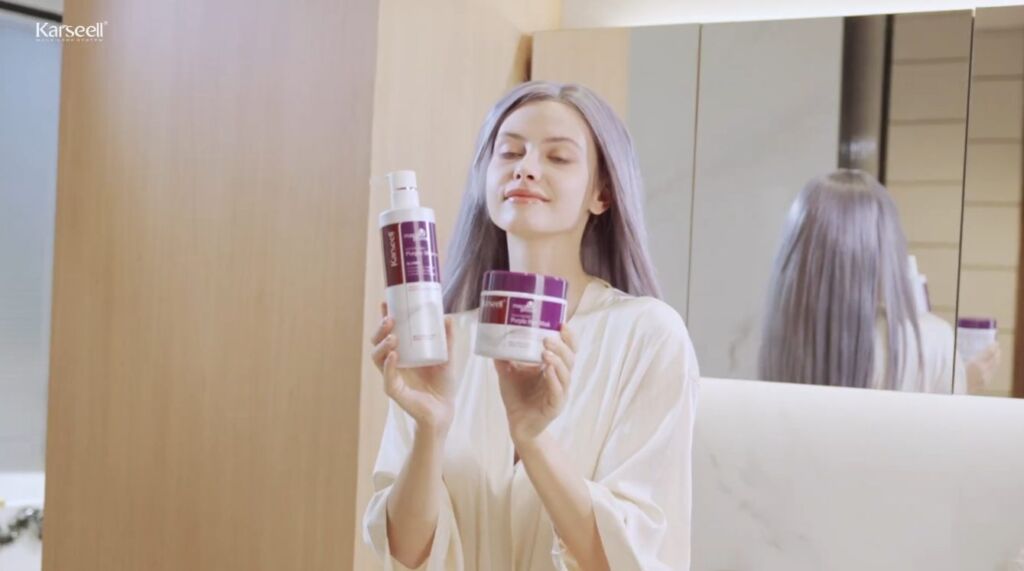
How to Use Purple Hair Mask Correctly
- Shampoo first: Clean hair absorbs the mask better
- Apply generously: Focus on the most brassiest areas (usually around the face and crown)
- Comb through: Ensures even distribution
- Cover with a shower cap: Heat helps open the cuticle for deeper penetration
- Leave for 5-20 minutes: Time depends on brass severity—start conservative
- Rinse cool: Cool water seals the cuticle and locks in tone
Common Mistakes to Avoid
- Leaving purple mask on “overnight”: This almost always causes over-toning. Follow product instructions.
- Using purple shampoo every single wash: Can cause dryness and a purple tint over time
- Not using conditioner after purple shampoo: Leads to brittle, dry hair
- Expecting instant results from purple shampoo: It’s maintenance, not magic—serious brass needs the mask
- Ignoring your hair’s porosity: High porosity hair absorbs pigment faster and may need less frequent treatments
Frequently Asked Questions
Can I use purple shampoo and purple mask on the same day?
Yes, but use them in the right order: shampoo first (with purple shampoo or regular shampoo), then apply the purple mask after rinsing. Don’t apply both at the same time—the mask will block the shampoo from cleaning your hair properly. Using both in one session is an intensive treatment ideal for when you need maximum brass correction.
Will purple shampoo or mask make my hair purple?
Not under normal circumstances. The violet pigment is very subtle and designed to cancel yellow/orange tones, not dye your hair purple. Over-use of purple mask (especially leaving it on too long) CAN cause a purple or gray tint, particularly on very light blonde hair. Start with shorter processing times and increase gradually.
Which is better for maintaining balayage?
For balayage (where you have roots, natural color, and lightened sections), a combination approach works best. Use purple mask on the lightest sections weekly, and purple shampoo throughout to maintain overall tone. This prevents the root area from over-toning while keeping your highlights brass-free. Our purple mask is specifically formulated for this multi-tonal approach.
Can I use purple shampoo on dark hair?
Purple shampoo is primarily designed for blonde, platinum, silver, gray, or lightened brown hair. On dark hair, it won’t be very visible and isn’t necessary. If you have dark hair with subtle warm tones you want to neutralize, a purple shampoo won’t have enough pigment to make a difference. Some people with dark brown hair use purple shampoos for subtle enhancement, but it’s not effective for brass removal on darker bases.
How long does the brass-removing effect last?
This depends on your hair’s porosity, exposure to sun/chlorine/swimming pools, and how often you shampoo. With consistent use of purple shampoo and weekly masks, you can maintain a brass-free tone indefinitely. Without maintenance, brass typically starts returning within 2-4 weeks as new hair grows and oxidation occurs.
Your Brass-Free Blonde Journey Starts Here
When it comes to purple shampoo vs purple mask, the verdict is clear: you need both. The mask provides intensive treatment for existing brass, while the shampoo maintains your tone between treatments. This dynamic duo is the secret to keeping your blonde, silver, or pastel hair looking its absolute best.
Ready to banish brass for good? Discover our premium Karseell Purple Hair Mask for deep brass correction combined with scalp-nourishing benefits. For your daily maintenance routine, pair it with our complete purple shampoo guide to keep your blonde looking fresh, vibrant, and brass-free.
