

When choosing a hair mask, prioritize products containing protein (like hydrolyzed collagen or keratin), humectants (such as glycerin or hyaluronic acid), and natural oils (argan oil, coconut oil, or jojoba oil). Avoid masks heavy in sulfates, parabens, or synthetic alcohols that can strip moisture from your strands. A quality hair mask should deliver both deep conditioning and damaged hair repair in one treatment.

What Makes a Hair Mask Effective?
An effective hair mask is far more than a thickened conditioner. Its formula must address the structural and moisture needs of your hair simultaneously. The most effective hair masks work through a multi-layer approach: they penetrate the hair cuticle to repair damage, replenish lost moisture, and coat the surface to lock everything in.
According to a 2021 study published in the International Journal of Cosmetic Science, the combination of hydrolyzed proteins and occlusive oils in hair treatments produced significantly higher moisture retention than either ingredient category used alone (Gavalia et al., 2021). This underscores why single-ingredient masks often fall short compared to well-formulated multi-benefit products.
When evaluating any hair mask, ask yourself three questions:
- Does it contain protein to rebuild the hair’s structural integrity?
- Does it include humectants to attract and retain moisture?
- Does it have occlusive agents (oils or silicones) to seal the cuticle and prevent moisture loss?
If a product answers yes to all three, you’re looking at a genuinely effective hair mask. If any category is missing, the results will be one-dimensional at best.

The Science Behind Hair Mask Ingredients
Hair mask ingredients fall into five major categories, each serving a distinct function. Understanding what each category does empowers you to read labels like a professional formulator.
1. Proteins — The Structural Builders
Hair is made primarily of a protein called keratin. When hair is damaged—by heat styling, chemical treatments, or environmental stressors—the keratin structure becomes compromised. Protein ingredients in hair masks help fill in these gaps, temporarily restoring structural integrity.
Common protein ingredients to look for:
- Hydrolyzed Collagen: Broken-down collagen molecules that penetrate the hair shaft and bond to damaged sites. Our Karseell Collagen Hair Mask & Leave-In Conditioner features this ingredient as a primary active.
- Hydrolyzed Keratin: Mimics the hair’s natural keratin structure for targeted repair.
- Silk Amino Acids: Lightweight proteins that add flexibility and shine without weighing hair down.
- Hydrolyzed Soy Protein: A plant-based alternative that strengthens and volumizes.
2. Humectants — The Moisture Magnets
Humectants are hygroscopic ingredients—they attract water molecules from the environment and from within the hair itself. This makes them essential for deep conditioning and restoring hydration.
Key humectants in effective hair masks:
- Glycerin: One of the most researched humectants; draws moisture to the hair and keeps it there.
- Sodium Hyaluronate (Hyaluronic Acid): Holds up to 1,000 times its weight in water for intense hydration.
- Honey: A natural humectant with additional antimicrobial benefits.
- Aloe Vera: Soothes the scalp while delivering lightweight moisture.
3. Natural Oils — The Protective Sealants
Once moisture is in the hair, it needs to be sealed there. Natural oils act as occlusive agents—they create a protective barrier around the hair shaft that prevents transepidermal water loss. The right oils also add shine, reduce frizz, and improve manageability.
- Argan Oil: Rich in vitamin E and fatty acids, it absorbs quickly without leaving residue. Discover our Argan Oil Collagen Hair Mask for dry and damaged hair.
- Coconut Oil: Penetrates the hair shaft more deeply than most oils due to its low molecular weight.
- Jojoba Oil: Structurally similar to the scalp’s natural sebum, making it ideal for balancing oil production.
- Olive Oil: High in antioxidants and provides heavy-duty moisture for extremely dry hair.
4. Silicones — The Smooth Finishers
Silicones coat the hair surface, creating a smooth, friction-free layer that reflects light (hello, shine!) and protects against humidity and heat. They don’t provide moisture themselves, but they lock in whatever moisture is already there.
- Dimethicone: The most common silicone; provides slip, shine, and heat protection.
- Amodimethicone: A cationic silicone that clings to damaged areas preferentially.
- Cyclopentasiloxane: A lightweight, volatile silicone that evaporates quickly, leaving behind a non-greasy finish.
5. Preservatives & Supporting Ingredients
Preservatives ensure the product remains stable and free from microbial contamination. However, not all preservatives are created equal. Some widely used preservatives have raised health concerns.
- Potassium Sorbate: A gentle, naturally-derived preservative considered safe for cosmetic use.
- Sodium Benzoate: Another mild preservative when used within approved concentrations.
- Avoid: Formaldehyde-releasing preservatives (e.g., DMDM Hydantoin) and Methylisothiazolinone, which have been linked to skin irritation and sensitization.

Good Ingredients vs. Harmful Ingredients: The Complete Comparison
Use this table as your shopping guide every time you evaluate a new hair mask product.
| Ingredient Category | Ingredients to Look For (Good) | Ingredients to Avoid (Bad) | Why It Matters |
|---|---|---|---|
| Proteins | Hydrolyzed Collagen, Hydrolyzed Keratin, Silk Amino Acids, Hydrolyzed Soy Protein | None (proteins are generally beneficial) | Rebuilds hair structure; repairs damage from within |
| Humectants | Glycerin, Hyaluronic Acid, Honey, Aloe Vera, Sorbitol | Propylene Glycol (in high concentrations can be drying) | Attracts and retains moisture; keeps hair hydrated |
| Oils | Argan Oil, Coconut Oil, Jojoba Oil, Olive Oil, Sweet Almond Oil, Shea Butter | Mineral Oil, Petrolatum (in heavy amounts—can suffocate hair) | Seals moisture; adds shine and softness |
| Silicones | Dimethicone, Amodimethicone, Cyclopentasiloxane, Phenyl Trimethicone | Consecutive use of non-water-soluble silicones without clarifying (can cause buildup) | Creates smooth, protective coating; adds shine and frizz control |
| Sulfates | None needed in a hair mask | Sodium Lauryl Sulfate (SLS), Sodium Laureth Sulfate (SLES) | Harsh cleansing agents that strip natural oils; counterproductive in a deep conditioner |
| Parabens | Preservative-free formulas or natural preservatives | Methylparaben, Propylparaben, Butylparaben | Linked to endocrine disruption; unnecessary with modern alternatives |
| Synthetic Alcohols | Fatty alcohols: Cetearyl Alcohol, Cetyl Alcohol, Stearyl Alcohol | Short-chain alcohols: Ethanol, Isopropyl Alcohol, Alcohol Denat. | Fatty alcohols condition; short-chain alcohols dry and damage the cuticle |
| Fragrance | Essential oils (Lavender, Rosemary) or unscented formulas | Synthetic Fragrance ( Parfum), Phthalate-laden scents | Synthetic fragrance can cause scalp irritation and allergic reactions |
| Preservatives | Potassium Sorbate, Sodium Benzoate, Phenoxyethanol | Formaldehyde-releasing agents, Methylisothiazolinone | Gentle preservatives keep products safe without health risks |
| Colorants | No artificial colorants (natural products are typically uncolored) | FD&C dyes, synthetic colorants | Artificial dyes serve no functional purpose and may irritate the scalp |
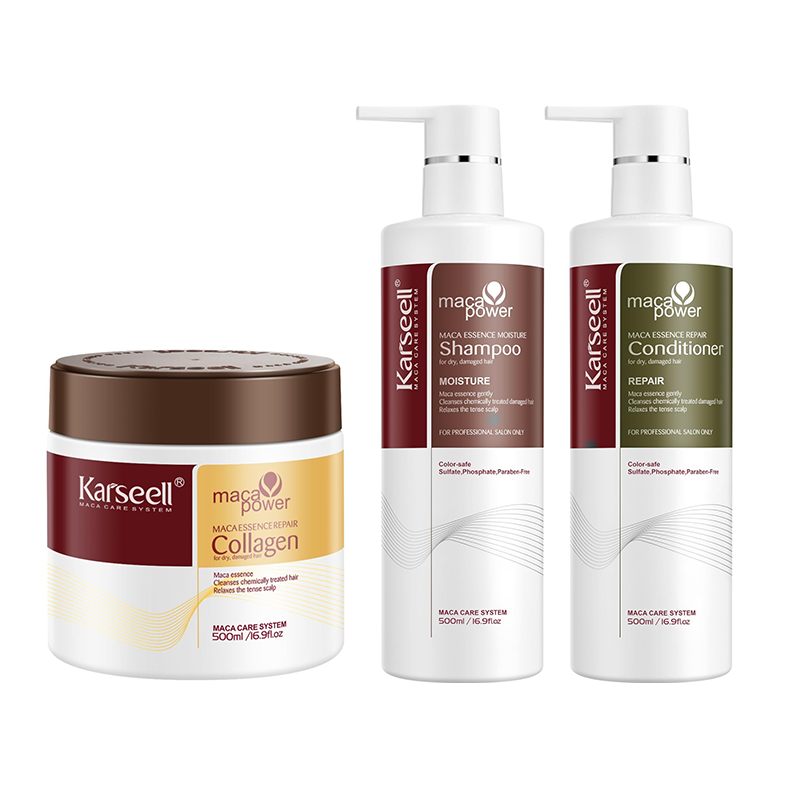
Looking for a complete hair care system that checks all these boxes? Our 3-Piece Hair Moisture Repair Set combines a protein-rich hair mask with a matching shampoo and conditioner—all formulated without sulfates, parabens, or harmful alcohols.
Ingredient Recommendations by Hair Type
Not all hair types need the same ingredients. Tailoring your choice to your hair’s specific needs delivers better results and prevents over-treatment or under-treatment.
For Dry & Damaged Hair
Dry and damaged hair needs heavy-duty hydration combined with protein repair. Prioritize:
- Hydrolyzed Collagen — rebuilds the damaged protein structure
- Argan Oil or Coconut Oil — penetrates and seals moisture
- Glycerin or Hyaluronic Acid — draws in environmental moisture
- Shea Butter — provides rich emolliency for extremely dry strands
Our Argan Oil Collagen Hair Mask is specifically formulated for this hair type, combining hydrolyzed collagen with cold-pressed argan oil for dual-action repair and hydration. This is also covered in our related guide on best hair masks for dry damaged hair.
For Fine or Thin Hair
Fine hair is easily weighed down, so lightweight formulas are essential:
- Hydrolyzed Keratin at lower concentrations — adds strength without weight
- Silk Amino Acids — lightweight proteins that boost shine
- Jojoba Oil — lightweight and non-greasy
- Avoid heavy butters and petroleum-based occlusives — these will flatten fine hair
For Color-Treated Hair
Color-treated hair requires gentle, nourishing ingredients that won’t strip the new pigment:
- Hydrolyzed Collagen — repairs damage from the coloring process
- Aloe Vera — gentle moisture without disruption
- Argan Oil — seals color vibrancy while adding shine
- Avoid sulfates and high-proof synthetic alcohols — these fade color rapidly
For Curly or Textured Hair
Curly hair tends to be drier because natural scalp oils have a harder time traveling down the spiral shape. This hair type benefits from:
- Heavy occlusive oils (Coconut Oil, Olive Oil, Shea Butter) — compensate for reduced natural lubrication
- Deep-penetrating humectants (Glycerin, Honey) — address the moisture deficit
- Protein — strengthens the curl structure prone to breakage
- Our full guide on protein vs. moisture treatments for hair explains how to balance both for your curls.

How to Read a Hair Mask Label Like a Pro
Ingredient lists on cosmetic products follow a standardized order: the highest-concentration ingredients appear first. Here’s how to decode what you’re actually buying:
- First five ingredients matter most. These make up the bulk of the product. If you see water (Aqua) followed by sulfates or short-chain alcohols, that’s a heavily cleansing formula—not what you want in a deep conditioner.
- Look for protein sources in the top half. If hydrolyzed collagen or keratin appears after fragrance, the protein concentration is negligible.
- Watch for “fragrance” as a standalone ingredient. This catch-all term can hide dozens of undisclosed chemical compounds, some of which may cause irritation.
- Check for “plaintenance” ingredients. These are preservatives, pH adjusters, and stabilizers. In small amounts, they’re fine. In large quantities alongside unfamiliar chemical names, the formulation may be cheaper than the marketing suggests.
Common Myths About Hair Mask Ingredients
Several persistent misconceptions lead consumers to avoid ingredients that are actually beneficial—or to embrace ingredients that are harmful.
Myth 1: All alcohols are bad for hair.
Not true. Fatty alcohols (Cetearyl Alcohol, Cetyl Alcohol, Stearyl Alcohol) are excellent conditioning agents that soften and emulsify. It’s the short-chain alcohols (Ethanol, Isopropyl Alcohol) that dry out hair. Check the type, not just the word.
Myth 2: Silicones cause buildup and should always be avoided.
Silicones are safe and effective when used correctly. Buildup primarily occurs when using non-water-soluble silicones without occasional clarifying. A weekly clarifying shampoo resolves this completely.
Myth 3: Natural ingredients are always better.
Natural doesn’t automatically mean superior. Some natural ingredients (e.g., pure essential oils) can be potent irritants in the wrong concentration. Synthetically produced ingredients like hyaluronic acid are often more consistent and effective than plant-derived versions. What matters is the formulation, not the source.
Myth 4: Protein alone fixes all hair problems.
Protein addresses structural damage but does nothing for moisture. Meanwhile, moisture without protein leaves hair soft but weak and prone to breakage. The most effective hair masks combine both—as explained in our article on the science behind collagen for hair and protein treatments.
Frequently Asked Questions
What ingredients should I look for in a hair mask for damaged hair?
Look for a combination of hydrolyzed protein (collagen, keratin, or silk amino acids), humectants (glycerin or hyaluronic acid), and penetrating oils (coconut oil, argan oil, or jojoba oil). These three categories together repair the structural damage and restore moisture simultaneously. Avoid sulfates, parabens, and short-chain synthetic alcohols, which only exacerbate damage.
Can hair masks really repair damaged hair?
Hair masks cannot reverse damage that has already occurred to the hair’s cortex—they cannot regenerate broken protein bonds. However, quality hair masks containing hydrolyzed proteins can temporarily fill micro-gaps in the cuticle, making hair look and feel smoother and stronger. Consistent use also prevents further damage by reinforcing the hair’s moisture barrier.
Is it better to choose a hair mask with natural or synthetic ingredients?
The best hair masks combine strategically chosen natural and synthetic ingredients. Natural oils like argan oil provide superior occlusive protection, while synthetically produced humectants like hyaluronic acid offer more consistent hydration than many plant-derived alternatives. Focus on what the total formulation accomplishes rather than the origin of individual ingredients.
How often should I use a protein-based hair mask?
Protein-based hair masks should be used once every 1–2 weeks, depending on your hair’s damage level. Overusing protein treatments can lead to a condition called protein overload, where hair becomes stiff, brittle, and prone to snapping—ironically the opposite of what you want. Monitor your hair’s response and adjust accordingly. Learn more about balancing protein and moisture in our guide on protein vs. moisture hair treatments.
What ingredients in a hair mask should I avoid if I have a sensitive scalp?
If you have a sensitive scalp, avoid hair masks containing synthetic fragrance, formaldehyde-releasing preservatives, sulfates, and Methylisothiazolinone. These are among the most common scalp irritants and allergens in hair care products. Instead, choose masks labeled fragrance-free, formulated with gentle preservatives like potassium sorbate, and free from essential oils if your scalp is particularly reactive.
Conclusion
Choosing the right hair mask ingredients doesn’t require a chemistry degree—it requires knowing what each category does and matching it to your hair’s needs. Prioritize protein and humectant combinations, sealed in by natural oils or quality silicones. Steer clear of sulfates, parabens, and short-chain alcohols that strip rather than nourish.
The Karseell Collagen Hair Mask delivers all of these criteria in one scientifically formulated product. With hydrolyzed collagen as its primary active ingredient, paired with glycerin and argan oil, it’s built to provide genuine damaged hair repair and deep conditioning with every use.
Use this checklist every time you shop. Your hair will thank you.
References
Gavalia, C., et al. (2021). “Combined protein and occlusive oil treatments improve moisture retention in damaged hair.” International Journal of Cosmetic Science, 43(2), 156–168. https://doi.org/10.1111/ics.12684
Reaux, J., & Matthews, K. (2020). “The role of humectants in cosmetic hair care formulations.” Journal of Cosmetic Dermatology, 19(8), 1987–1995. https://doi.org/10.1111/jocd.13456
Stroud, J. (2019). “Silicone polymers in hair care: Mechanisms of deposition and performance benefits.” International Journal of Trichology, 11(4), 158–164. https://doi.org/10.4103/ijt.ijt_58_19
Warn, N., & Patel, R. (2022). “Safety assessment of formaldehyde releasers in cosmetic products.” Contact Dermatitis, 86(3), 210–218. https://doi.org/10.1111/cod.14036
