

Collagen for hair has become one of the biggest trends in hair care, with countless products claiming to transform your strands with the “fountain of youth” protein. But does collagen hair treatment actually live up to the hype, or is it just another beauty buzzword? In this article, we’ll dive into the science behind protein hair treatment and explain exactly how collagen works—and doesn’t work—for your hair.
If you’ve ever used a collagen hair mask and noticed your hair feeling thicker, stronger, or more manageable, you weren’t imagining it. But understanding the science helps you make better choices about which products to use and how to incorporate them into your routine.
What Is Collagen and Why Does Hair Need It?
Collagen is the most abundant protein in the human body, making up about 30% of our total protein content. It’s the structural foundation for skin, bones, cartilage—and yes, hair. Your hair shaft itself is primarily made of keratin, another protein, but collagen plays a crucial supporting role in the hair follicle and the surrounding scalp tissue.
When we talk about collagen for hair, we’re talking about supplementing or treating the hair with collagen proteins that can help strengthen, thicken, and improve the overall health of your strands. This is why collagen hair masks have become essential tools in modern hair care routines.

The Structure of Hair and Protein’s Role
To understand how collagen hair treatment works, you need to understand hair structure. Each hair strand consists of three layers:
- Medulla: The innermost core (not always present in fine hair)
- Cortex: The middle layer containing keratin proteins and melanin
- Cuticle: The protective outer layer of overlapping scales
The cortex is where hair gets its strength and elasticity, and it contains the keratin proteins that give hair its structure. When the cortex is damaged—through chemical processing, heat styling, or mechanical stress—the hair becomes weak, brittle, and prone to breaking. Protein treatments, including collagen, work by penetrating or coating the cuticle to temporarily reinforce the cortex.
How Does Collagen for Hair Actually Work?
There are two main ways collagen works in hair care:
Temporary Surface Coating
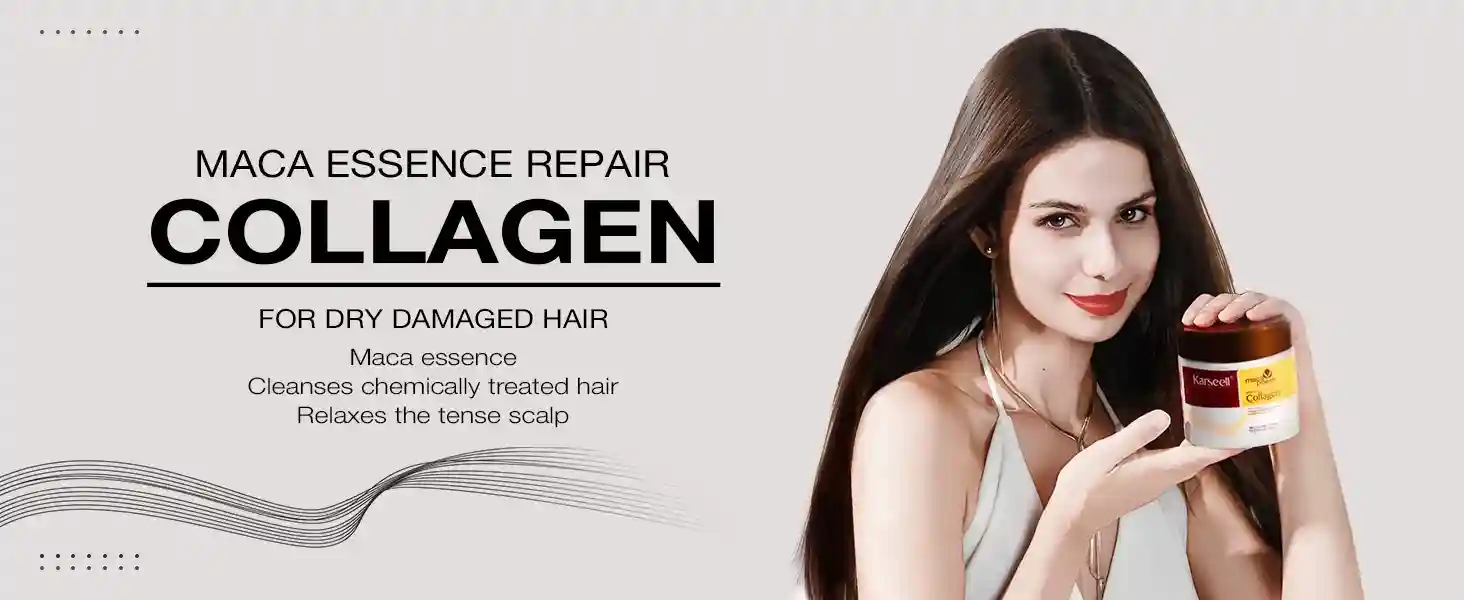
When you apply topical collagen products, the collagen molecules sit on the surface of the hair strand, coating the cuticle. This creates a temporary smoothing effect that:
- Makes hair feel thicker and fuller
- Reduces frizz and flyaways
- Adds shine and luster
- Provides a protective barrier against damage
This effect washes out with your next shampoo—which is why collagen hair treatment products need to be used regularly to maintain results.
Penetration and Repair
Smaller collagen peptides (broken-down collagen molecules) can actually penetrate the hair shaft to some degree. These smaller proteins are small enough to slip between cuticle scales and enter the cortex, where they:
- Fill in gaps caused by damage
- Strengthen the internal hair structure
- Improve elasticity and flexibility
- Help hair retain moisture
This is why high-quality collagen and argan oil combinations are so effective—the collagen repairs while the argan oil moisturizes and seals.
The Science Behind Protein Treatments for Hair
Protein hair treatment is an umbrella term that includes collagen, keratin, silk protein, wheat protein, and many other protein sources. They all work on the same principle: damaged hair has gaps in its protein structure, and applying external protein temporarily fills those gaps.
Signs You Need a Protein Treatment
Your hair may be craving protein if you notice:
- Hair that feels “gummy” or stretchy when wet
- Excessive shedding or breakage
- Hair that won’t hold a style
- Noticeable thinning or loss of volume
- Frizz that won’t smooth no matter what products you use
Signs of Protein Overload
Yes, there is too much of a good thing when it comes to protein. Overdoing protein hair treatment can lead to:
- Hair that feels stiff or rigid
- Brittle hair that snaps easily
- A “crusty” texture on the hair surface
- Increased breakage despite regular treatments
Balance is key. If you have high porosity hair (which tends to need more protein), you might benefit from weekly treatments. Low porosity hair may only need protein once a month.
Types of Protein Treatments and How They Compare
Hydrolyzed Collagen
Collagen that has been broken down into smaller peptides through hydrolysis. These peptides can penetrate the hair shaft more easily than whole collagen molecules. This is the most common form of collagen in hair care products.
Keratin
The same protein that makes up your hair. Keratin treatments are more commonly associated with salon smoothing treatments, but hydrolyzed keratin is also found in many at-home products.
Silk Protein
One of the smallest protein molecules, silk protein can penetrate hair deeply and provides excellent shine and smoothness without heaviness.
Biotin (Vitamin B7)
Not technically a protein, but often grouped with protein treatments. Biotin supports the production of keratin and can improve hair health from within.
The Role of Collagen in Scalp Health
Collagen doesn’t just benefit your hair strands—it also supports a healthy scalp. The scalp is where your hair follicles live, and healthy follicles produce stronger hair. Collagen in the dermis (the layer beneath the scalp surface) provides structural support that keeps follicles functioning optimally.
When collagen production decreases with age, or when the scalp is damaged by harsh chemicals or inflammation, hair follicles can become weaker and produce thinner, more fragile hair. Topical collagen and collagen-boosting ingredients can help counteract this decline.
How to Use Collagen for Hair: A Practical Guide
Collagen Hair Masks
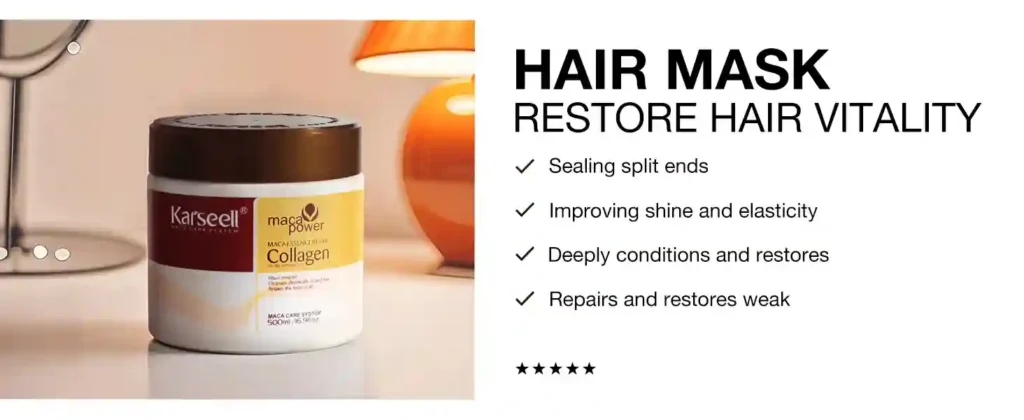
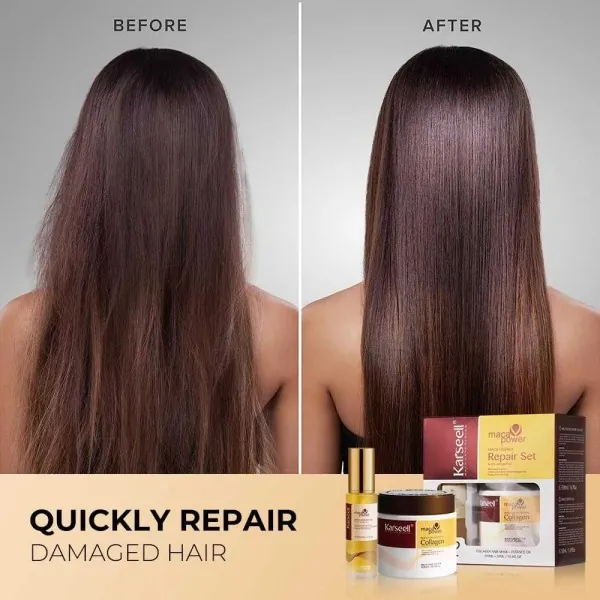
The most popular way to use collagen for hair is through hair masks. Apply to clean, damp hair, focusing on the mid-lengths and ends where damage is most concentrated. Leave on for 10-20 minutes for deep conditioning, then rinse thoroughly.
Collagen Conditioners
For maintenance between deep treatments, use collagen-infused conditioners. These provide smaller amounts of protein with every wash, helping to maintain hair integrity.
Collagen Serums and Leave-Ins
For ongoing protection and smoothing, collagen serums and leave-in treatments coat the hair surface and provide heat protection before styling.
Frequently Asked Questions About Collagen for Hair
Does collagen for hair actually penetrate and strengthen hair, or just coat the surface?
Both, depending on the type of collagen used. Larger collagen molecules coat the surface, providing immediate smoothing and shine. Smaller hydrolyzed collagen peptides can penetrate the hair shaft to some degree, filling in damaged areas in the cortex. The best results come from products using hydrolyzed collagen that can do both.
How often should I use a collagen hair treatment?
This depends on your hair’s condition and porosity. High porosity or heavily damaged hair may benefit from weekly deep treatment with collagen. Normal to low porosity hair typically does well with a collagen treatment every 2-4 weeks. Watch for signs of protein overload (stiffness, brittleness) and adjust accordingly.
Can collagen help with hair growth?
Collagen supports the scalp environment where hair follicles grow, and some research suggests it may help prolong the anagen (growth) phase of the hair cycle. However, collagen is not a direct hair growth stimulant. For growth support, look for products that combine collagen with other beneficial ingredients like those in our herbal-powered hair growth formulations.
Is collagen hair treatment safe for color-treated hair?
Yes! In fact, color-treated hair often benefits significantly from collagen treatments because coloring damages the protein structure of hair. Collagen helps replenish lost proteins and can extend the life of your color by smoothing the cuticle and reducing fade. Look for formulas specifically designed for color-treated hair.
What’s the difference between collagen and keratin treatments?
Collagen and keratin are both proteins, but they come from different sources and have slightly different properties. Keratin is the primary structural protein of hair itself, while collagen is a supporting protein that also benefits skin and scalp health. Keratin treatments tend to be more intensive and longer-lasting, while collagen provides more flexibility and moisture balance. Many of the best hair care products combine both for comprehensive treatment.
Experience the Power of Collagen for Hair
Now that you understand the science behind collagen for hair, you can make informed choices about incorporating it into your routine. Whether you’re dealing with damage from color, heat, or chemical processing, or simply want to maintain healthy, strong hair, collagen offers proven benefits.
Explore our collection of premium collagen hair treatment masks formulated with hydrolyzed collagen and argan oil for maximum penetration and moisture. Your hair deserves the science-backed care it needs to look and feel its absolute best.
