

Finding the best hair masks by hair type can feel like searching for a needle in a haystack. What works wonders for your best friend’s thick, curly hair might completely weighing down your fine, straight strands. In this comprehensive 2026 guide, we’ll break down exactly which hair masks work best for every hair type—from dry and damaged to fine and thinning—so you can make informed decisions and get real results.
Why Hair Type Matters When Choosing a Mask
Not all hair masks are created equal, and understanding your hair porosity and type is essential for choosing the right product. A mask that’s too heavy for fine hair will leave it limp and greasy, while a too-light formula won’t penetrate thick, coarse hair at all.
The key is matching the mask’s ingredients and texture to your hair’s specific needs. Let’s dive into recommendations for every hair type.

Best Hair Mask for Dry and Damaged Hair
Dry and damaged hair needs intensive moisture and repair. This hair type typically shows signs like:
- Frizz and flyaways
- Split ends
- Dull, lackluster appearance
- Tangled easily
- Feels rough or straw-like
Recommended: Karseell Collagen Hair Mask with Argan Oil
For dry damaged hair, the Karseell Collagen Hair Mask is an excellent choice. Its combination of hydrolyzed collagen and cold-pressed argan oil delivers both protein reinforcement and deep moisturizing.
Why it works:
- Collagen penetrates damaged cuticles to rebuild from within
- Argan oil provides essential fatty acids for lasting hydration
- Free from sulfates and parabens that can further dry out hair
- Suitable for all hair types, including color-treated hair
How to Use for Maximum Repair
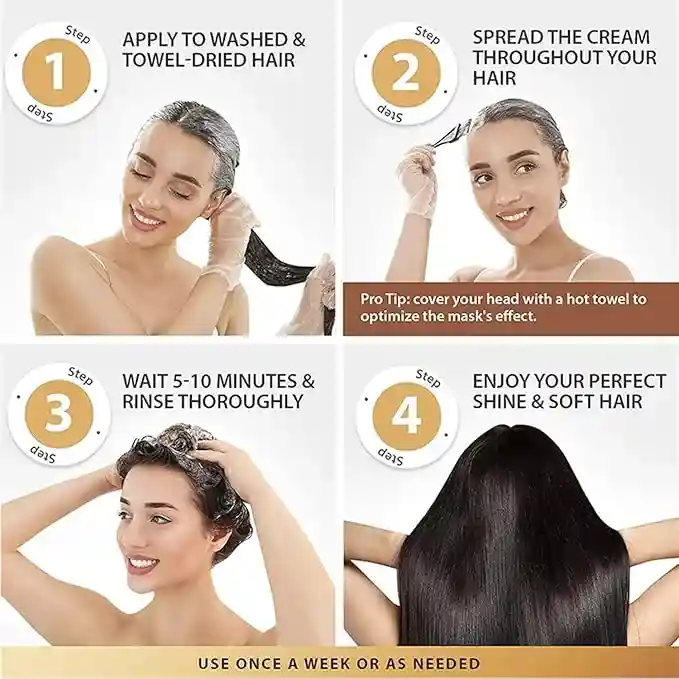
For severely damaged hair, try this intensive routine:
Step 1: Apply mask to clean, damp hair
Step 2: Cover with a shower cap and apply heat using a hairdryer for 10 minutes
Step 3: Let cool for 5 minutes to allow penetration
Step 4: Rinse with cool water to seal the cuticle
Best Hair Mask for Fine and Thin Hair
If you have fine or thin hair, you’ve probably been told to avoid heavy hair masks. Here’s the truth: fine hair still needs moisture and repair, but you need to choose wisely.
Signs You Have Fine or Thin Hair
- Hair appears flat even right after washing
- You can easily feel individual strands
- Hair lacks volume
- Products sink in immediately (sometimes too quickly)
- Looks oily by afternoon even when freshly washed
Recommended: Lightweight Collagen Formulas
Look for masks labeled as “lightweight,” “volume,” or “fine hair.” The Karseell Collagen formula is actually well-suited for fine hair because hydrolyzed collagen molecules are small enough not to weigh hair down.
Application Tips for Fine Hair
- Apply only from mid-lengths to ends—never at the scalp
- Use a smaller amount than you think you need
- Focus on the ends where damage is usually worst
- Rinse thoroughly to avoid any residue

Best Hair Mask for Thick and Coarse Hair
Thick, coarse hair has its own set of challenges. The natural oils from your scalp have a harder time traveling down long, thick strands, often leaving the mid-lengths and ends dry.
Signs You Have Thick or Coarse Hair
- Takes a long time to dry
- Hard to saturate with water or products
- Feels wire-like or rough when untreated
- Requires significant force to detangle
- Large diameter of individual hair strands
Recommended: Rich, Heavy Moisture Masks
Thick hair benefits from masks rich in:
- Shea butter or cocoa butter
- Coconut oil
- Deep-penetrating argan oil
- Protein for strength (but not too much—you don’t want stiffness)
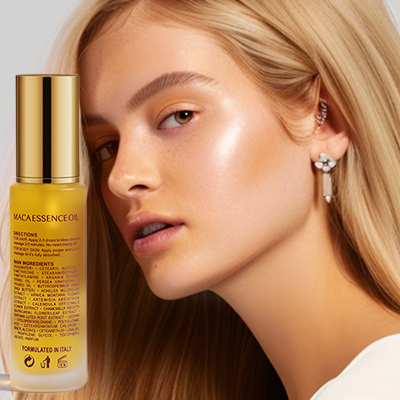
The collagen and argan oil combination is particularly effective for coarse hair because the collagen provides structure while argan oil delivers intense moisture without feeling greasy.
Best Hair Mask for Curly and Textured Hair
Curly hair is naturally drier because the oils from your scalp have a harder time traveling down the spiral-shaped shaft. Curly and textured hair types often need the most intensive moisture.
Signs You Have Curly or Textured Hair
- Hair forms loops or waves when air-dried
- Prone to frizz, especially in humidity
- Loses definition throughout the day
- Can feel crunchy or stiff when over-processed
- Natural oils don’t reach ends easily
Recommended: Deep Conditioning Masks with Slip
Look for masks that:
- Provide intense hydration
- Offer slip for easier detangling
- Define curls without stiffness
- Reduce frizz for up to several days
The LOC Method for Curly Hair
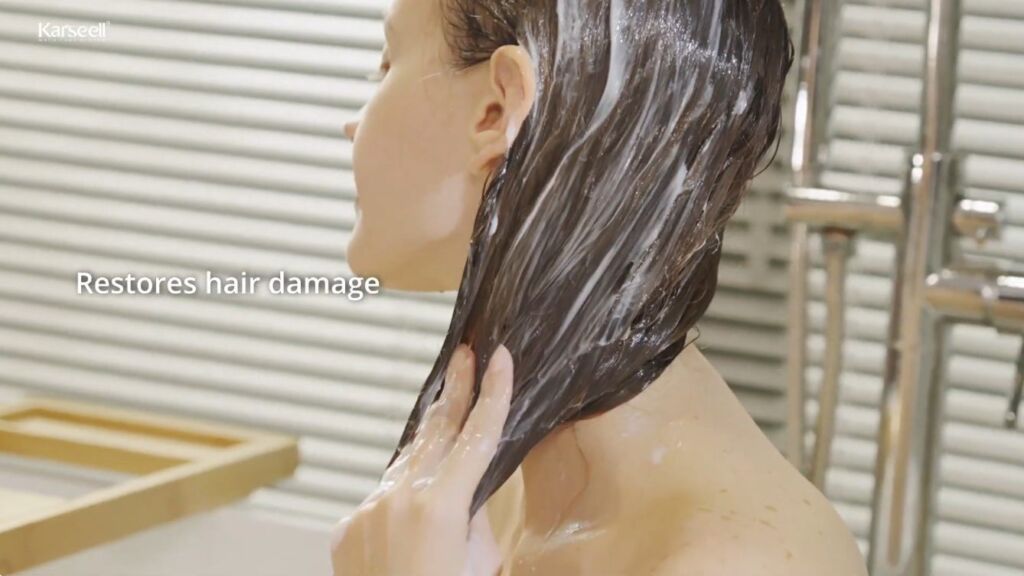
Many with curly hair use the LOC method (Liquid, Oil, Cream) for maximum moisture:
Liquid: Leave-in conditioner or water-based product
Oil: Argan oil or similar for sealing
Cream: Rich hair mask or styling cream
Best Hair Mask for Color-Treated Hair
Bleaching, dyeing, and chemical treatments strip your hair’s natural proteins and moisture. Color-treated hair needs special care to maintain both the color and the hair’s structural integrity.
Signs Your Color-Treated Hair Needs Repair
- Color fading faster than usual
- Breakage near the scalp or mid-lengths
- Brittle, straw-like texture
- Porous ends that feel rough
- Dull, flat color appearance
Recommended: Protein-Rich, Color-Safe Formulas
For color-treated hair, the Karseell Purple Hair Mask is an excellent choice for blonde and silver hair. It neutralizes yellow tones while providing deep conditioning.
Key ingredients to look for:
- Keratin or silk proteins for bond repair
- Anthocyanins (for purple masks) to neutralize brassy tones
- UV filters to prevent future fading
- Moisturizers that won’t strip color

Best Hair Mask for Oily Scalp
Having an oily scalp but dry ends is one of the most challenging combinations. You need moisture without adding oil at the roots.
Signs You Have an Oily Scalp
- Hair looks greasy by midday
- Buildup at the scalp within 24 hours of washing
- Flakiness that could be confused with dry scalp
- Roots feel heavy or limp
Recommended: Lightweight Masks Applied Strategically
For this hair type:
- Apply masks only to mid-lengths and ends
- Use lighter gel or watery textures rather than heavy creams
- Consider protein-free formulas if your hair is also limp
- Use a clarifying shampoo before applying a mask
Avoid These Ingredients
- Heavy oils (coconut oil, olive oil) at the scalp
- Butters that don’t absorb well
- Greasy silicones that add weight
Best Hair Mask for Damaged Hair from Heat Styling
Constant use of flat irons, curling irons, and blow dryers causes cumulative damage. Even heat protectants can’t fully prevent damage from high temperatures.
Signs of Heat Damage
- Frizz that won’t smooth out
- Split ends appearing soon after trims
- Hair that looks healthy at roots but damaged at ends
- Changes in curl pattern (previously curly, now straight)
- Bubbling or roughness on individual strands
Recommended: Bond-Building and Protein Masks
Heat-damaged hair responds well to:
- Protein treatments to rebuild the hair’s structure
- Bond-building ingredients
- Regular deep conditioning to restore moisture
- Silk or argon oil for smoothness
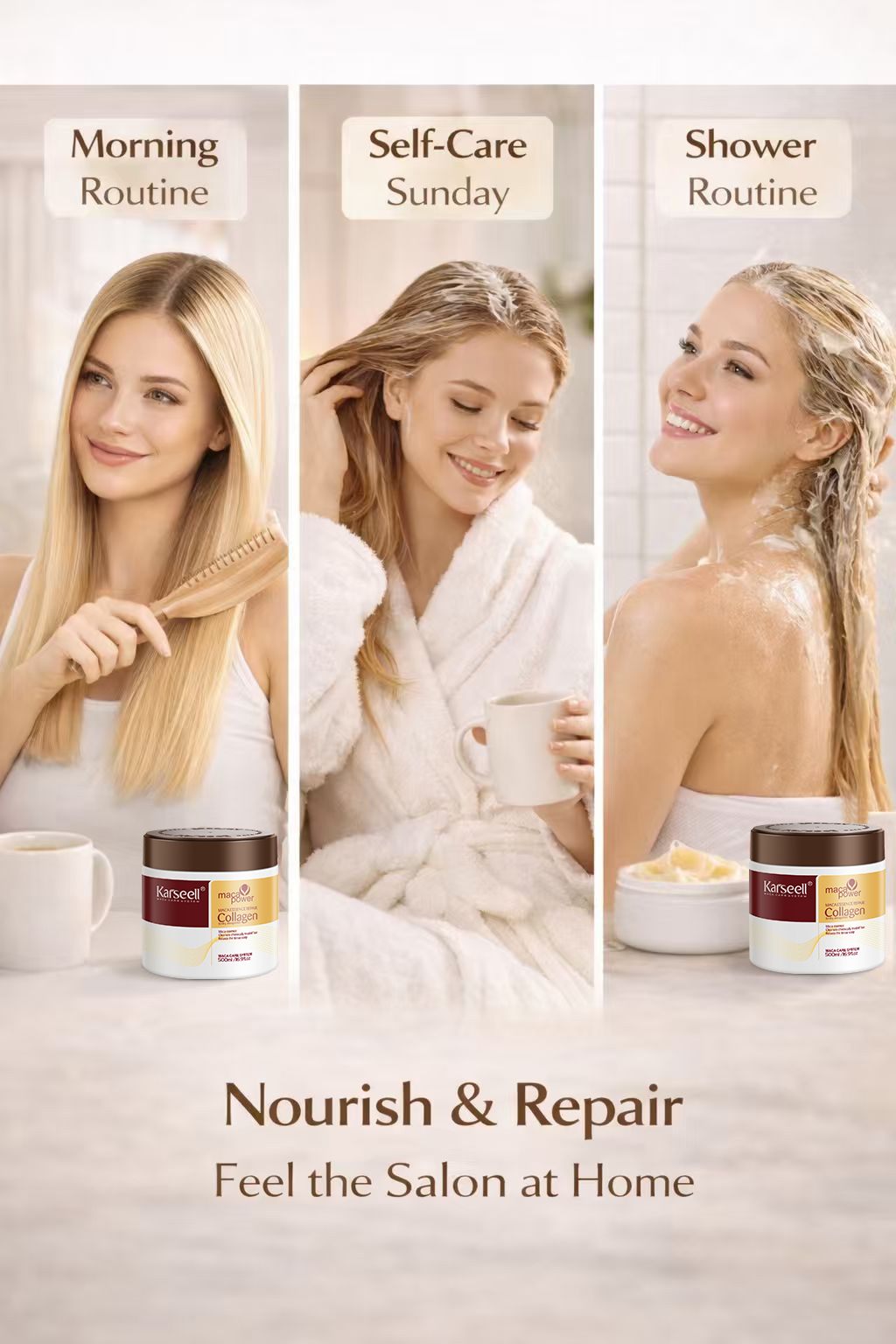
The Karseell collagen and argan oil mask addresses both the protein loss and moisture depletion from heat styling.

Quick Reference Guide
| Hair Type | Best Mask Type | Key Ingredients |
|---|---|---|
| Dry/Damaged | Deep Moisture | Argan oil, collagen, shea butter |
| Fine/Thin | Lightweight Protein | Hydrolyzed collagen, light silicones |
| Thick/Coarse | Rich Deep Conditioner | Butters, heavy oils, keratin |
| Curly/Textured | Slip-Forward Hydrating | Oils, humectants, styling agents |
| Color-Treated | Protein + Color-Safe | Keratin, UV filters, purple toners |
| Oily Scalp | Light Ends-Only | Lightweight moisturizers, no heavy oils |
| Heat Damaged | Bond-Building Protein | Collagen, keratin, argan oil |
Frequently Asked Questions
How often should I use a hair mask?
For most hair types, using a hair mask 1-2 times per week is ideal. Fine or thin hair may only need one weekly treatment, while thick, coarse, or heavily damaged hair can benefit from two weekly applications. Overusing hair masks, especially protein-rich ones, can lead to protein overload.
Can I use a hair mask for dry damaged hair every day?
No, using a hair mask every day is not recommended. Daily mask use can lead to protein overload, causing hair to become stiff, brittle, and more prone to breakage. Save intensive treatments for 1-2 times per week and use regular conditioner for daily moisture.
What’s the best hair mask for fine hair?
The best hair mask for fine hair is a lightweight formula with hydrolyzed proteins that won’t weigh hair down. Look for products specifically labeled as “volumizing” or “lightweight” and always apply from mid-lengths to ends only, avoiding the scalp area.
How long should I leave a hair mask on?
Most hair masks should be left on for 10-15 minutes. For intensive treatments on severely damaged hair, you can extend this to 30 minutes, optionally with heat. Leaving a mask on for too long (several hours or overnight) doesn’t improve results and may cause the opposite effect.
Should I use a hair mask before or after shampoo?
Hair masks should always be applied to clean hair because product buildup can prevent penetration. Shampoo first, then apply the mask from mid-lengths to ends. Some people prefer to skip conditioner on mask days since the mask provides more intensive treatment.
Ready to find your perfect match? Explore the full range of Karseell hair masks designed for every hair type and concern.
