

Ask anyone with curly hair about masks and you will hear the same complaint: they leave the hair heavy, shiny and flat, and the definition you had in the morning is gone by lunch. That is not a fault in your hair. It is usually a mask doing what it was designed to do, only too much of it, in the wrong place. Most of the fix is technique. Curly hair masks only work when the application matches the curl.
Why a mask flattens your curls
It helps to understand the mechanism, because “my mask flattens my curls” is really several different problems wearing the same coat.
What the cast actually is
When a rich, waxy or buttery product dries on hair, it forms a stiff film. On straight hair nobody notices. On curly hair that film is called a cast, and it is why a mask can remove the bounce from your hair in one wash. The cast holds the hair in whatever shape it dried in, so a curl that dried stretched stays that way instead of springing back.
There are two ways to end up with a cast: leaving a heavy mask in until it is dry, and using more product than the hair can hold, so the excess sits on the outside.
Why curl pattern and porosity change how much your hair can hold
Every head of hair has a finite capacity for product, and two things decide yours. Curl pattern changes how much surface you have to work with: coiled hair packs more fibre into the same area, so product spreads less easily and sits closer to the outside. Porosity decides how fast the hair takes water and product in. Low porosity hair has a tightly closed cuticle, so a rich mask stays on the surface and accumulates. High porosity hair drinks quickly and lets the product escape just as quickly.
That is why the same jar can suit one head of curls and disappoint the next, and why a good mask routine starts with the amount you use rather than the brand you buy. Our guide to what hair porosity is and why it matters helps you work out yours, and our walkthrough of building a curly hair routine covers how the steps fit together.
How to pick a mask that keeps volume
You can judge a mask before you buy it, but you have to read past the front of the bottle.
What to look for on the label
Three phrases matter more than the claims on the front. A product described as a leave-in is designed to stay in the hair and be used in small amounts, which is what curls want between washes. A product described as lightweight is built for hair that holds a lot of water. And all curl types is a manufacturer statement about curl pattern, more useful than a generic “for all hair types” line.
Two things to distrust on any label: “intense”, “deeply nourishing” and “salon grade” often describe the richness of the formula rather than its suitability for curls, and “detangles instantly” usually means “contains a heavy coating that will flatten you”.
The Karseell options side by side
| Product | Price | Rating | Reviews | Role on curly hair |
|---|---|---|---|---|
| Karseell Curl-Defining Repair Cream | $18.99 | 5.00 out of 5 | 226 | A styling cream that adds body and hold without a heavy finish |
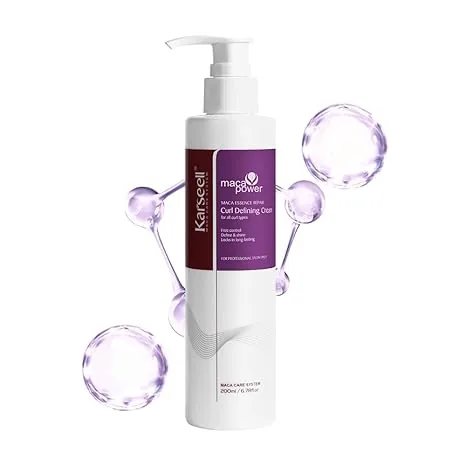
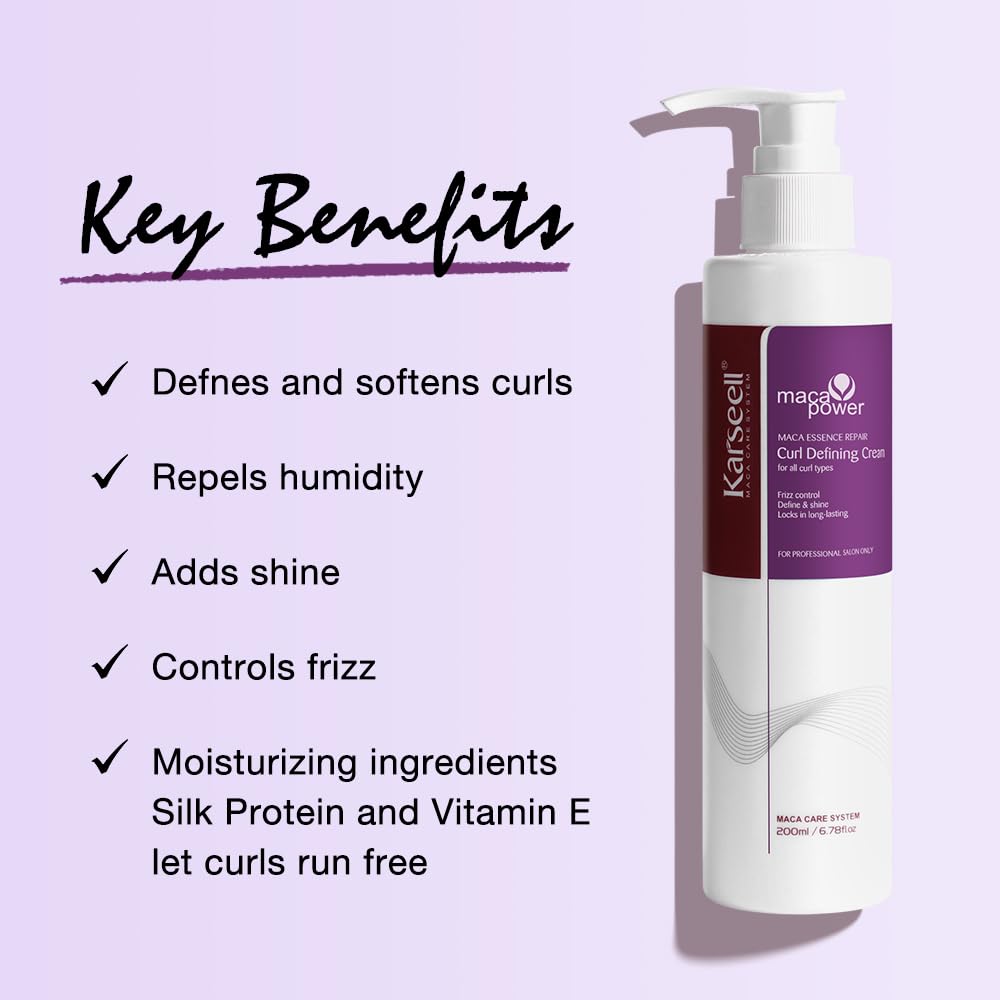
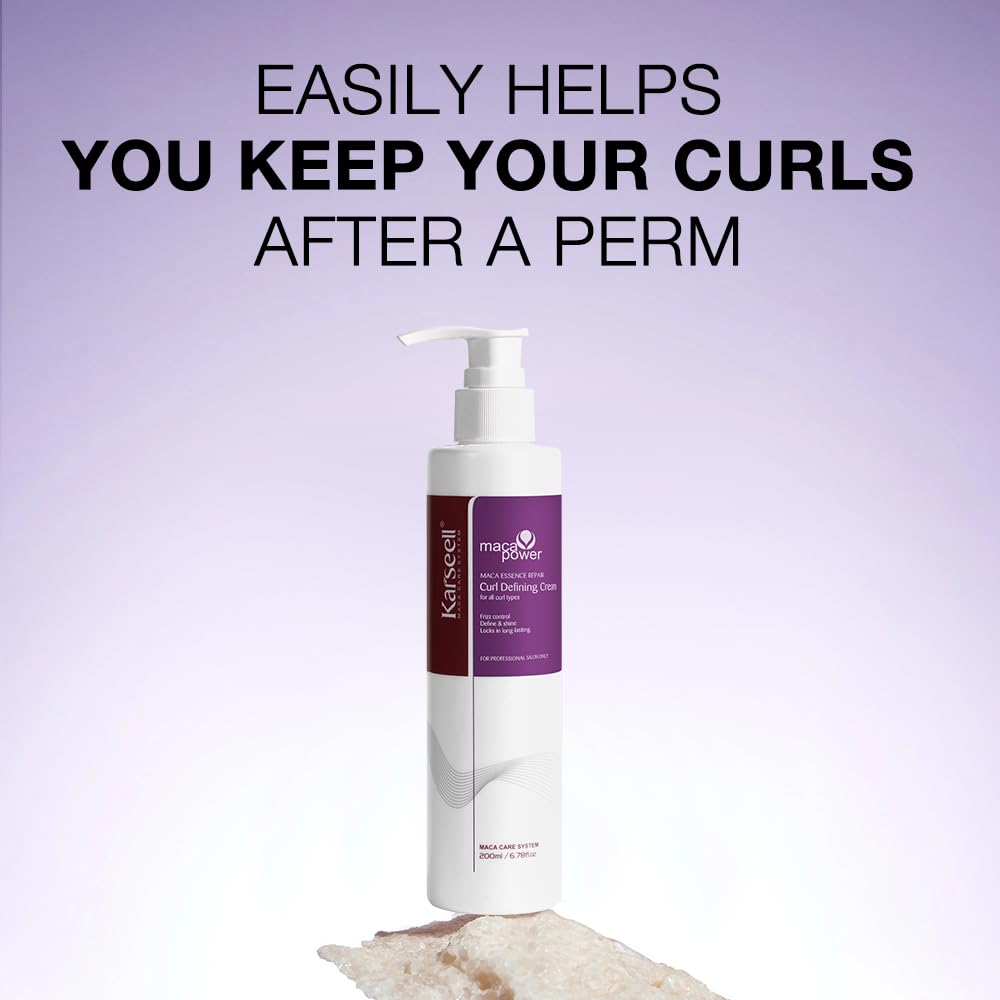
| Karseell Curl Defining Cream for Wavy, Curly and Coily Hair | $34.99 | 4.96 out of 5 | 98 | A leave-in for damp hair, or a small amount on dry hair between washes |
| Karseell Collagen Hair Mask 500ml | $15.99 | 4.98 out of 5 | 1063 | The rinse-out moisture step, described as lightweight yet deeply conditioning |
| Karseell Argan Oil Hair Serum and Leave-In Conditioner | $33.99 | 5.00 out of 5 | 85 | Oil-based moisture for dry, bleached, permed and fine hair |
Read that table as a system rather than a ranking. The Curl-Defining Repair Cream is sulfate free, suits all curl types, and is described as colour safe and keratin safe. The Curl Defining Cream for Wavy, Curly and Coily Hair is a leave-in styling cream: apply it to damp hair after washing, or use a small amount on dry hair to refresh curls between wash days, with no rinsing needed. The conditioner and styling range and the hair mask range are worth a look.
How to apply a mask on curly hair
This is the section that decides whether the mask helps or flattens. Four rules, in order.
Apply to soaking wet hair
Not damp, not towel-dried. Soaking wet. Water swells the cuticle and the fibre expands, so the product disperses around the cuticle flakes instead of sitting as a film on the outside. Apply a mask to towel-dried hair and you are laying a concentrated layer on a partially dry fibre, which is the recipe for a cast and a flat root.
Section the hair before you start
Divide your hair into four to eight sections before you touch the product, and work through them one at a time. Curly hair tangles on its own, so applying a mask with your head full of loose curls means you end up pulling, and pulling is what causes breakage. Sectioning also gives an even application.
Use less than you think
Here are rough starting points for a single application, and they are deliberately low. Fine hair or loose waves: a walnut-sized amount in total. Medium curls at shoulder length: about a tablespoon. Long or thick hair: two tablespoons, no more. Halve that if your hair is low porosity.
Where you put it matters as much as how much. Work it from the mid-lengths down to the ends and keep it away from the roots, because product at the roots is what flattens the volume at the top of the head.
Rinse thoroughly, and never let a mask dry in
Rinse with cool-to-lukewarm water until it runs clear and your hair feels slippery again with no residue on your fingers. That slippery feeling is your signal that the mask has gone. Thick curls hold product in the core of the curl where you cannot see it, and that is where build-up starts.
And then the rule that matters most: never let a heavy mask dry in your hair. Rinse it out while the hair is still wet. A mask that dries in sets as a cast, which is exactly the stiff, flat result you were trying to avoid.
How to rinse without losing your definition
Even with perfect application, the rinse can undo your curls. Most people pull their hair forward under the tap, which combs out the pattern. Two habits fix that: rinse by section, with your fingers, so you direct water along the length, and squeeze rather than scrub, pressing the water out from the bottom upwards.
When you get out, blot rather than rub. A cotton t-shirt or a microfiber towel pressed against the hair absorbs water without the friction of a terry towel. Then scrunch: cup your hands at the ends and squeeze upward, letting the hair bunch into the curl shape. Plopping works well too: rest the wet hair on top of your head under a microfiber towel for ten to fifteen minutes. Dry with a diffuser on low heat if you blow dry, and let hair air dry completely before you touch it.
Choosing by curl type
The same rules apply to every curl pattern, but the amounts do not. Loose waves and fine hair have the least capacity for product, so start with the smallest amount and keep the mask to every other week. Medium curls handle a weekly mask comfortably and benefit from a leave-in on damp hair. Coily hair is usually the driest and can take more moisture, but it needs sectioning and a thorough rinse. Treat the lengths and ends and leave the roots alone.
Our guide to hair care routines for different hair types is useful here, and so is our walkthrough of choosing a hair mask for curly hair, which covers the ingredient side of the same question.
Pairing your mask with a leave-in
A rinse-out mask on its own does very little for the hair between washes, and that gap is where most curly hair problems start. A mask is a reset; a leave-in is what holds the result.
On damp hair after every wash, use a small amount of a leave-in cream or oil. The Argan Oil Hair Serum and Leave-In Conditioner is $33.99, rated 5.00 out of 5 from 85 reviews, and its product page describes botanical essences and plant extracts with rich protein and nutrition, aimed at dry, damaged, colour-treated, permed and fine hair. The Curl Defining Cream for Wavy, Curly and Coily Hair at $34.99, rated 4.96 out of 5 from 98 reviews, does both jobs: it defines the pattern and smooths flyaways, on damp hair after washing or in a small amount on dry hair between wash days.
Two rules keep it working. Apply leave-in to damp hair, not bone dry, because dry hair drinks less and the product then sits on the surface. And use less than feels reasonable at first.
How often to use a mask on curly hair
Once a week is a sound starting point for dry, coily or colour-treated curls. Every two weeks is plenty for fine or low-porosity hair, which gets weighed down faster than most people expect. Never add an extra mask day in the same week that you are using a rich oil or a heavy leave-in.
Watch the protein side of the balance as well as the moisture side. Protein treatments make hair feel substantial and springy, and overuse leaves hair feeling straw-like and brittle. If your hair is drinking masks and still feels papery, the answer is usually a moisture step between washes, not more mask. Our guide to using a hair mask on curly hair covers the order of those steps.
Signs your mask is too heavy
- Flat roots and no volume at the crown, especially on day two. That is product sitting where you did not put it, usually because you applied to the roots or used too much.
- A stiff, crunchy or waxy film that you can feel when you run your fingers through the lengths. That is a cast forming.
- Build-up at the ends: hair that looks dull, slightly greasy and less soft than it did in week one, even though you are masking more often.
- Hair that takes longer to dry than it used to and looks wet-looking when it is dry.
When you spot these, change one thing at a time. Cut the amount in half and keep everything else the same for one wash. Then move the application to the mid-lengths and ends only. Then try a clarifying shampoo every two to four weeks. If your hair is fine and does not need a rich mask, a leave-in cream and a good wash routine may serve you better than weekly masking.

Frequently Asked Questions
Why do my curls go flat after I use a hair mask?
Almost always because too much product stayed on the hair, or because it dried in. A rich mask forms a film, and a film that dries on curly hair hardens into a cast, which holds the hair in the shape it dried in. Reduce the amount, keep it away from the roots, apply it to soaking wet hair, and always rinse it out while the hair is still wet.
Should I apply a hair mask to wet or dry hair?
Soaking wet, every time. Water swells the cuticle so the product disperses into the fibre rather than sitting on the surface, which keeps it from turning into a heavy film. Dry or towel-dried hair is the worst case, because the product concentrates on the strand and then sets.
How long should I leave a mask on curly hair?
Follow the label, which for the Karseell Collagen Hair Mask is 5 to 10 minutes. Longer is not better for curls, because the extra time gives the film time to set. The real variable is not minutes but how completely you rinse: until the water runs clear and your hair is slippery again.
How often should I use a hair mask on curly hair?
Once a week for dry, coily or colour-treated curls, and every two weeks for fine or low-porosity hair that gets weighed down easily. If your hair feels coated, oily by the second day, or stiff, you are using it too often or too much.

