

A bond repair hair mask sounds like it should be the answer to damaged hair. It is a real category, and the products in it do something specific. But most people searching for one are actually trying to fix hair that feels dry, rough, and brittle — and for that, a bond mask and a collagen mask are not interchangeable.
This guide explains what bond repair actually means, which type of damage it addresses, how to use a bond repair mask correctly, and when a collagen or argan oil mask is the better choice for your hair.
Search Intent: What Someone Searching for a Bond Repair Hair Mask Needs to Know
People search for bond repair hair masks with one of three underlying questions.
- Does this actually repair hair, or does it just make it feel nice? The honest answer is that it does both, but they are different benefits and they work at different levels.
- How do I use it? Bond masks have specific application rules that differ from ordinary conditioning masks.
- Is it worth the price compared to a regular deep conditioner? Usually yes for the right hair, and usually no for the wrong hair.
If your hair feels dry and rough, the problem is surface conditioning, and a bond mask is not what you need. Let us start there, because it is the most common confusion.
Bond Repair vs Conditioning: Two Different Problems
Hair is a keratin structure. Inside it, chains are held together by disulfide bonds. When you bleach, heat-style, or chemically treat hair, those bonds break.
Bond repair products target exactly that. They use active ingredients, most famously bis-aminopropyl diglycol dimaleate, to reconnect broken disulfide bonds within the hair cortex. That is a structural intervention working from the inside.
Conditioning products target the surface. They deposit film-forming ingredients that reduce friction between the cuticle layers, which is what makes hair feel smoother, softer, and easier to detangle.
| Symptom | Likely cause | What actually helps |
|---|---|---|
| Hair feels rough, dry, and dull | Depleted moisture and surface wear | Deep conditioning mask with oils |
| Hair tangles and knots easily | Friction from a rough cuticle | Conditioning mask for slip |
| Hair snaps and breaks when combing | Weakened internal bonds | Bond-building treatment plus gentler handling |
| Ends feel gummy or stretchy | Over-processed hair with lost elasticity | Professional assessment, then conditioning |
Read that table honestly. Most people searching for a bond repair hair mask have the first two rows, not the third. That is why a collagen mask works better for them.
How to Use a Bond Repair Mask Correctly
If you do have structural damage and you have bought a bond repair product, application matters more than most people expect. Getting it wrong wastes the product.
- Start with damp, towel-dried hair. Not soaking wet. Excess water dilutes the active ingredient and reduces contact time.
- Apply to the mid-lengths and ends. The scalp does not need bond repair, and product on the scalp can cause irritation.
- Leave it for the time on the label. Bond-building formulas need enough dwell time to work. Rinsing early is the most common mistake.
- Use lukewarm water to rinse. Very hot water opens the cuticle and undoes some of the conditioning you just added.
- Follow the full system. Bond lines are designed to work together across shampoo, treatment, and conditioner.
Our guide to shampoo, conditioner and hair mask order covers the sequencing in detail, because the order changes which product does the work.
How to Use a Collagen Mask Instead
For dry, rough, damaged-feeling hair, a collagen mask follows a slightly different and simpler set of rules.
- Apply to damp hair after shampooing. The shampoo has already cleaned; the mask conditions.
- Use it on the lengths and ends. Skip the scalp unless you specifically need scalp conditioning.
- Leave it for 5 to 10 minutes. This is the standard window for the Karseell collagen masks. Longer is not better here.
- Rinse thoroughly with lukewarm water. This removes the excess so hair is not coated.
- Skip the conditioner afterward. On treatment days the mask usually does the job of both. Our hair mask versus conditioner comparison explains which to use when.
One important detail: a collagen mask is not a one-time fix. If your hair has been bleached or heat-damaged over months, it will need consistent treatment. Our guide to how often to use a hair mask covers the realistic frequency, including why once a week beats daily for most hair.

How to Tell Which Damage You Actually Have
Before buying anything, it is worth diagnosing the problem properly. Put your hair under good light and look at it closely, and answer these questions.
- Does it break in the middle of the shaft, or only at the ends? Mid-shaft breakage points to structural weakness. End breakage points to dryness and split ends.
- Does it feel rough and dull, but soft to the touch? That is a conditioning problem, not a bond problem.
- Does it stretch and feel gummy when wet? That is over-processing, and it usually needs professional assessment rather than a product swap.
- Did the breakage start after a specific event? A bleach appointment, a bad perm, or months of flat-iron use gives you a cause to work against.
This distinction matters because the two problems need different solutions. If you use a bond mask on hair that only needs moisture, you will spend money and time and see very little change, then conclude that no product works. Our guide to why hair breaks off goes deeper into the mechanics if you want the full picture.
Making the Treatment Step Work Harder
If you are using a mask and the results are slower than you expected, the issue is often the technique rather than the product. A few adjustments make a noticeable difference.
- Apply to damp, not dripping, hair. Slightly damp hair absorbs the conditioning better than soaked hair.
- Section your hair. Working in sections means every part of the lengths gets product, instead of the top layer soaking it all up.
- Comb it through. A wide-tooth comb distributes the mask evenly and reduces tangles while the product is working.
- Add a heat cap if you have one. Warmth increases penetration during the processing window.
- Do not scrub. Massage gently into the mid-lengths. Scrubbing breaks hair while it is most fragile.
And the habit that matters most is outside the shower: how you dry and style. Lower heat, a microfiber towel or T-shirt instead of a terrycloth one, and brushing from the ends upward rather than from the root down. These reduce the damage your mask is working to repair.

Ingredients: What to Look for on the Label
| Label cue | What it does | Best fit |
|---|---|---|
| Bis-aminopropyl diglycol dimaleate | Reconnects broken disulfide bonds | Structurally weakened hair |
| Collagen and keratin | Supports strength and improves slip | Dry, damaged-feeling hair |
| Argan oil | Adds moisture, shine, and softness | Dry, frizzy, coarse hair |
| Heavy cream texture | Coats and softens thick hair | Thick or very dry hair |
| Lightweight, fast-rinsing formula | Conditions without buildup | Fine hair or oily roots |
If you want the full checklist rather than the short version, our guide to what ingredients to look for in a hair mask covers every cue worth knowing, including how to read an ingredient list when the front of the bottle is marketing.
When You Need Both Approaches
There is a real category of hair that needs both. If your hair is chemically processed and also feels dry, the sensible routine is a bond treatment on some washes and a collagen mask on others, or a bond pre-treatment followed by a mask in the same wash.
The practical version: use a bond product as a pre-shampoo step when your hair is structurally weak, and use a collagen mask as your weekly treatment when your hair feels rough. They do not compete.
Common Mistakes With Bond and Collagen Masks Alike
- Expecting one application to reverse months of damage. Hair improves across a series of washes.
- Leaving a rich mask on for 30 minutes. Longer contact time does not mean better results with conditioning masks.
- Applying to the scalp. It causes buildup and can irritate.
- Rinsing with very hot water. It strips the conditioning you just applied.
- Using a bond mask on hair that is only dry. You are paying for a structural treatment you do not need.
Karseell Product Recommendations
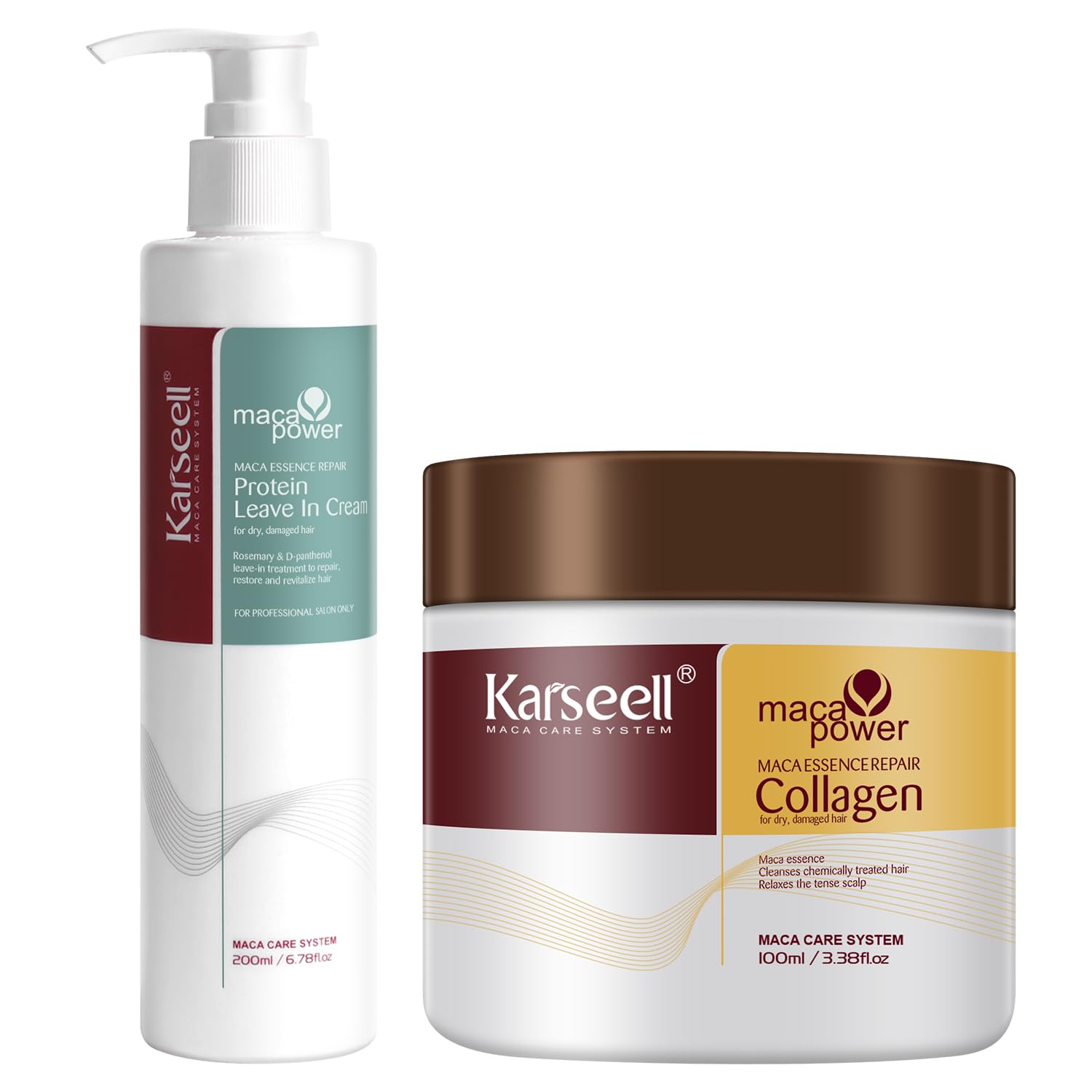
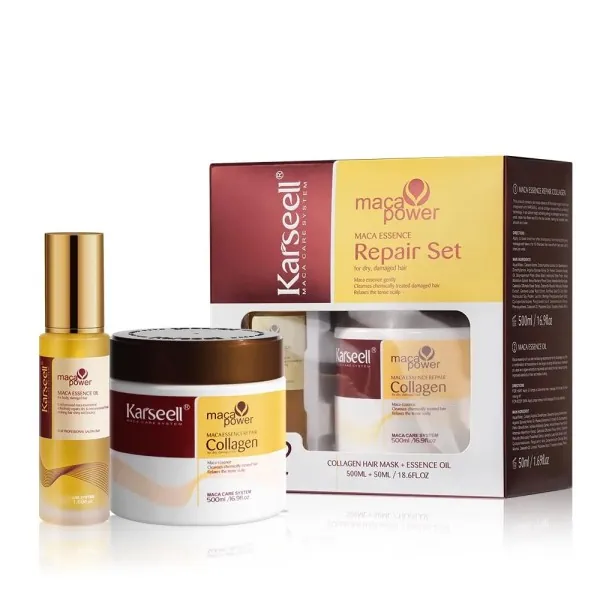
If your hair feels dry, rough, and brittle rather than structurally failing, the Karseell Collagen Hair Mask is the product built for it. Collagen, keratin, and argan oil, formulated for dry, damaged, and color-treated hair of any type, with a 5 to 10 minute application.
For the fuller routine, pair it with the Karseell Moroccan Argan Oil for Hair Healing applied to damp hair after washing, which extends the softness between treatments. Customers rate the collagen mask at 4.98 out of 5 across more than 1,000 reviews, and the practical routine is simple: shampoo, mask, rinse with lukewarm water, light oil, and lower heat when styling.
FAQ
What is a bond repair hair mask?
It is a treatment formulated with bond-building active ingredients, most commonly bis-aminopropyl diglycol dimaleate, designed to reconnect disulfide bonds broken by heat and chemical processing. It targets internal hair structure rather than surface texture.
Is a bond repair mask better than a collagen hair mask?
Neither is universally better. Bond repair suits hair that snaps and breaks easily even when it feels soft. Collagen conditioning suits hair that feels dry, rough, and hard to detangle. If your hair is both, use both.
Can I use a bond repair mask on bleached hair?
Yes, bond products are frequently used on bleached hair since lifting color causes significant bond damage. Apply to the lengths and ends, follow the dwell time on the label, and rinse with lukewarm water.
How long does it take to see results from a hair mask?
You will notice more slip and softness after the first use. Visible changes in roughness, shine, and manageability usually take two to four consistent weekly treatments, because the hair needs repeated conditioning to build up.
Does a bond repair mask replace conditioner?
Usually not. Bond treatments are focused on structure, while conditioner handles everyday conditioning. On treatment days the two can often be combined, but a rich collagen mask often replaces conditioner because it conditions more thoroughly on its own.
