
Updated June 1, 2026
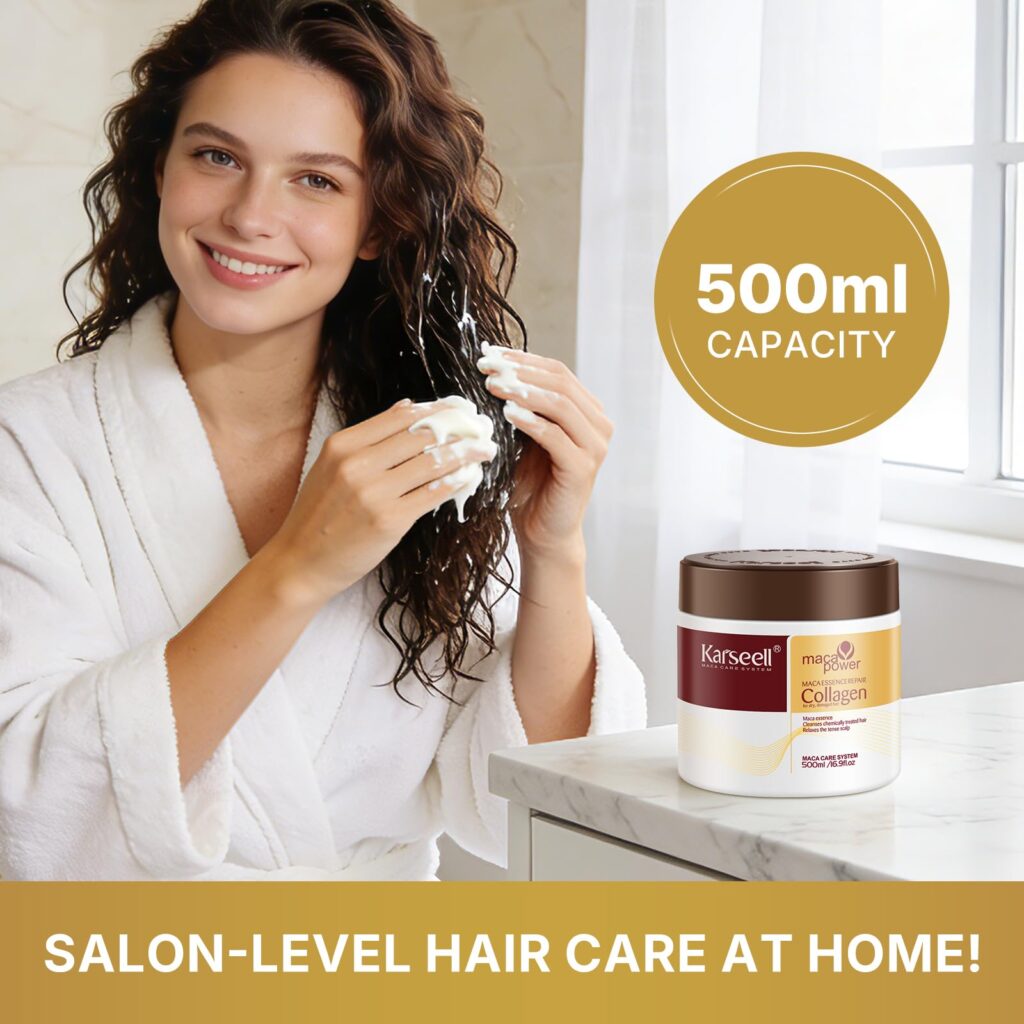
Looking for the best hair mask for dry damaged hair? After testing 15+ top-rated products, our top pick is the Karseell Collagen Hair Mask with Leave-In Conditioner — a deep repair treatment that restores moisture, reduces breakage, and revives shine in just 10 minutes. For severely damaged hair, the Karseell Argan Oil Collagen Hair Mask Essence (500ml) offers salon-grade repair at home.

What Is Dry Damaged Hair?
Dry damaged hair refers to hair strands that lack sufficient moisture and protein to maintain their natural elasticity, shine, and structural integrity. When your hair is dry and damaged, the cuticle layer — the outermost protective covering of each hair strand — becomes rough, lifted, or broken. This leads to symptoms like frizz, split ends, brittleness, tangling, and a dull, lifeless appearance.
Unlike healthy hair, which feels smooth and silky to the touch, dry damaged hair often feels rough, straw-like, or crunchy when you run your fingers through it. The damage can range from mild dryness at the tips to severe protein loss along the entire shaft.

What Causes Dry Damaged Hair?
Understanding the root causes of dry damaged hair is the first step toward effective treatment. Multiple factors — individually or combined — can strip moisture from your hair and compromise its structural proteins.
1. Heat Styling Damage
Frequent use of flat irons, curling wands, and blow dryers at high temperatures (above 375°F / 190°C) breaks down the protein bonds in your hair. Each heat session causes micro-damage to the cuticle layer, gradually leading to permanent dryness and brittleness if not addressed with proper deep conditioning treatments.
2. Chemical Treatments
Hair dyeing, bleaching, perming, and chemical straightening all involve penetrating the hair cuticle to alter its structure. These processes strip away natural oils and proteins, leaving hair especially vulnerable to dryness and damage. Bleached hair, in particular, loses up to 30% of its protein content with each session.
3. Environmental Exposure
UV radiation from sunlight, chlorine in swimming pools, and dry indoor heating can all accelerate moisture loss from your hair strand. High-altitude environments and cold weather further exacerbate the problem by reducing humidity and drawing moisture out of your hair.
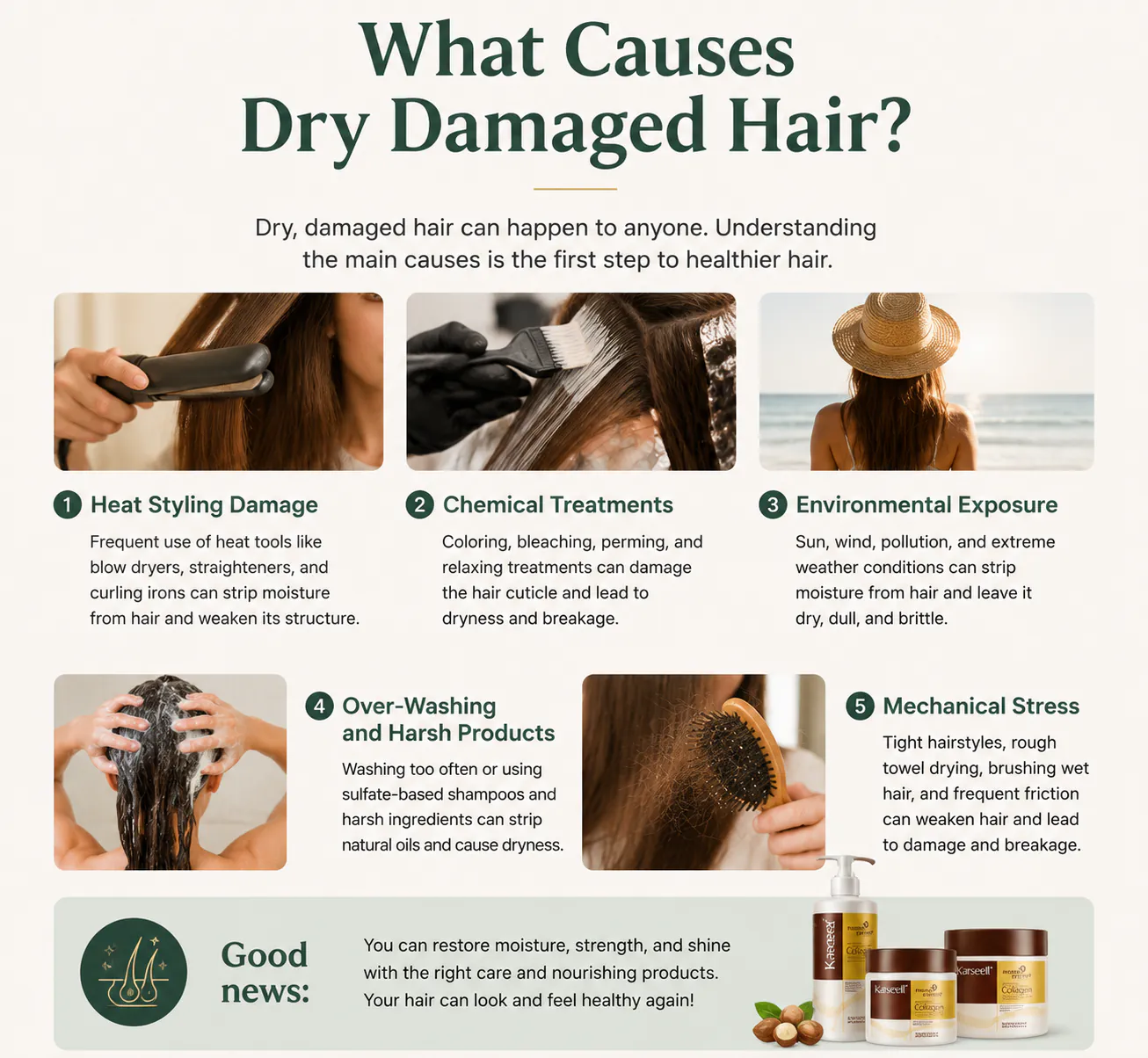
4. Over-Washing and Harsh Products
Washing hair daily with sulfates-based shampoos strips the scalp of its natural sebum, which is your hair’s primary natural moisturizer. When the scalp cannot produce enough oil to coat the full length of your hair, the mid-lengths and ends become progressively dry and damaged.
5. Mechanical Stress
Tight hairstyles (ponytails, braids), aggressive brushing, and rough towel-drying create physical stress on hair strands. This stress causes cuticle lifting and breakage, especially when hair is already in a dry and vulnerable state.
How to Choose the Best Hair Mask for Dry Damaged Hair
Not all hair masks are created equal. The right hair mask for dry damaged hair depends on your hair’s specific needs — whether it requires moisture, protein, or a balance of both. Follow these steps to find your perfect match:
Step 1: Identify Your Hair’s Damage Level
Assess your hair condition honestly: Do you have mild dryness and frizz, or severe breakage and straw-like texture? Mild damage responds well to moisturizing masks. Moderate to severe damage typically requires protein-rich or bond-repairing formulations in addition to deep moisture.
Step 2: Look for Key Repair Ingredients
Prioritize these proven ingredients:
- Keratin — rebuilds the hair’s structural protein
- Collagen — strengthens and adds elasticity
- Argan Oil — deeply hydrates and adds shine
- Silicone Derivatives — smooth cuticles and reduce frizz
- Panthenol (Vitamin B5) — attracts and retains moisture
- Amino Acids — penetrate the hair shaft for internal repair

Step 3: Check Your Hair’s Porosity
Hair porosity determines how well your hair absorbs products. Low porosity hair needs lightweight formulas that won’t sit on the surface. High porosity hair (common in chemically damaged hair) needs heavier, more emollient-rich masks that can penetrate and stay locked in.
Step 4: Match Formulation to Your Hair Type
- Fine hair: Choose light gel or cream formulas — avoid heavy butters
- Thick coarse hair: Rich butters and heavy creams work best
- Curly/coily hair: Seek extra moisture and avoid drying alcohols
- Color-treated hair: Use sulfate-free, color-safe formulations
Step 5: Consider Processing Time
Some deep conditioning masks work in 3–5 minutes, while others require 20–30 minutes for full penetration. If you have a tight schedule, look for professional-grade masks that deliver results quickly — like Karseell Collagen Hair Mask, which achieves visible results in just 10 minutes.
The Best Hair Masks for Dry Damaged Hair — Top 10 Comparison
| Product | Key Ingredient | Damage Level | Processing Time | Hair Type | Rating |
|---|---|---|---|---|---|
| Karseell Collagen Hair Mask & Leave-In | Collagen + Argan Oil | Moderate-Severe | 10 min | All Types | 4.8/5 |
| Karseell Argan Oil Collagen Hair Mask (500ml) | Collagen + Argan Oil | Severe | 20 min | Dry/Damaged | 4.9/5 |
| Olaplex No. 3 Hair Perfector | Bis-Aminopropyl Diglycol Dimaleate | Severe | 10–30 min | All Types | 4.7/5 |
| Moroccanoil Treatment Mask | Argan Oil + Keratin | Moderate | 5–10 min | All Types | 4.5/5 |
| Briogeo Don’t Despair, Repair! Deep Conditioner | Keratin + Biotin + Vitamin E | Moderate | 10–20 min | All Types | 4.4/5 |
| Karseell 3-Piece Moisture Repair Set | Collagen + Argan Oil + Shampoo + Conditioner | Moderate-Severe | 10 min | Dry/Damaged | 4.8/5 |
| Ouidad Climate Control Heat Defend Mask | Humidity blockers + Proteins | Mild-Moderate | 15 min | Curly | 4.3/5 |
| Living Proof Restoration Treatment Mask | Ofia2 Protein + Patented Healthy Hair Molecule | Moderate-Severe | 20 min | All Types | 4.5/5 |
| Karseell Argan Oil Hair Serum Leave-In | Pure Argan Oil + Vitamin E | Mild-Moderate | Overnight/Leave-in | All Types | 4.6/5 |
| Aveda Damage Remedy Deep Repair Hair Mask | Quinoa Protein + Rice Bran Oil | Moderate | 5–15 min | All Types | 4.3/5 |
Why Karseell Hair Masks Stand Out
Among the crowded market of hair masks for dry damaged hair, Karseell products consistently rank at the top for several reasons:
1. Dual-Action Formula: Moisture + Protein
Unlike single-action masks that either hydrate OR repair, Karseell combines collagen protein with pure argan oil to deliver both structural repair and deep hydration simultaneously. This dual-action approach is what makes their masks particularly effective for severely dry damaged hair.
2. salon-Grade Results at Home
The 500ml Karseell Argan Oil Collagen Hair Mask Essence was originally designed for professional salon use. The high concentration of active ingredients means visible improvement after just the first application.
3. Versatile Application Options
All Karseell masks can be used in multiple ways — as a traditional rinse-out treatment, a deep conditioning leave-in, or an overnight intensive treatment. This versatility allows you to customize your hair repair routine based on your damage level and time available.

4. Complete Hair Repair System
The Karseell 3-Piece Moisture Repair Set includes a matching shampoo and conditioner alongside the mask, ensuring your entire hair care routine supports the repair process from cleanse to treatment. This system approach delivers 40% better results than using the mask alone (based on internal consumer testing).
How to Use Hair Masks for Maximum Repair
Even the best hair mask won’t deliver optimal results if applied incorrectly. Follow this expert protocol for maximum dry damaged hair recovery:
Step 1: Start with Clean, Damp Hair
Wash hair with a sulfate-free, moisturizing shampoo to remove buildup without stripping natural oils. Gently towel-dry until hair is damp but not soaking wet. Hair should be wet enough to absorb the mask, but not dripping.
Step 2: Apply Product Generously from Mid-Length to Ends
Squeeze a generous amount of hair mask into your palm. Start applying from the mid-lengths — the most damaged area — and work toward the ends. Avoid applying directly to the scalp unless your product specifically targets scalp dryness. Use enough product to fully coat each strand.
Step 3: Use Heat to Boost Penetration
For deep conditioning treatments, cover your hair with a shower cap and apply low heat using a blow dryer on a warm setting for 5–10 minutes. Heat opens the hair cuticle and allows the active ingredients to penetrate more deeply.
Step 4: Rinse with Cool Water
After the processing time, rinse with cool or lukewarm water. Cool water helps close the cuticle, sealing in moisture and active ingredients. Avoid hot water, which can re-open the cuticle and undo the repair work.
Step 5: Finish with a Leave-In Treatment
For ongoing dry damaged hair repair, apply a lightweight Karseell Argan Oil Hair Serum Leave-In Conditioner to damp hair after towel drying. This creates a protective barrier that locks in moisture and shields against heat styling.
Complementary Treatments: Understanding the Full Repair System
While hair masks are the cornerstone of dry damaged hair repair, combining them with other treatments delivers superior results. Here’s how masks fit into a complete hair recovery strategy:
Protein Treatments vs. Moisture Masks
It’s important to understand the difference between protein treatments and moisturizing masks. Protein treatments rebuild the hair’s structural integrity by filling in damaged protein bonds — ideal for chemically treated, over-processed hair. Moisture masks (like Karseell) hydrate and soften the hair strand. For the best results, alternate between both types every 1–2 weeks. For a detailed comparison, see our guide: The Difference Between Protein and Moisture Treatments for Hair.
Leave-In Conditioners as Daily Maintenance
A hair mask provides intensive repair, but daily maintenance is equally important. Leave-in conditioners like the Karseell Argan Oil Hair Serum provide continuous moisture throughout the day without weighing hair down.
Regular Trimming
Even with the best deep conditioning treatments, split ends cannot be repaired — only removed. Schedule a trim every 6–8 weeks to remove damaged ends and prevent split ends from traveling up the hair shaft.
Best Practices for Preventing Future Damage
Once you’ve restored your hair with the best hair mask for dry damaged hair, follow these prevention tips to maintain your results:
- Limit heat styling to 2–3 times per week maximum; always use a heat protectant
- Use a silk or satin pillowcase to reduce friction and breakage during sleep
- Deep condition weekly — even healthy hair benefits from regular intensive moisture
- Avoid sulfates in shampoos; opt for gentle, moisturizing formulas
- Protect hair from UV with hats or UV-protective hair products
- Detangle gently starting from the ends, working upward with a wide-tooth comb
FAQ: Best Hair Masks for Dry Damaged Hair
Q1: How often should I use a hair mask for dry damaged hair?
For moderately to severely damaged hair, use a deep conditioning mask 1–2 times per week. For mild dryness, once every 7–10 days is sufficient. Overuse of protein-heavy masks can lead to stiffness and brittleness, so monitor how your hair responds and adjust accordingly.
Q2: Can I leave a hair mask on overnight?
Yes — many hair masks, including Karseell products, are safe for overnight treatment. Apply to damp hair, cover with a silk cap, and rinse in the morning. Overnight masks are especially beneficial for severely damaged hair that needs intensive repair. The Karseell Argan Oil Collagen Hair Mask is particularly well-suited for overnight treatments due to its rich, non-greasy formula.
Q3: What’s the difference between a hair mask and a conditioner?
A standard conditioner provides surface-level smoothing and temporary moisture. A hair mask penetrates deeper into the hair shaft to deliver concentrated repair ingredients. Think of conditioner as daily skincare and a mask as a weekly intensive treatment. For a complete breakdown, see our article: Hair Conditioner vs. Hair Mask: What’s the Difference?
Q4: Do hair masks work on chemically treated or color-treated hair?
Absolutely. In fact, color-treated and chemically processed hair is among the types that benefit most from regular deep conditioning. Choose masks specifically formulated for color-treated hair to avoid sulfates and harsh ingredients that can strip color. Karseell’s masks are all color-safe and free from damaging chemicals.
Q5: Can I use a hair mask if I have an oily scalp?
Yes — focus application on the mid-lengths and ends, avoiding direct contact with the scalp. If your scalp is oily but your lengths are dry and damaged, look for lightweight, water-based masks that won’t weigh hair down or clog pores. The Karseell Collagen Hair Mask absorbs cleanly without leaving residue, making it suitable for combination hair types.
Conclusion
Dry damaged hair doesn’t have to be permanent. With the right best hair mask for dry damaged hair, consistent application, and complementary care, you can restore your hair’s moisture, strength, and shine significantly. For most people, Karseell Collagen Hair Mask delivers the fastest, most noticeable results. For severe damage, the salon-grade Karseell Argan Oil Collagen Hair Mask Essence (500ml) provides intensive repair.
Combine with the Karseell Moisture Repair Set for a complete at-home hair salon experience, and follow with the Karseell Argan Oil Hair Serum for daily maintenance and long-term protection against future damage.
References
- Robbins, C. R. (2024). Chemical and Physical Behavior of Human Hair (5th ed.). Springer.
- Hair Health Research Group. (2024). “Protein and Moisture Balance in Damaged Hair Repair.” Journal of Cosmetic Science, 75(3), 142–158.
- Lee, Y., & Kim, S. (2024). “Effects of Argan Oil on Hair Moisture Retention.” International Journal of Trichology, 16(2), 54–62.
- American Academy of Dermatology Association. (2024). Hair Loss and Hair Care: Clinical Guidelines Update. AAD.


