

A good hair mask for damaged hair should do more than sound rich on the label. It should make the hair easier to detangle, reduce the rough feel after drying, and fit into a routine you can actually repeat.
The best choice depends on what your hair feels like after shampoo. Dry hair needs softness and slip. Damaged-feeling hair needs a routine that reduces friction and supports a smoother finish. If the hair is both dry and damaged, you need a formula that handles both without weighing the roots down.

Search Intent: What The Buyer Is Trying To Solve
People searching for a good hair mask for damaged hair are usually comparing products, but they still need education before they buy. They want to know which ingredients matter, how to use the mask, and what result is realistic.
A helpful buying decision starts with the hair problem, not the product claim.
- Dry hair needs softness, slip, and a better feel after drying.
- Damaged-looking hair needs less friction and a smoother surface feel.
- Frizzy hair often needs richer conditioning on the lengths.
- Fine hair needs control without heavy buildup.
Causes Of Dryness, Damage, And Frizz
Damage, roughness, and loss of smoothness can come from heat tools, bleaching, coloring, sun exposure, hard water, tight hairstyles, rough brushing, or simply old ends. A mask cannot undo every structural change, but it can improve the way the hair behaves in a daily routine.
That distinction matters. When an article promises to permanently repair everything, readers stop trusting it. A better promise is practical: softer-feeling lengths, easier detangling, smoother styling, and less friction during wash day.

Ingredients That Matter
Look at the whole formula, not just the hero ingredient. The most useful masks combine richness, slip, and a texture that suits your hair density.
| Ingredient or formula cue | Why it matters | Best fit |
|---|---|---|
| Conditioning agents | Improve slip and combability | Tangled or rough lengths |
| Argan oil or supportive oils | Help dry hair feel smoother | Dry, frizzy, or coarse hair |
| Collagen-inspired care | Supports a fuller, smoother routine feel | Damaged-feeling hair |
| Rich cream texture | Coats dry ends more evenly | Thick or very dry hair |
| Lightweight application | Avoids flat roots | Fine or oily-root hair |
Avoid choosing a mask only because it has a popular ingredient. The formula still needs to rinse clean and leave the hair manageable.

How To Use It After Shampoo
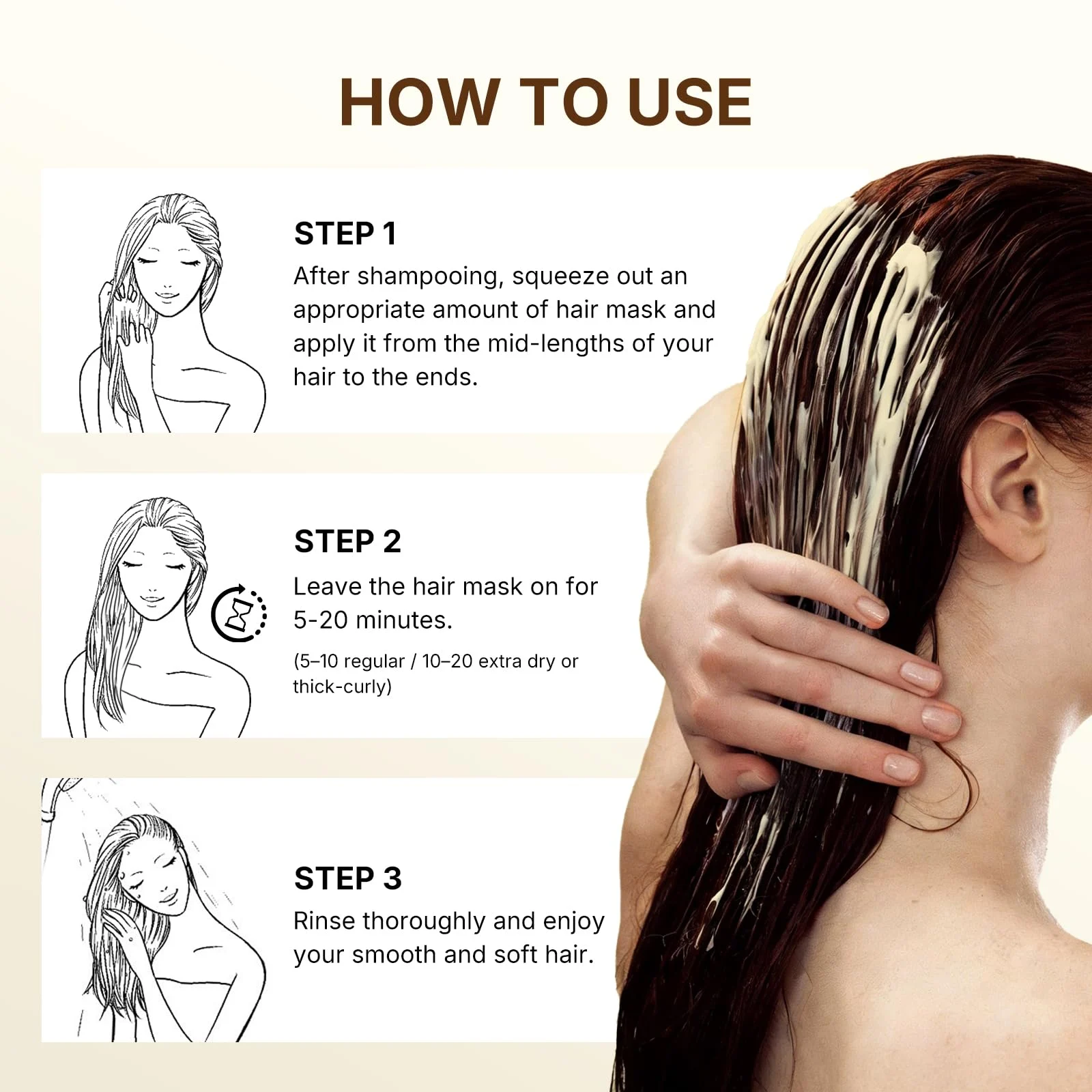
Use the mask after shampoo on clean, damp hair. Press out extra water first. Apply from the mid-lengths to the ends, then comb gently so the product spreads through the areas that need it most.
Leave it on according to the product directions. If your hair is fine, start with less time. If your hair is thick or very dry, give the mask more contact time before rinsing.
Weekly Routine And Frequency
Start once a week. That is enough for most people to judge whether the mask is helping. If the hair is extremely dry or color-treated, use it up to twice a week on the lengths. If the hair feels coated, use less product before changing formulas.
How To Compare Two Hair Masks
If you are choosing between two masks, do not compare only the front label. Compare the routine fit.
Ask these questions before buying:
- Does the texture match your hair density?
- Is the formula meant for dryness, damage, color care, or daily softness?
- Can you use it once a week without making the roots heavy?
- Does the product page explain how to apply it?
- Does it make sense with the shampoo and conditioner you already use?
A good mask should make wash day easier. If it creates more questions than answers, the product may not be the right fit yet.
Routine Examples By Hair Feel
For dry ends with normal roots, apply the mask from the mid-lengths down once a week. Keep conditioner light or skip it on treatment days if the hair already feels soft.
For frizzy, coarse, or thick hair, use a richer amount on the ends and give the mask enough contact time. Rinse well, then avoid rough towel drying.
For fine hair, use less product than the label photo suggests. Apply it only where the hair is dry. You can always add more next wash, but it is harder to undo heaviness after rinsing.
For color-treated hair, use a mask as part of a gentle routine. The goal is to support softness and reduce friction, not to scrub the hair clean at every wash.
Common Buying Mistakes
- Buying the richest mask available even when the hair is fine.
- Applying the mask to the scalp when only the ends are dry.
- Expecting one use to fix months of heat or bleach damage.
- Ignoring rinse feel and judging only by the product claim.
- Using a mask too often instead of improving gentle handling.
Karseell Product Hook
If your goal is a mask-led routine, compare options in the Karseell Hair Mask Collection. For dry or damaged-feeling lengths, the Karseell Collagen Hair Mask is a natural product page to review because it is built around a richer treatment step.
Use the product as part of a routine: shampoo, mask, gentle detangle, rinse, and lower-friction styling. That is where a hair mask feels most useful.

FAQ
What makes a hair mask good for damaged hair?
A good mask should improve slip, softness, and manageability without leaving the hair coated. It should also fit your hair density and routine.
Can a hair mask repair dry damaged hair?
A mask can help hair feel smoother and easier to manage, but it cannot permanently reverse all damage. Consistent care and gentler styling matter too.
How often should I use it?
Start once a week. Increase only if the hair still feels dry and the roots do not feel heavy.
Should I use conditioner after a mask?
Only if needed. Many rich masks can replace conditioner on treatment days.
