

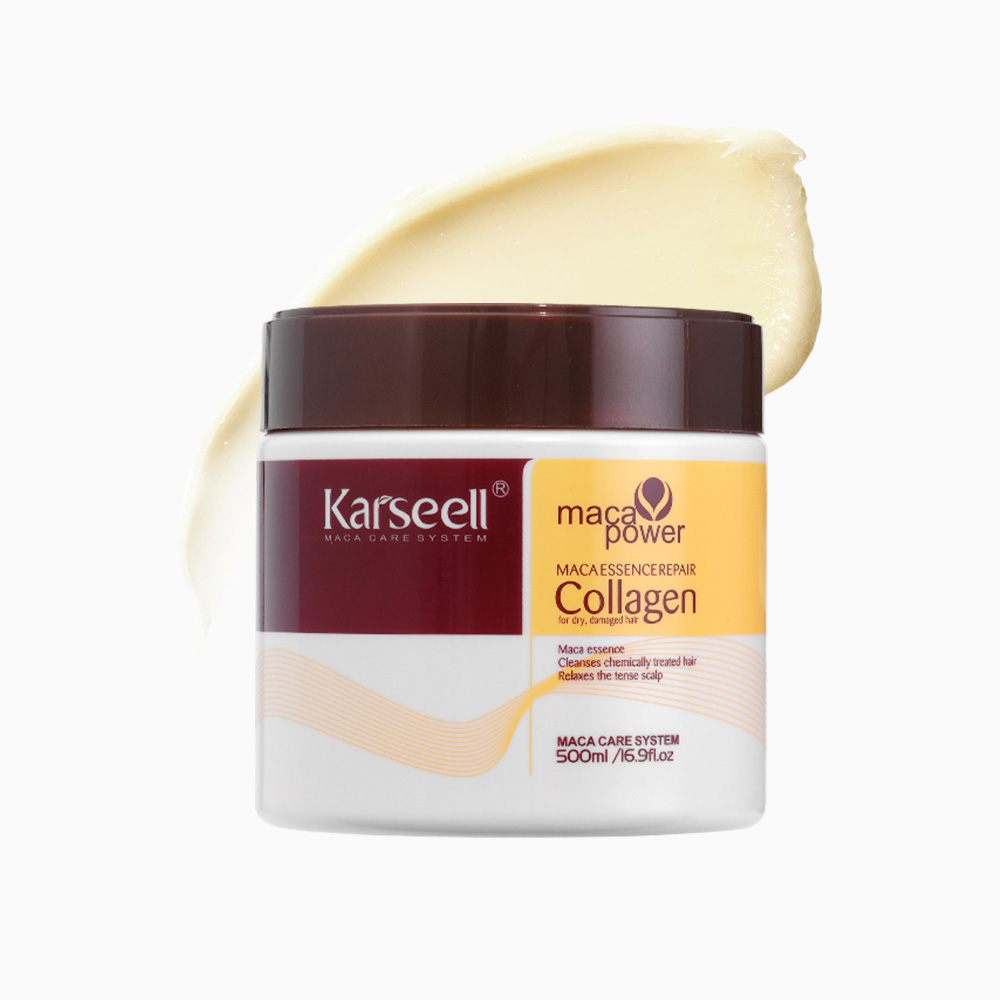
The right leave-on time for a hair mask is usually shorter than people think. More time does not always mean better results. For most rinse-out masks, the useful range is about 5 to 15 minutes, depending on the formula, hair condition, and how heavy your hair feels after rinsing.
If your hair is fine, oily at the roots, or easily weighed down, start with the shorter end. If your hair is dry, coarse, bleached, or hard to detangle, a longer contact time may make the routine feel smoother.
Quick Answer: How Long To Leave A Hair Mask On
| Hair type or concern | Suggested starting time | Adjustment tip |
|---|---|---|
| Fine hair | 3 to 5 minutes | Keep it on the ends only |
| Normal dry hair | 5 to 10 minutes | Increase if ends stay rough |
| Thick, coarse, or very dry hair | 10 to 15 minutes | Comb through gently for even coverage |
| Bleached or heat-styled hair | 10 minutes to start | Focus on consistency, not extreme timing |
Always follow the product label. If the product says 5 minutes, do not assume 45 minutes will make it stronger. Overusing a rich formula can leave the hair feeling coated rather than healthier.
Why Timing Matters
A mask needs enough time to spread across the hair and soften the surface feel. But once the hair is fully coated, leaving the product on much longer may not add much benefit. The extra time can even work against you if the formula is rich and your hair is fine.
Think of timing as a dial, not a challenge. You are trying to find the shortest amount of time that leaves the hair easier to comb and smoother after drying.
How To Tell If You Left It On Long Enough
The best sign is not how slippery the hair feels while wet. Wet hair almost always feels smoother with product on it. The better test is how the hair behaves after it is fully dry.
- If the ends feel softer and easier to brush, the timing is probably close.
- If the hair feels heavy or stringy, use less product or less time next wash.
- If the hair still tangles immediately, add a few minutes or improve distribution.
- If only the ends feel dry, apply more there instead of coating the roots.
How To Apply A Mask So Timing Works Better
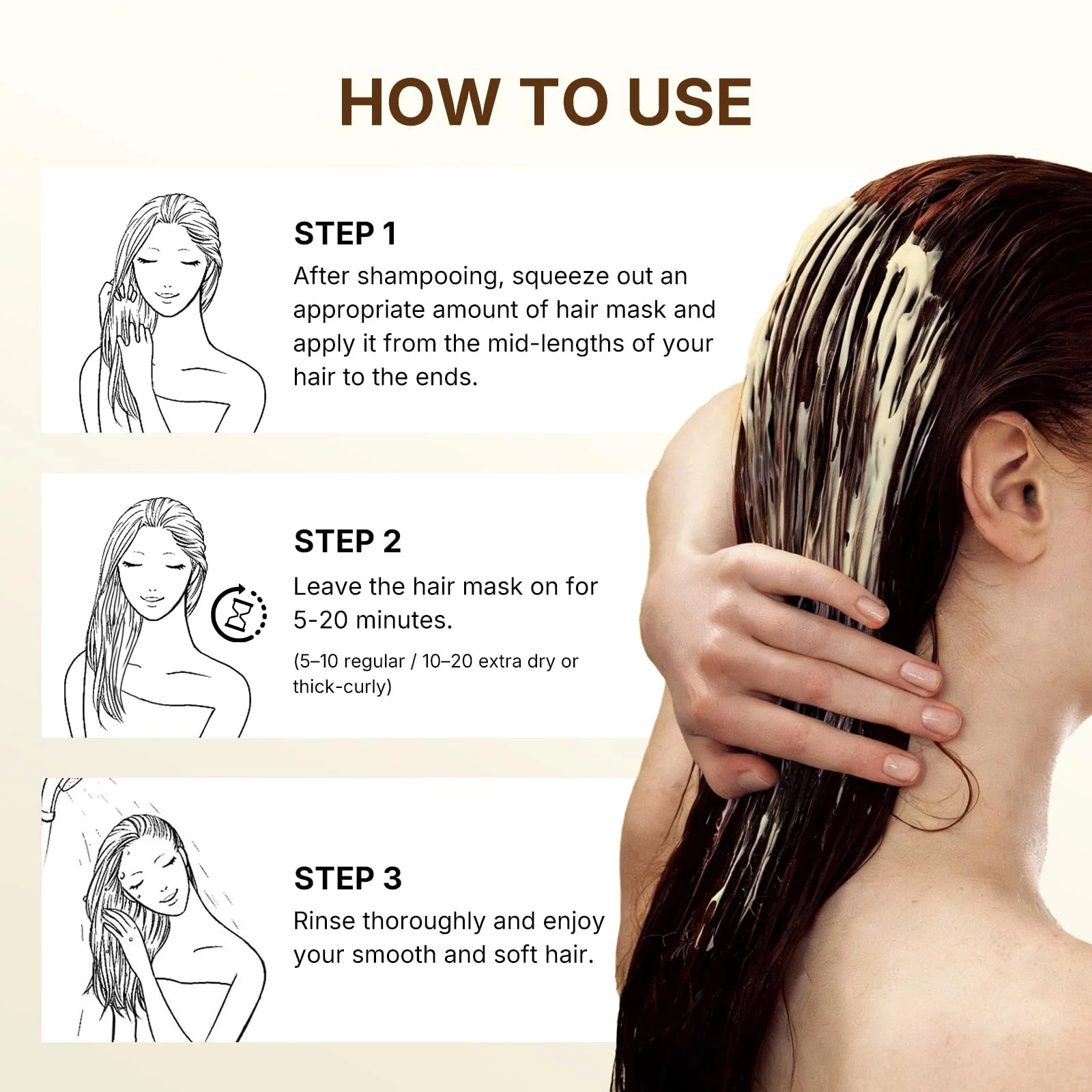
Timing only helps if the product reaches the right part of the hair. After shampoo, press out extra water. Apply the mask where your hair needs it most, usually from the mid-lengths to the ends. Then spread it gently with your fingers or a wide-tooth comb.
A small amount placed well often works better than a large amount placed everywhere. Roots usually need less richness than ends.
Weekly Routine And Frequency
If you use a mask once a week, you can usually give it a full 5 to 10 minutes. If you use it more often, keep the timing shorter unless your hair is very dry or thick. The more frequently you mask, the more important it is to rinse thoroughly.
For a simple routine, choose one wash day as your treatment day. Keep a note of the contact time and how your hair feels later. After two or three uses, you will have a clearer answer than any general rule can give you.
Timing By Hair Type
Fine hair usually needs the most restraint. A few minutes on the ends can be enough, especially if the roots get oily quickly. The goal is a smoother finish without losing movement.
Medium-density hair can usually start around 5 to 10 minutes. If the ends still feel rough after drying, add a little more time before adding more product.
Thick, coarse, curly, or bleached hair may benefit from a longer contact time, but it still needs a clean rinse. If the hair feels waxy or dull afterward, the timing or amount is too much.
Before You Leave A Mask On Longer
If the mask does not seem to work, do not immediately jump from 5 minutes to an hour. First check the basics: did you remove excess water, apply enough to the ends, and comb it through gently?
Many poor results come from uneven application. A mask sitting on the outside of wet hair for a long time may do less than a smaller amount spread carefully through the areas that actually need help.
A Practical Test For Your Next Three Washes
Use the same mask for three wash days and change only the contact time. Try 5 minutes, then 8 minutes, then 10 minutes. Keep the amount and placement the same.
After each wash, judge the hair when it is fully dry. If the 8-minute result feels smooth without heaviness, that may be your best timing. If 10 minutes feels better only on the ends, apply the product more selectively next time.
Common Mistakes
- Leaving a mask on for a long time but applying it unevenly.
- Using the same timing on roots and ends.
- Sleeping in a rinse-out mask unless the product says it is designed for that.
- Adding heat without knowing whether the formula recommends it.
- Judging results before the hair is fully dry.
Where Karseell Can Fit
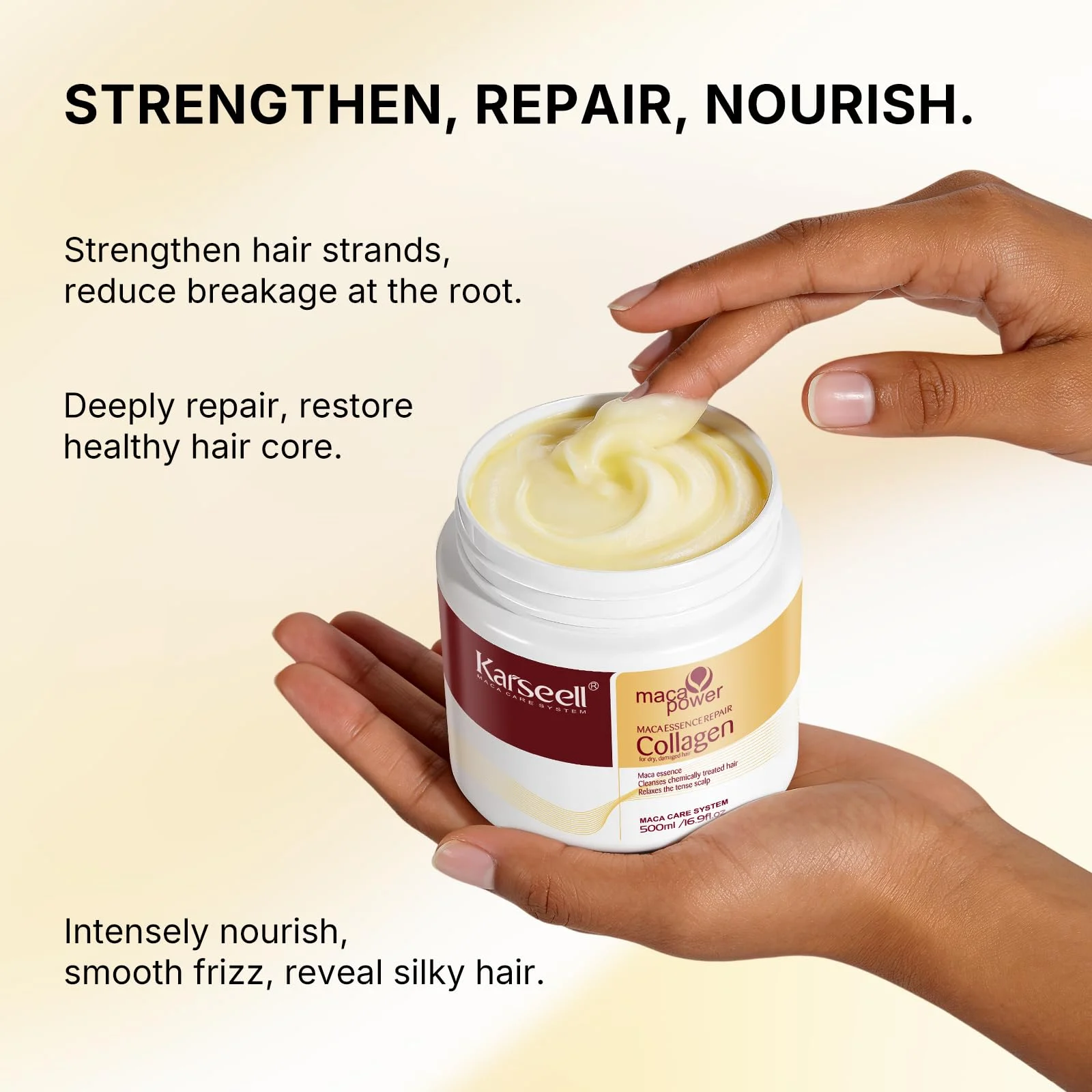
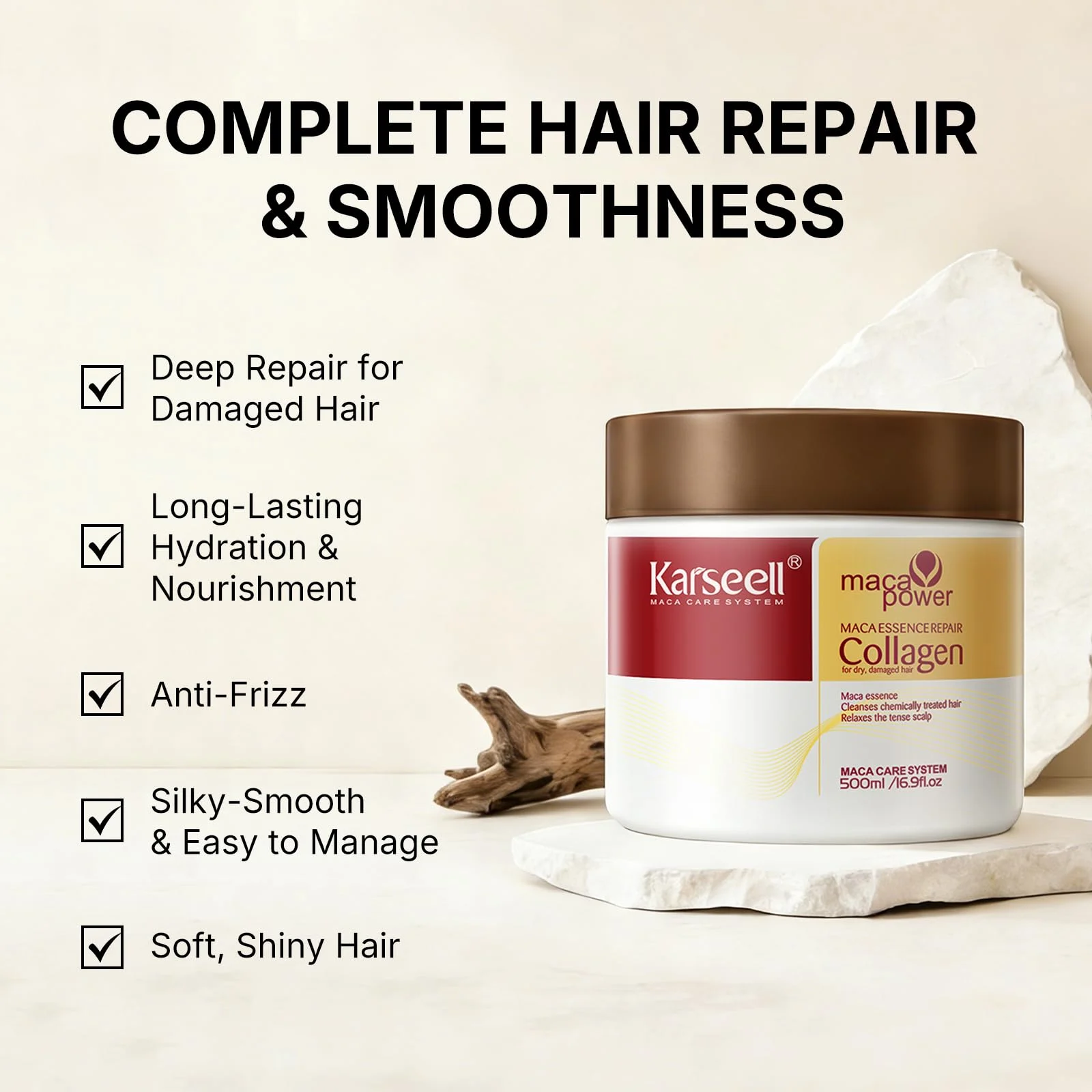
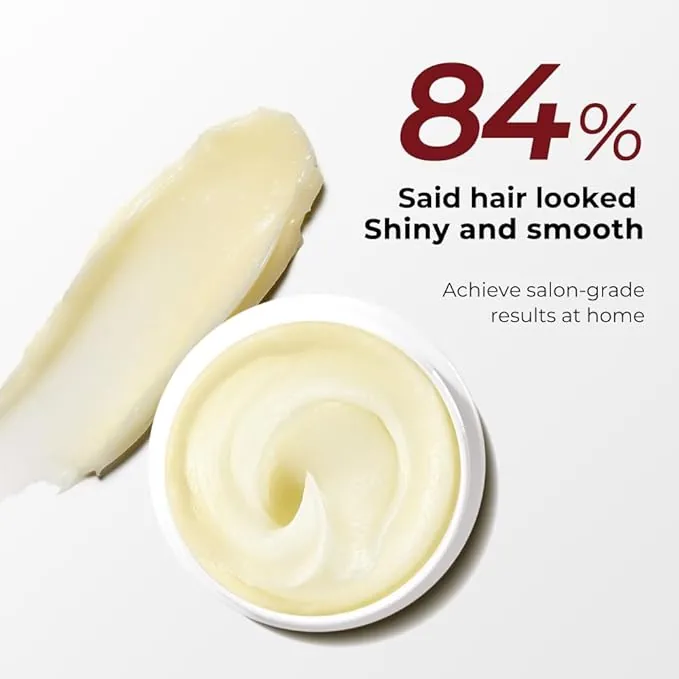
For a weekly routine, the Karseell Collagen Hair Mask can be used as the richer conditioning step after shampoo. If you are comparing formats, start with the Karseell Hair Mask Collection and choose based on hair feel rather than just product name.
The most useful product is the one you can use consistently without making your hair heavy.
FAQ
Can I leave a hair mask on too long?
Yes. Longer is not always better, especially for fine hair or rich formulas. Follow the product directions and adjust based on how your hair feels after drying.
Is 5 minutes enough for a hair mask?
For many people, yes. Fine or lightly dry hair may only need a few minutes. Very dry or coarse hair may need closer to 10 or 15 minutes.
Should I use conditioner after a mask?
Only if your hair still needs it. If the mask already leaves your hair soft and smooth, conditioner may be unnecessary.
How often should I use a mask?
Once a week is a good starting point. Increase or reduce based on dryness, heaviness, and how the ends feel after drying.
