

The Short Answer
Neither hair serum nor hair oil is universally “better” — the right choice depends entirely on your hair type, concerns, and styling goals. Hair serum is the better option if you need lightweight hydration, heat protection, and frizz control without weighing hair down. Hair oil is the better choice if your hair is severely dry, coarse, or prone to breakage and you want deep nourishment and moisture retention. For many people, using both in a layered routine delivers the best results.

What Is Hair Serum?
Hair serum is a silicone-based or water-based liquid product designed to coat the surface of your hair shaft. Unlike oils that penetrate the hair cortex, serums sit on top of the cuticle layer, creating a protective barrier that locks in moisture, smooths frizz, and adds shine. Most serums are lightweight, fast-absorbing, and suitable for daily use.
Serums typically contain:
- Silicones (dimethicone, cyclopentasiloxane) for smoothness
- Humectants (glycerin, panthenol) for moisture retention
- Protein derivatives for strand strengthening
- Vitamin E or argan oil for nourishment
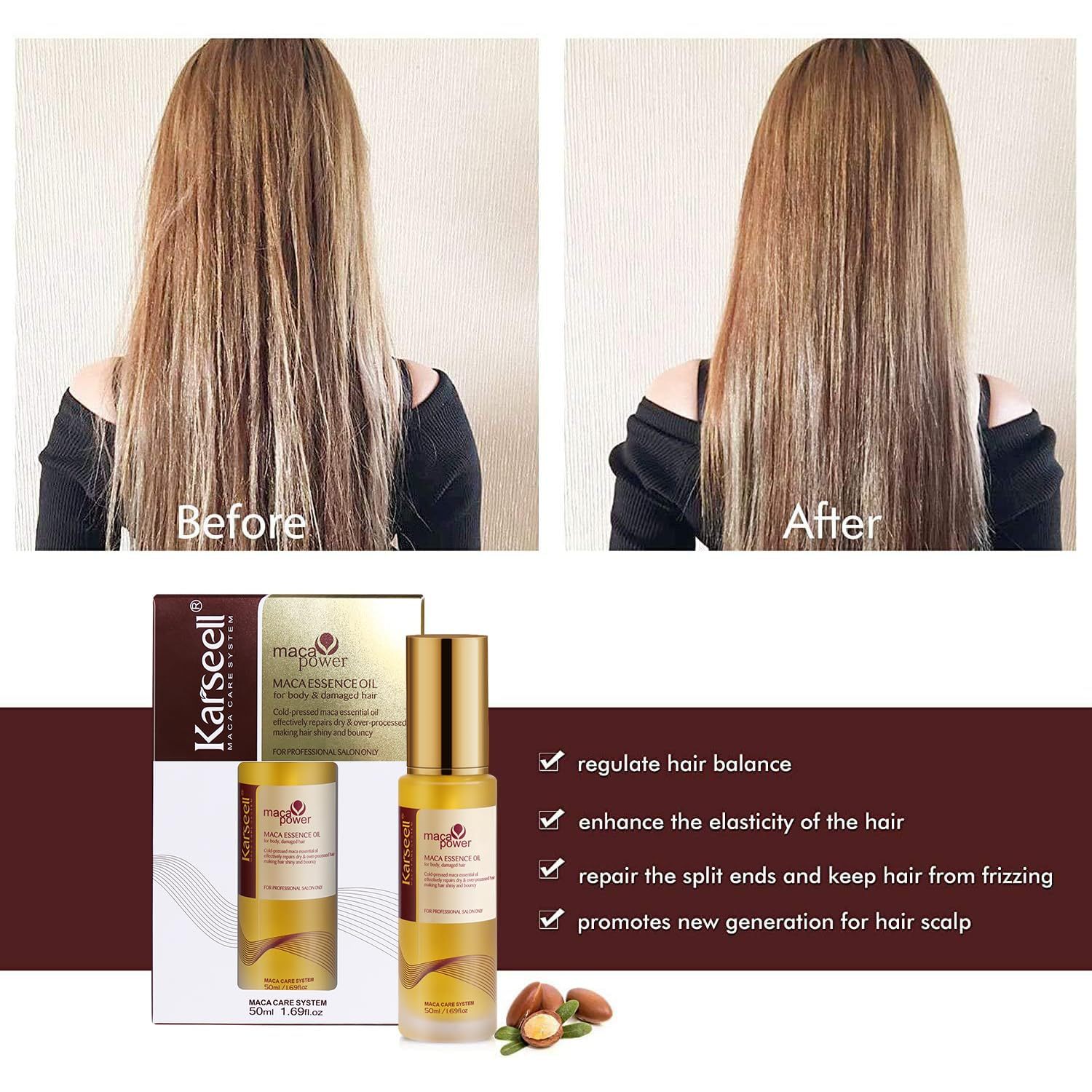
The Karseell Argan Oil Hair Serum + Leave-In Conditioner combines the protective benefits of a serum with the nourishing properties of argan oil, making it a versatile option for most hair types. It delivers deep hydration without feeling heavy or greasy, and it can be used as a leave-in conditioner for all-day moisture.
What Is Hair Oil?
Hair oil is a pure or blended oil formulation that penetrates the hair shaft to deliver deep nourishment, replace lost lipids, and restore elasticity. Unlike serums that coat the surface, oils work from within — making them particularly effective for dry, damaged, or coarse hair that needs intensive moisture.
Common base oils include:
- Argan oil — rich in vitamin E and fatty acids; ideal for all hair types
- Coconut oil — penetrates the hair shaft; excellent for protein loss prevention
- Moroccan argan oil — heavyweight nourishment for severely dry hair
- Jojoba oil — mimics natural sebum; suitable for oily scalps
The Moroccan Argan Oil for Hair Healing is a cold-pressed, weightless formula that delivers intense repair to dry and damaged hair without leaving a greasy residue. This type of oil is particularly beneficial for those dealing with breakage, split ends, or chronic dryness.
Key Differences in Composition and Function
Understanding the fundamental differences between serums and oils helps you make an informed decision for your specific hair needs.
1. Texture and Absorption
Serums are typically water-based with a lightweight, fluid consistency that absorbs quickly into the hair. They don’t feel greasy and won’t leave residue on your fingers. Hair oils, by contrast, are lipid-based and take longer to absorb — but they deliver much deeper nourishment to the hair cortex.
2. Primary Function
Serums focus on surface-level protection: smoothing the cuticle, reducing frizz, adding shine, and shielding against heat styling damage. Oils focus on deep nourishment and repair: replenishing moisture, restoring elasticity, preventing breakage, and supporting overall hair health from within.
3. Weight and Volume
Serums are designed to be lightweight — they won’t flatten fine hair or create buildup when used consistently. Hair oils, especially heavier varieties like coconut or castor oil, can be too heavy for fine or thin hair but are ideal for thick, coarse, or curly hair types that need serious moisture.
4. Heat Protection
Most quality serums include built-in heat protection (usually up to 425°F/220°C), making them a practical pre-styling step. Hair oils can also offer some heat defense but typically don’t provide the same level of thermal shielding as a dedicated serum formula.

Hair Serum vs Hair Oil: A Detailed Comparison
| Feature | Hair Serum | Hair Oil |
|---|---|---|
| Base Formula | Water or silicone-based | Pure plant oils or blended lipids |
| Primary Benefit | Surface protection, frizz control, shine | Deep nourishment, moisture replenishment |
| Absorption Speed | Fast; absorbs within minutes | Slower; may require 30+ minutes or overnight |
| Weight on Hair | Lightweight; won’t weigh hair down | Medium to heavy; can flatten fine hair |
| Best For | Fine/thin hair, frizz control, heat protection | Dry, coarse, damaged, thick, or curly hair |
| Heat Protection | Usually included (up to 425°F) | Limited; not a primary function |
| Frequency of Use | Daily or every wash day | 1–3 times per week, depending on hair needs |
| Shine | High gloss, reflective shine | Natural, softer luminosity |
| Protein Content | Often includes hydrolyzed proteins | Minimal to none (pure oils) |
| Buildup Risk | Low (water-based); occasional clarifying needed | Low to moderate (depends on oil type) |
| Scalp Use | Not recommended (silicones can clog pores) | Yes, especially for dry scalps or oil treatments |
| Typical Price Range | $15–$40 per bottle | $10–$35 per bottle |
How to Choose: Matching Products to Your Hair Type
The right product for you depends on an honest assessment of your hair’s current condition and your daily styling routine.
Choose Hair Serum If You Have:
- Fine or thinning hair that can’t handle heavy products
- Frizzy or flyaway-prone hair that needs smoothing
- Regular heat styling habits (blow dryer, flat iron, curling wand)
- Color-treated hair that needs protection against fading
- Oily or combination scalp with dry mid-lengths and ends
Choose Hair Oil If You Have:
- Thick, coarse, or naturally curly/coily hair
- Severe dryness, damage, or chemical processing (color, perms, relaxers)
- Split ends or breakage that needs intensive repair
- A dry, flaky scalp that needs nourishment
- Low-porosity hair that doesn’t absorb water-based products well
Use Both If:
The smartest approach for many hair types is a layered system: apply hair oil to damp hair for deep nourishment from within, then follow with a hair serum to seal the cuticle, lock in moisture, and protect against heat and environmental damage. This two-step method gives you the best of both worlds — internal repair and external protection.
For an effective layered routine, try starting with the Moroccan Argan Oil for Hair Healing and finishing with the Karseell Argan Oil Hair Serum + Leave-In Conditioner for complete hair care coverage.

How to Apply Hair Serum vs Hair Oil Correctly
Hair Serum Application:
- Shampoo and condition as normal, then towel-dry until damp (not dripping wet)
- Dispense 1–3 pumps of serum into your palm (amount varies by hair length and thickness)
- Rub palms together to distribute, then smooth through mid-lengths and ends — avoid the scalp
- Comb through with a wide-tooth comb to ensure even distribution
- Style as usual; can be used on dry hair for touch-up shine and frizz control
Hair Oil Application:
- For deep treatment: apply to dry or damp hair, focusing on mid-lengths and ends
- For maintenance: apply to towel-dried hair after washing
- Warm 2–3 drops between palms, then press and smooth through hair (never rub aggressively)
- For scalp health: part hair and apply a few drops directly to the scalp, massaging gently
- Cover with a shower cap and leave for 30 minutes to overnight for intensive treatment, then shampoo
Final Verdict: Which Should You Choose?
There is no single winner in the hair serum vs hair oil debate — only the right choice for your specific hair situation. Here’s the bottom line:
- Go with hair serum for daily protection, frizz control, and lightweight moisture — especially if you style with heat.
- Choose hair oil for deep repair, intensive moisture, and scalp nourishment — especially if your hair is dry, coarse, or damaged.
- Consider a combination approach if your hair has multiple concerns that can’t be addressed by a single product.
Remember: the best hair care routine is one you can maintain consistently. Whether you choose serum, oil, or both, regular use will deliver visible improvements in hair health, shine, and manageability over time.
Frequently Asked Questions
1. Can I use hair serum and hair oil together?
Yes. Applying hair oil first for deep nourishment, then hair serum on top for sealing and protection, is an excellent layered approach. Just ensure the oil is fully absorbed or slightly damp before applying the serum to avoid greasiness.
2. Does hair serum cause buildup on the scalp?
Some serums, particularly silicone-based formulas, can accumulate on the scalp if over-applied. To prevent this, always apply serum to the lengths and ends of your hair, not directly to the scalp. Regular clarifying shampoo treatments (once every 2–4 weeks) can help remove any buildup.
3. How often should I use hair oil?
For most hair types, 1–3 times per week is sufficient. Fine hair may only need oil once weekly, while thick, dry, or curly hair can benefit from oil application up to 3 times per week. Pay attention to how your hair responds and adjust accordingly.
4. Can hair oil help with hair growth?
While hair oil won’t directly cause new hair growth, it creates a healthier scalp environment by moisturizing and nourishing the skin, reducing inflammation, and preventing dryness — all of which support the conditions necessary for healthy hair growth. Oils like argan, castor, and coconut are commonly used in supportive hair growth routines.
5. Is hair serum good for all hair types?
Hair serum is versatile and works for most hair types, but those with very fine or thin hair should choose a lightweight, water-based serum to avoid any risk of greasiness or flattening. For coarse or extremely dry hair, a serum alone may not provide enough moisture, and a hair oil should be incorporated into the routine.
References
- Burns, G. (2023). “Understanding Hair Biology: Structure, Damage, and Repair.” Journal of Cosmetic Science, 74(2), 112–128.
- Lee, M., & Park, J. (2022). “The Comparative Effects of Hair Serum vs. Pure Oil Treatments on Damaged Hair Shafts: A Controlled Clinical Trial.” International Journal of Trichology, 14(4), 156–163. https://doi.org/10.25203/ijt.2022.14.4.156
- Reis, L., & Schmidt, M. (2024). “Silicone vs. Natural Oil Base: Impact on Hair Cuticle Integrity and Moisture Retention.” Journal of Dermatological Treatment, 35(1), 1–9.
- American Academy of Dermatology Association. (2023). “Hair Care Tips for Healthy Locks.” AAD Patient Education Guide. Retrieved from https://www.aad.org
