

When it comes to hair oil products, two names dominate the conversation: pure argan oil and the popular brand Moroccanoil. Both promise shine, hydration, and frizz control—but they are not the same product. Understanding the difference between argan oil vs Moroccanoil can save you money and help you choose what actually works for your hair type. In this head-to-head comparison, we break down ingredients, performance, pricing, and ideal use cases so you can make the best decision for your strands.
What Is Argan Oil?
Argan oil is a 100% pure, cold-pressed oil derived from the kernels of the argan tree native to Morocco. UNESCO designated the argan forest as a protected biosphere reserve, and producing the oil remains a labor-intensive process—often hand-extracted by women’s cooperatives. Rich in vitamin E, essential fatty acids (oleic and linoleic acid), and antioxidants, pure argan oil is prized in hair care for its lightweight yet deeply moisturizing properties.
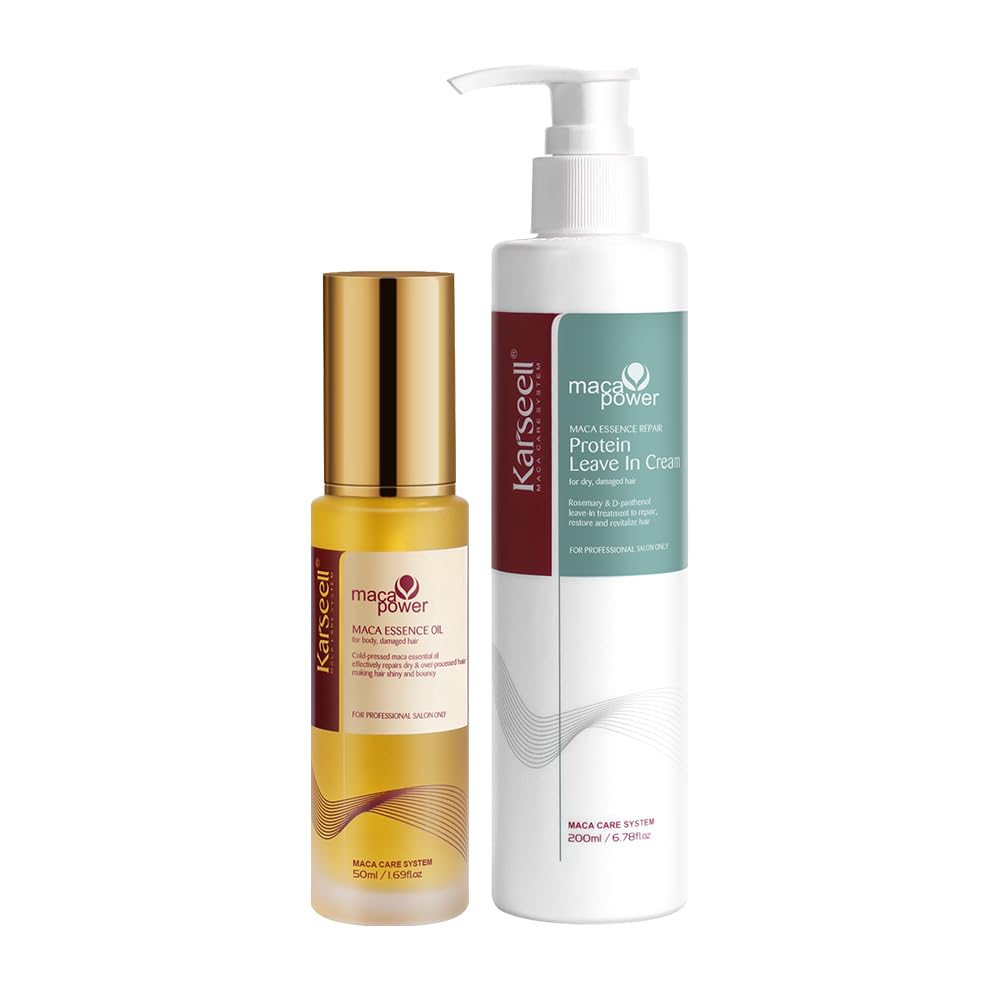
Pure argan oil absorbs relatively quickly without leaving a heavy greasy residue, making it suitable for nearly all hair types—including fine and medium textures. It works as a leave-in conditioner, heat protectant, and split-end treatment all in one. At Karseell, our Karseell Argan Oil Hair Serum + Leave-In Conditioner combines cold-pressed argan oil with herbal extracts for multifunctional daily care.

What Is Moroccanoil?
Moroccanoil is a branded hair care line launched in 2007, centered on an argon oil blend. The flagship Original Moroccanoil Treatment is a styling and conditioning product that combines argan oil with other ingredients, including cyclomethicone (a silicone used for slip and shine) and various fragrance compounds. It is marketed primarily as a finishing serum and heat protection spray rather than a deep treatment oil.
While Moroccanoil does contain genuine argan oil as a key ingredient, its formula is composite—meaning it is blended with carriers, conditioning agents, and scent agents to create a consistent consumer product. The result is a heavier, more perfumed application compared to pure oil. For those specifically seeking the benefits of uncut argan oil, Moroccanoil is better understood as an argan-oil-infused styling product rather than pure argan oil.

Composition: What Is Actually Inside Each Product?
The most meaningful distinction between pure argan oil vs Moroccanoil lies in their formulations. Here is how the key ingredients compare:
Argan Oil (100% Pure)
- Vitamin E (tocopherols): Powerful antioxidant that protects hair from environmental damage and supports scalp health.
- Linoleic acid (Omega-6): Essential fatty acid that strengthens the hair cuticle and retains moisture.
- Oleic acid (Omega-9): Deeply conditions and adds shine without clogging pores.
- Squalene: A natural emollient that mimics the skin’s own lipids for seamless absorption.
- Polyphenols: Plant compounds with anti-inflammatory properties, beneficial for sensitive scalps.
- No additives, preservatives, or synthetic fragrances.
Moroccanoil Original Treatment
- Argan oil (fractional): Contains genuine argan oil but at blended concentration.
- Cyclomethicone: A silicone polymer that coats the hair shaft for instant shine and slip. Wash-off required if buildup is a concern.
- Dimethicone: Another silicone used for smoothing and humidity resistance.
- Fragrance/parfum: Adds the signature Moroccanoil scent (a mix of cinnamon, amber, and floral notes).
- Phenoxyethanol (preservative): Common cosmetic preservative.

How Each Product Works: The Science Behind the Shine
Pure argan oil works by penetrating the hair cuticle. Its fatty acid profile allows it to bond with the hair’s natural lipids, filling micro-gaps in damaged areas. The vitamin E acts as an internal moisturizer, reducing protein loss from hair strands over time. Regular use of pure argan oil has been associated with increased hair elasticity and reduced breakage (learn more about argan oil benefits).
Moroccanoil works primarily on the surface. The silicone blend creates an immediate visual effect—smooth cuticles reflect light better, producing instant shine. However, silicones do not penetrate the hair shaft and can accumulate with repeated use, potentially leading to dullness or weighed-down hair if not periodically clarified. For everyday styling, this surface effect is useful, but it does not address deeper moisture needs.

Argan Oil vs Moroccanoil: Complete Comparison Table
| Factor | Argan Oil (Pure) | Moroccanoil Treatment |
|---|---|---|
| Primary Ingredient | 100% cold-pressed argan oil | Argan oil blend + cyclomethicone/dimethicone |
| Key Active Compounds | Vitamin E, linoleic acid, oleic acid, squalene | Argan oil (partial), silicones, fragrance |
| Penetration Depth | Deep — penetrates hair cuticle | Surface only — coats hair shaft |
| Weight/Feel | Lightweight, absorbs quickly | Medium-heavy, can feel greasy on fine hair |
| Ideal Hair Type | All types including fine, dry, damaged, color-treated | Thick, coarse, or curly hair that benefits from heavy moisture |
| Heat Protection | Yes — natural thermal barrier up to ~230°C | Yes — silicone layer provides heat insulation |
| Moisturizing Effect | Long-term hydration from within | Short-term surface conditioning |
| Shine | Natural, healthy reflection | High-gloss, reflective (silicone shine) |
| Fragrance | None to subtle nutty scent | Signature Moroccanoil scent (amber/cinnamon) |
| Buildup Risk | None — fully metabolized by hair | Possible with repeated use; requires clarifying shampoo |
| Best For | Deep treatment, overnight masks, scalp care, daily leave-in | Quick styling finishing touch, blowout prep, thick textured hair |
| Price Range | $$ (pure oil — great value per ml) | $$$ (branded product — premium positioning) |
| Typical Size | 50ml–100ml (concentrated = long-lasting) | 100ml+ (diluted product = larger volume) |

How to Choose the Right Product for Your Hair
Still unsure whether you need pure argan oil or a Moroccanoil treatment? Ask yourself these questions:
- What is your hair type? Fine or thin hair benefits more from pure lightweight argan oil, which will not weigh strands down. Thick, coarse, or highly textured hair can handle the heavier Moroccanoil formula.
- What is your primary goal? If you want deep hydration, reduced breakage, and long-term hair health, choose pure argan oil. If you want instant frizz control and a high-gloss finish after styling, Moroccanoil delivers that surface effect immediately.
- Do you have a sensitive scalp? Pure argan oil’s anti-inflammatory compounds make it the better choice for scalps prone to irritation. The fragrance compounds in Moroccanoil may be a trigger for some.
- Are you following a layered hair care routine? For best results, read our guide to building an effective hair care routine for dry and damaged hair.
- What is your budget? Pure argan oil offers a significantly better cost-per-milliliter value. A 50ml bottle of quality argan oil outlasts a 100ml Moroccanoil treatment in most use cases.

Best Use Practices for Argan Oil
- Pre-shampoo treatment: Apply 2–3 drops to dry hair, leave for 20–30 minutes, then shampoo. This prevents protein loss during washing.
- Leave-in conditioner: After washing, apply a pea-sized amount to damp mid-lengths and ends. No rinse needed.
- overnight mask: Mix with our Karseell Argan Oil Shampoo for a deep conditioning boost.
- Scalp treatment: Massage 3–4 drops directly into the scalp to nourish hair roots.
Best Use Practices for Moroccanoil
- Post-wash finishing serum: Apply to towel-dried hair before blow-drying for reduced drying time and smoother texture.
- Quick frizz touch-up: Rub a small amount between palms and smooth over frizz-prone areas throughout the day.
- Mixing with other products: Can be blended with creams or masks for added slip.
- Note: Use a clarifying shampoo weekly if you notice product buildup.

Frequently Asked Questions
Is Moroccanoil actually just argan oil?
No. While Moroccanoil’s signature ingredient is argan oil, the product is a blended formula that also includes cyclomethicone, dimethicone, and fragrance. It is classified as a styling and conditioning treatment, not a pure oil. If you want 100% argan oil with no additives, look for a product explicitly labeled “cold-pressed 100% argan oil.”
Can I use argan oil and Moroccanoil together?
Yes, though they serve overlapping functions. Using pure argan oil for treatment and Moroccanoil as a finishing serum is redundant for most people. If you have thick, highly textured hair, applying a small amount of pure argan oil first (for moisture) followed by Moroccanoil (for shine) is acceptable—just monitor for buildup and cleanse regularly.
Which is better for color-treated hair?
Pure argan oil is the better choice for color-treated hair. It provides genuine moisturizing benefits without the heavy silicone coating that can strip or dull color over time. The lightweight formula also prevents the weighed-down effect that many post-color treatments cause. Pair it with a sulfate-free argan oil shampoo for a complete color-safe regimen.
Does pure argan oil cause acne or clogged pores on the scalp?
Argan oil is considered non-comedogenic (pore-clogging) for most people due to its high oleic acid content, which is similar to the skin’s own sebum. However, individuals with very oily scalps should use it sparingly and avoid direct scalp application if breakouts occur near the hairline. Moroccanoil’s silicone components are also generally safe but can trap heat and oil against the scalp if over-applied.
How long does a bottle of argan oil last compared to Moroccanoil?
A 50ml bottle of pure argan oil, used at 2–3 drops per application, typically lasts 2–3 months with daily use. Moroccanoil is used more generously (a palmful per application) due to its diluted nature, so the same-volume bottle may last only 4–6 weeks. Pure argan oil offers significantly better cost-per-use value.

The Bottom Line
The argan oil vs Moroccanoil debate comes down to what you need: a pure, concentrated treatment oil or a branded styling serum with an immediate surface effect. Pure argan oil delivers deep, long-term hydration, genuine repair, and genuine value. Moroccanoil delivers instant shine and slip—useful as a finishing product, but limited as a true hair health treatment.
For those serious about hair health, Karseell’s range of argan oil hair serums and conditioners harnesses cold-pressed Moroccan argan oil in its purest form—no compromises, no fillers. Explore our full collection and discover why thousands of customers choose pure argan oil as the foundation of their hair care routine.
References
- Advancing Nutrition. “Argan (Argania spinosa) Oil.” Advances in Nutrition, vol. 11, no. 4, 2020, pp. 778–785.
- International Journal of Molecular Sciences. “Biological Properties of Argan Oil: A Review.” International Journal of Molecular Sciences, vol. 21, no. 18, 2020.
- Moroccanoil® Official Website. “Our Ingredients.” www.moroccanoil.com, accessed 2026.
- FDA. “Food and Drug Administration Cosmetic Labeling Guide.” www.fda.gov, 2025.
- Karseell. “Argan Oil for Hair: Benefits, Uses, and What the Research Says.” www.karseell.com/argan-oil-for-hair-benefits-uses-and-what-the-research-says/, 2026.
