

Why Hair Texture Changes and What It Signals
Hair that feels like sandpaper is sending a clear message about its condition. Understanding what sandpaper-texture hair means helps you address the root cause rather than just treating the symptom.
Sandpaper texture in hair is caused by cuticle damage. When the protective cuticle scales are worn away, the exposed cortex surface is rough and irregular. This roughness creates the sandpaper sensation when you run your fingers through the hair or when hair rubs against itself or clothing.
The cuticle can be damaged by chemical treatments (bleaching, dyeing, perming), heat styling without protection, mechanical abrasion from brushing or combing, and environmental factors (UV, pollution, hard water).
When the cuticle is damaged, the hair not only feels rough, it also looks dull, tangles easily, and breaks more readily. The roughness is not just a texture problem; it is a structural problem that makes all other hair problems worse.
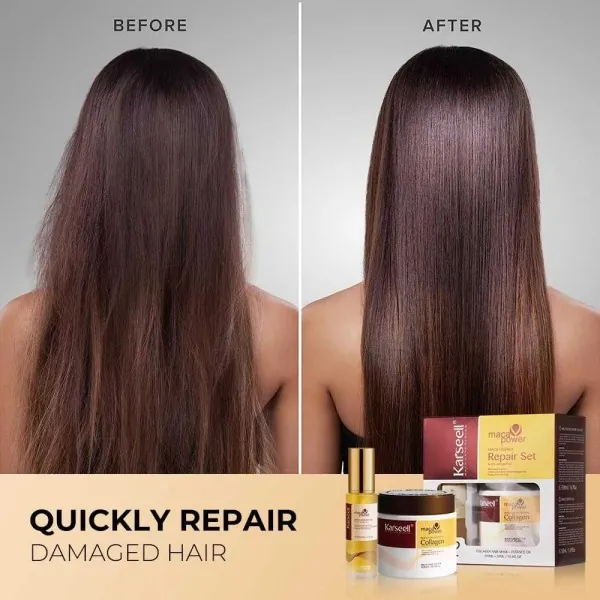
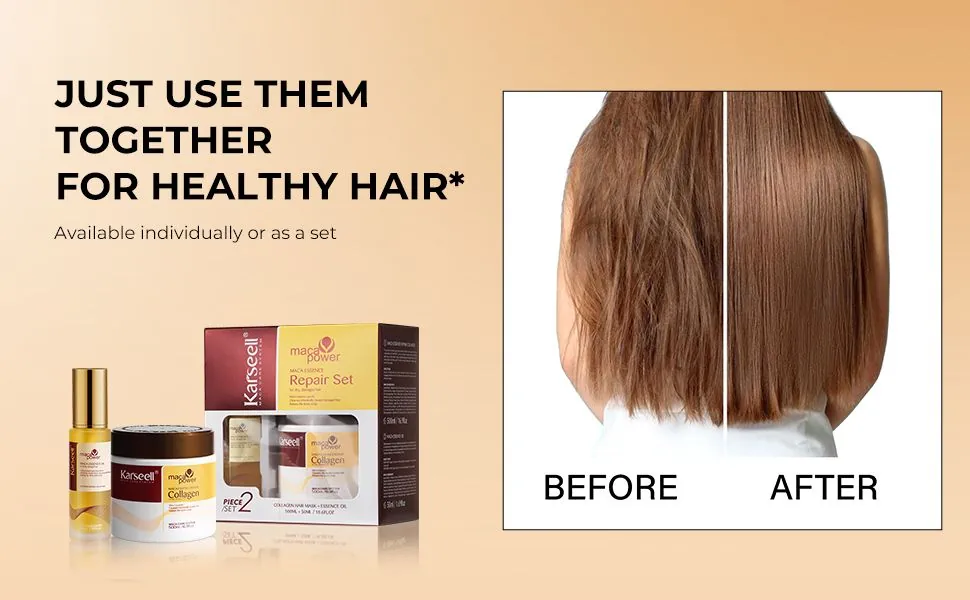
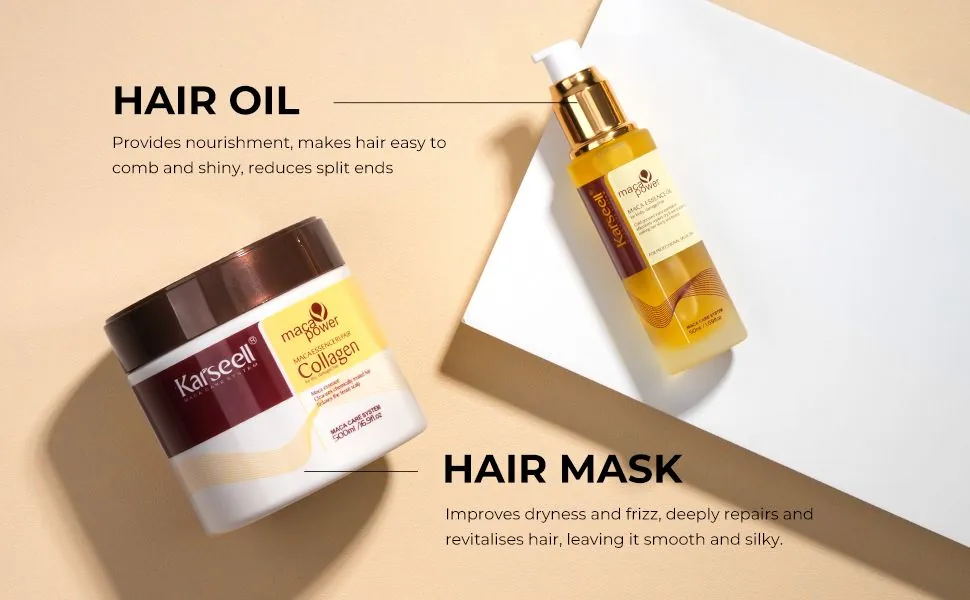
The good news is that cuticle damage can be managed. While the completely worn-away cuticle cannot be regrown, the remaining cuticle can be smoothed and the exposed cortex can be protected and strengthened. The Karseell Collagen Hair Mask does both.
How to Restore Smoothness to Damaged Hair
Restoring smoothness to sandpaper-texture hair requires a multi-step approach.
First, remove buildup that may be contributing to roughness. Use a clarifying shampoo once to remove any product residue, mineral deposits, or silicone buildup that may be sitting on top of the damaged cuticle and adding to the rough texture.
Second, repair the cuticle surface with protein. The hydrolyzed collagen and wheat protein in the Karseell mask fill in the gaps and cracks in the damaged cuticle, creating a smoother surface. Use the mask twice weekly for the first month to accelerate repair.
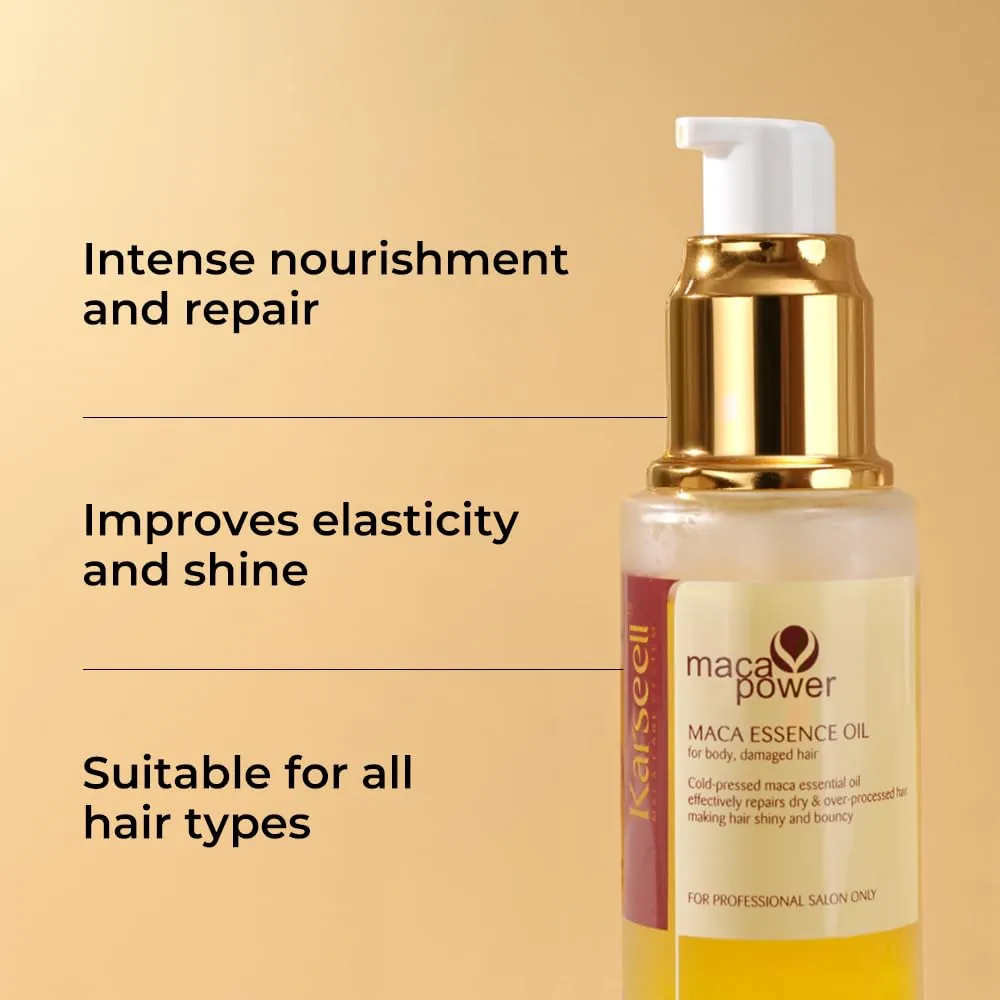
Third, seal the repaired surface with an occlusive. After each mask treatment, apply Karseell Argan Oil to create a protective barrier that prevents moisture loss and reduces future cuticle damage.
Fourth, prevent future damage by using heat protection before any heat styling, switching to a wide-tooth comb for wet detangling, and reducing the frequency of chemical treatments.
The Role of pH in Hair Smoothness
pH has a direct and immediate effect on hair smoothness. This is why pH-balanced products make such a noticeable difference in how hair feels.
Hair is most smooth when at its natural slightly acidic pH of 4.5 to 5.5. At this pH, the cuticle scales lie flat against each other, creating a smooth surface that feels silky to the touch.
When hair is exposed to alkaline substances (soap, hard water minerals, many conventional shampoos), the cuticle swells and the scales lift, creating immediate roughness. This is why hair always feels rougher after shampooing with soap or harsh shampoo, even before it has dried.
The Karseell Collagen Hair Mask and Conditioner are both formulated at the optimal acidic pH, which helps restore the cuticle to its smooth, closed state after each wash.
How Long Does It Take to Fix Sandpaper Hair?
The timeline for fixing sandpaper-texture hair depends on the severity and type of damage.
Surface roughness from dehydration (not actual cuticle damage) can improve within 1 to 2 weeks of consistent deep conditioning. The cuticle is not damaged, just dry and rough.
Moderate cuticle damage from heat or environmental factors typically shows visible improvement in 4 to 6 weeks of consistent mask and argan oil use. The cuticle surface smooths as the protein fills in gaps.
Severe cuticle damage from bleaching or multiple chemical treatments may take 3 to 6 months to significantly improve. Some cuticle damage may be permanent, but consistent care can minimize its appearance and prevent further damage.
Frequently Asked Questions
Will the mask fix my sandpaper hair permanently?
It will repair the existing damage and maintain the repaired state as long as you continue using it. Some damage from chemical treatments may be permanent. The key is consistent use to prevent further damage from accumulating.
I have hard water. Can it cause sandpaper texture?
Yes. Hard water minerals deposit on the cuticle and create a rough, chalky coating. Use a clarifying shampoo monthly and install a water softener or filter for the shower if hard water is severe in your area.
Can I use the mask every day?
The mask is designed for once or twice weekly use. Using it more frequently may lead to over-conditioning, particularly on fine hair. Use daily conditioner or argan oil for daily moisture and reserve the mask for intensive weekly treatment.
My hair feels smooth after the mask but rough again the next day. Why?
This indicates that the cuticle is not being properly sealed after treatment. Apply Karseell Argan Oil after every mask treatment to create a lasting seal. Also, ensure you are rinsing with cool water, which closes the cuticle more effectively than warm or hot water.
