

There is a remarkable journey that takes place between a raw ingredient and the finished product you trust on your hair. At Karseell, that journey is governed by one overriding principle: quality is never negotiable. In this article, we pull back the curtain on Karseell’s quality control process, explaining exactly how we ensure that every bottle, every batch, and every application meets the professional standards our customers rely on.
Why Quality Control Matters More in Hair Care Than Almost Anywhere Else
Hair care products are applied repeatedly—often weekly or even daily—over the course of years. Unlike makeup, which is used occasionally and washed off, hair care products are designed for sustained, repeated contact with your scalp and skin. This makes quality control not just a matter of product effectiveness, but of long-term scalp and hair health.
Inferior products may deliver short-term visual improvements—a temporary shine, a momentary softness—while causing cumulative damage that doesn’t become apparent until months later. At Karseell, our quality control process is designed to catch these issues before they ever reach your hair. For a deeper look at what goes into making a truly effective hair mask, read our article on collagen hair masks—the secret to stronger, healthier hair.
The Difference Between Quality Control and Quality Assurance
While these terms are sometimes used interchangeably, there is an important distinction. Quality assurance (QA) refers to the systematic processes we put in place during development to prevent defects. Quality control (QC) refers to the testing and inspection we perform on finished products to identify any issues that slipped through. Karseell employs both—QA during formulation and production, and QC on every batch that leaves our facility.
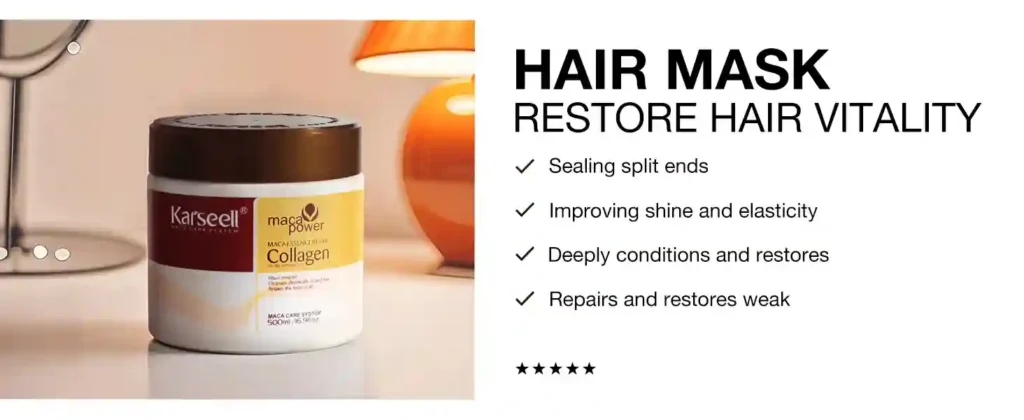
Stage 1: Ingredient Verification—Nothing In, Nothing Bad
Before any ingredient ever enters our production process, it must pass our supplier qualification protocol. This includes:
- Certificate of Analysis (COA) Review: Every ingredient shipment comes with a COA from the supplier, confirming identity, purity, potency, and safety parameters. Our quality team reviews each COA before accepting the shipment.
- Supplier Audits: We conduct periodic audits of our key ingredient suppliers to verify their handling, storage, and testing practices meet our standards.
- Identity Testing: For critical active ingredients—like our collagen complexes and argan oil—we conduct independent identity testing in addition to the supplier’s COA to verify what we’re receiving is exactly what we ordered.
- Contaminant Screening: Ingredients are tested for microbial contamination, heavy metals, and pesticide residues where applicable. This is especially important for natural ingredients that can absorb environmental contaminants from soil and water.
You can learn more about the specific ingredients that power Karseell products in our article on the collagen and argan oil combination for split ends and breakage.
Stage 2: Formulation Testing—Proving It Works
Once ingredients are verified, our formulations go through rigorous performance testing. This stage is where the difference between Karseell and low-cost competitors becomes most apparent.
Laboratory Performance Testing
Every new Karseell formula undergoes laboratory testing that measures:
- Moisture Retention Rates: We test how effectively a product helps hair retain moisture over time, not just immediately after application.
- Tensile Strength Testing: Using instrumentation, we measure how much force hair fibers can withstand before breaking—a key indicator of repair effectiveness.
- Cuticle Integrity Assessment: Under magnification, we assess whether the hair cuticle remains intact and smooth after repeated product use.
- Color Fade Resistance: For products used on color-treated hair (like our purple hair mask), we test how well our formulas protect against premature color fading.
Dermatologist-Reviewed Skin Sensitivity Testing
Even products that rinse off eventually contact your scalp. That’s why Karseell conducts dermatologist-reviewed skin sensitivity testing on all new formulations. This process involves:
- Patch testing on human volunteers under dermatological supervision
- Repeat Insult Patch Tests (RIPT) to identify potential allergic sensitization
- Assessment of irritation potential across different skin types
Our commitment to skin safety is especially important for customers with sensitive scalps. We explore this topic in detail in our article: Is Karseell collagen safe for sensitive scalps? Ingredient safety guide.

Stage 3: Production Quality Control—Every Batch Checked
When your product is being manufactured, our quality team doesn’t step back and wait for the finished product to arrive. We monitor production through:
- In-Process Testing: At key stages of production, samples are pulled and tested for pH, viscosity, color, and fragrance consistency. These checkpoints catch deviations before they affect an entire batch.
- Microbiological Testing: Finished products are tested for microbial contamination before release. No product ships unless it passes our micro standards—typically a total viable count of less than 100 CFU/g with zero pathogenic organisms.
- Fill Weight Verification: We verify that every unit is filled to the correct weight. Under-filled containers are rejected and recycled, never shipped.
- Stability Sampling: We retain samples from every production batch and store them under various conditions (room temperature, elevated temperature, UV exposure) to verify they maintain quality throughout their shelf life.
Stage 4: Post-Release Monitoring—We Keep Listening
Our quality control process doesn’t end when a product leaves the warehouse. Karseell actively monitors customer feedback, return rates, and adverse event reports to identify any patterns that might indicate a problem with a specific batch or formulation. If an issue arises:
- We investigate immediately
- We pull affected batches from sale if necessary
- We communicate transparently with customers
- We reformulate if a persistent issue is identified

How Karseell Quality Stacks Up Against Low-Cost Competitors
It’s a fact of the beauty industry: you get what you pay for. Budget hair care products often cut costs at exactly the points that matter most:
- Cheaper Ingredients: Low-cost brands frequently use generic, low-purity ingredients that deliver minimal benefit—or potential harm. They also tend to use higher percentages of water and fillers to reduce costs while maintaining the appearance of a full bottle.
- Minimal Testing: Budget brands often skip the extensive testing that Karseell conducts. Without performance testing and skin sensitivity assessments, there’s no guarantee the product does what it claims—or that it won’t cause harm.
- No Stability Monitoring: Without stability sampling, budget brands have no way of knowing whether their product degrades before its expiration date. You might be applying a degraded product without knowing it.
- No Post-Market Surveillance: Most budget brands have no system for monitoring customer feedback for quality signals. Problems only become apparent when they scale up into regulatory action.
At Karseell, we believe quality control is not a cost center—it’s the foundation of customer trust. To understand what makes our formulations stand apart, read our detailed article: Why Karseell products work—ingredients breakdown.
The Karseell Quality Promise
Every time you apply a Karseell product, you can trust that it has passed through our comprehensive quality control process—from ingredient verification through formulation testing, production monitoring, and post-release surveillance. This isn’t the industry standard. It’s the Karseell standard, and it’s why our customers keep coming back.
Experience the difference that rigorous quality control makes. Shop our collection of professional-grade Karseell hair care products and feel the quality for yourself.
Frequently Asked Questions
What quality control tests does Karseell perform on its products?
Karseell conducts multi-stage quality control including ingredient COA verification, supplier audits, microbial testing, pH and viscosity checks during production, stability sampling, dermatological skin sensitivity testing, and post-release customer feedback monitoring. Every batch is tested before release.
How does Karseell ensure ingredient quality from suppliers?
We require Certificate of Analysis (COA) documentation for every ingredient shipment, conduct periodic supplier audits, perform independent identity testing on critical active ingredients, and screen for contaminants including microbes, heavy metals, and pesticides.
Are Karseell products tested for skin safety?
Yes. All Karseell formulations undergo dermatologist-reviewed patch testing and Repeat Insult Patch Tests (RIPT) to identify potential skin irritation and allergic sensitization before products are released to market.
How is Karseell different from budget hair care brands?
Budget brands typically use lower-purity ingredients, skip extensive testing protocols, don’t conduct stability monitoring, and have no post-market surveillance systems. Karseell’s quality control process covers ingredient verification, formulation testing, production monitoring, and ongoing post-release monitoring—ensuring every product that reaches you meets professional-grade standards.
