

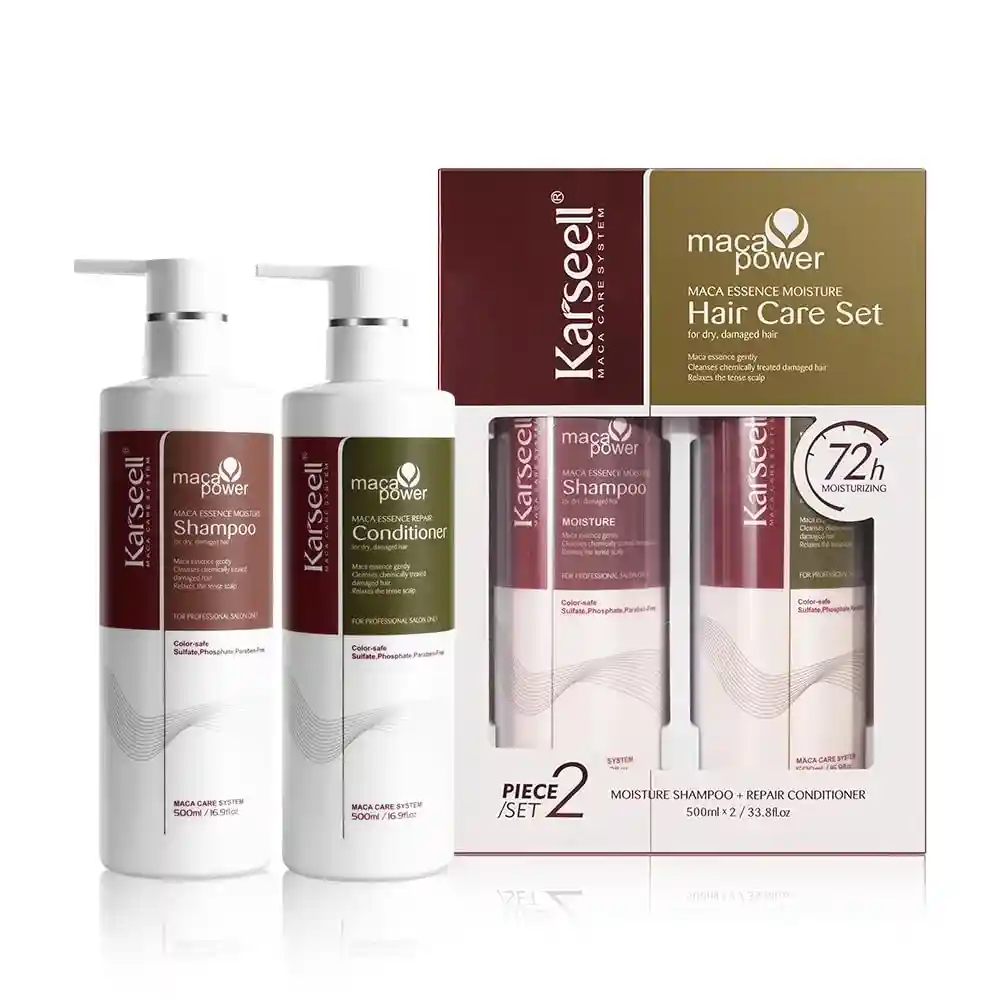
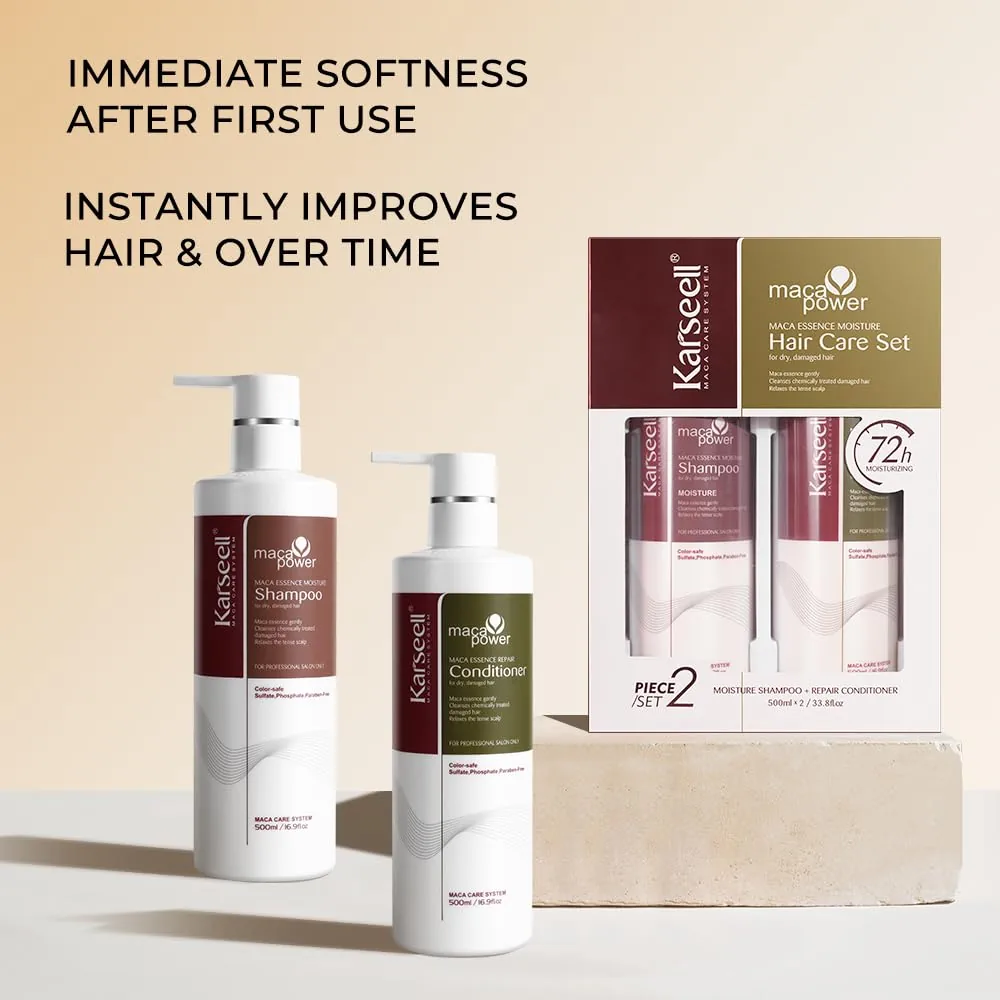
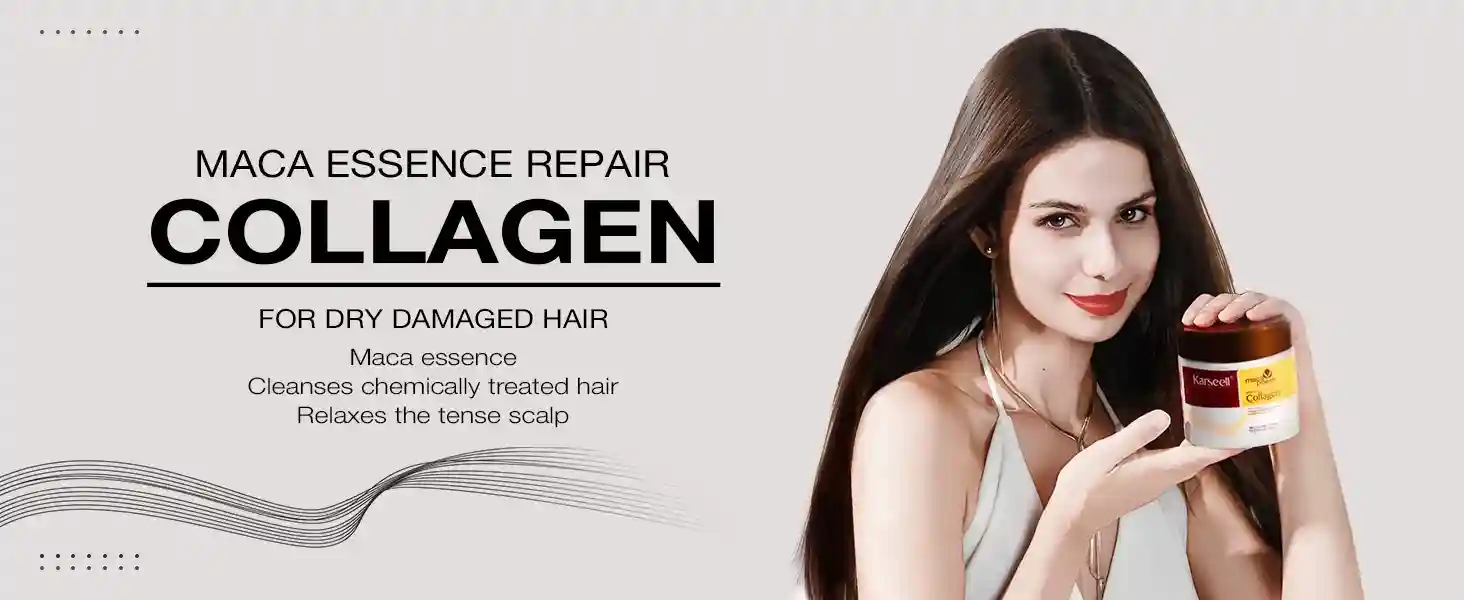
- Hair Repair: Karseell shampoos and conditioners are enriched with nourishing components like argan oil and keratin, which penetrate the hair shaft to restore strength and elasticity. This helps reverse damage from heat styling, coloring, and environmental stressors.
- Reduces Hair Breakage: Strengthened hair is less prone to snapping. Karseell’s formulas fortify strands from root to tip, minimizing split ends and breakage over time.
- Tackles Dandruff: For those struggling with flaky scalps, Karseell’s soothing ingredients—such as tea tree oil and aloe vera—calm irritation, balance oil production, and reduce dandruff without over-drying.
- Eases Hair Tangling: The conditioners provide deep hydration and slip, making detangling effortless and reducing friction that leads to breakage.
Why Sustainability in Hair Care Matters
The beauty and personal care industry generates enormous amounts of packaging waste, water waste, and chemical runoff that affects ecosystems worldwide. As consumers become more aware of these impacts, the demand for sustainable hair care products has grown significantly.
Sustainable hair care is not just about using natural ingredients. It encompasses the entire lifecycle of a product: from how ingredients are sourced and manufactured, to how the product is packaged and disposed of, to how it performs during use. A truly eco-friendly product considers all of these factors.
Karseell has committed to several sustainability principles in its product development: sourcing natural, plant-based ingredients that are renewable and biodegradable, formulating without harsh chemicals like sulfates and parabens that can harm aquatic ecosystems when washed down the drain, and using packaging materials that minimize environmental impact.
Choosing eco-friendly hair care products is one of the simplest and most impactful changes a consumer can make. Unlike dietary changes or transportation choices, switching to a sustainable shampoo requires no additional effort and no lifestyle adjustment, yet it contributes meaningfully to reducing your environmental footprint.
The Impact of Harsh Chemicals in Traditional Shampoos
Most conventional shampoos contain surfactants derived from petrochemicals, preservatives that have been linked to environmental and health concerns, and fragrance compounds that are not disclosed on the label. Understanding these ingredients helps explain why switching to a gentler formula is better for both your hair and the planet.
Sodium lauryl sulfate (SLS) and sodium laureth sulfate (SLES) are the primary cleansing agents in most commercial shampoos. They are effective at removing oil and dirt, but they are also aggressive enough to strip the hair of its natural protective oils and disrupt the scalp microbiome. In aquatic environments, sulfates are toxic to marine life even at low concentrations.
Parabens, used as preservatives in many conventional products, have been detected in water systems and marine organisms. Research suggests they may disrupt endocrine function in aquatic species. While their impact on human health is debated, many consumers prefer to avoid them as a precaution.
Silicones, while not inherently toxic, create an environmental concern when they wash off. Non-water-soluble silicones like dimethicone accumulate in waterways and are difficult to remove through standard wastewater treatment.
Karseell’s formulations avoid these ingredients in favor of gentler plant-derived alternatives that are both effective for hair care and less harmful to the environment.
The Benefits of Plant-Based Ingredients in Hair Care
Plant-based ingredients offer several advantages over their synthetic counterparts in hair care applications.
Argan oil, harvested from the argan tree in Morocco, is rich in vitamin E, linoleic acid, and oleic acid. It is an exceptional natural moisturizer that conditions the hair without leaving a heavy residue. The argan oil industry also supports rural Moroccan communities and uses sustainable harvesting practices, making it one of the most ethically sourced natural ingredients in hair care.
Keratin, when derived from plant sources or produced through biotechnology, provides the strengthening benefits of protein without the ethical concerns associated with animal-derived keratin.
Tea tree oil has natural antibacterial and antifungal properties that make it effective for addressing dandruff and scalp irritation without the need for synthetic antimicrobial agents.
Aloe vera is one of the most soothing and moisturizing plant ingredients available. Its polysaccharide content creates a gel-like protective barrier on the hair and scalp that locks in moisture and reduces inflammation.
These plant-based ingredients are biodegradable, meaning they break down naturally in the environment without leaving persistent pollutants. This is a significant advantage over synthetic conditioning agents that can persist in water systems for years.
How Eco-Friendly Products Perform Differently
A common concern is whether natural, sulfate-free shampoos and conditioners clean and condition as effectively as conventional products. The short answer is: yes, when properly formulated, they perform equally well.
The key difference is in the cleansing mechanism. Sulfate-based surfactants are aggressive and create a rich, abundant lather that many consumers associate with effective cleaning. Plant-based surfactants create a lighter lather but clean just as effectively. The lack of abundant foam does not mean the hair is less clean.
In fact, sulfate-free shampoos are often more effective for long-term hair health because they do not over-strip the scalp’s natural oils. This means the scalp produces less oil over time, hair stays cleaner longer between washes, and the hair itself maintains better hydration and elasticity.
The transition period when switching from a sulfate shampoo to a sulfate-free one can be challenging. During the first 1 to 2 weeks, hair may feel oilier and less clean because the scalp is adjusting to its new oil production levels. Persisting through this period leads to significantly better results in the long run.
Building a Sustainable Hair Care Routine
Adopting eco-friendly hair care products is just one part of a more sustainable approach to personal care. Here are additional practices that amplify the environmental benefits.
Reduce wash frequency. Washing hair every day is not necessary for most people. In fact, washing less frequently is better for both hair health and the environment. Try extending the time between washes by a day or two.
Use cold water when possible. Heating water requires energy. Rinsing hair with cooler water also helps close the cuticle and seal in moisture more effectively, so it benefits both the environment and your hair.
Choose concentrated or solid-format products when available. Shampoo bars and conditioner bars eliminate plastic packaging entirely and often last longer than their liquid equivalents.
Recycle packaging appropriately. Check your local recycling guidelines and rinse containers thoroughly before recycling to avoid contamination.
Frequently Asked Questions
Are eco-friendly shampoos less effective at cleaning oily hair?
No. Plant-based surfactants are just as effective at removing oil and buildup as sulfate-based ones. Oily hair types may need a slightly longer lathering time or a clarifying treatment once a month to address any residue from heavier styling products.
Do natural shampoos have a shorter shelf life?
Not necessarily. Karseell uses natural preservatives and smart packaging to ensure product stability. Most natural shampoos have a shelf life of 12 to 24 months when stored properly, comparable to conventional products.
Are eco-friendly products more expensive?
Not always. While some premium natural brands command higher prices, many eco-friendly options are competitively priced with conventional products. The long-term savings from washing less frequently and needing fewer repair treatments can also offset any price difference.
Can I use eco-friendly products if I have a sensitive scalp?
Yes. In fact, eco-friendly products are often better for sensitive scalps because they avoid common irritants like sulfates, artificial fragrances, and parabens. The plant-based ingredients like aloe vera and tea tree oil can actually soothe scalp irritation.
Do these products work well with color-treated hair?
Yes. The gentle, moisturizing formulas of eco-friendly shampoos and conditioners are particularly beneficial for color-treated hair, which needs gentle care to maintain vibrancy and prevent fading.
Are Karseell products cruelty-free?
Karseell does not test finished products on animals and is committed to ethical sourcing practices for all natural ingredients.
