
Every week, millions of people spend billions of dollars on hair care products that promise to transform their locks overnight. Yet most of them are still struggling with frizz, breakage, dullness, and damage. Why? Because beautiful hair is not about any single miracle product — it is about a consistent, science-backed routine that addresses your hair’s unique needs every single day.

Building the ultimate hair care routine does not require seventeen steps or a bathroom cabinet overflowing with bottles. In fact, some of the most effective routines are remarkably simple. What it does require is understanding what your hair needs, choosing products that actually deliver, and applying them in the right order. This guide will walk you through exactly how to build an ultimate hair care routine that delivers real, measurable results.
The Foundation: Understanding Your Hair’s Structure and Needs
Before you can build an effective hair care routine, you need to understand what you are actually caring for. Each strand of hair is composed of three layers: the medulla at the core, the cortex in the middle, and the cuticle on the outside. The cuticle is your hair’s protective shield — a layer of overlapping cells that determines how your hair looks, feels, and responds to products.
When the cuticle is smooth and sealed, light reflects off it evenly, giving hair its characteristic shine. When the cuticle is raised or damaged, hair looks dull, feels rough, and is far more susceptible to breakage. This is why the goal of any healthy hair routine should be to protect and maintain the integrity of the cuticle layer.
Your hair’s porosity — how well it absorbs and retains moisture — plays a crucial role in determining which products will work best for you. Low porosity hair repels water and product, requiring lighter formulations that can actually penetrate. High porosity hair absorbs water quickly but loses it just as fast, requiring heavier products that can seal the cuticle effectively.
Step One: The Cleanse — Choosing the Right Shampoo
Everything in your hair care routine begins with a proper cleanse. Yet despite shampooing being the most basic step, it is also where most people go wrong. The right shampoo removes dirt, excess oil, and product buildup without stripping your hair of the natural lipids it needs to stay healthy and strong.
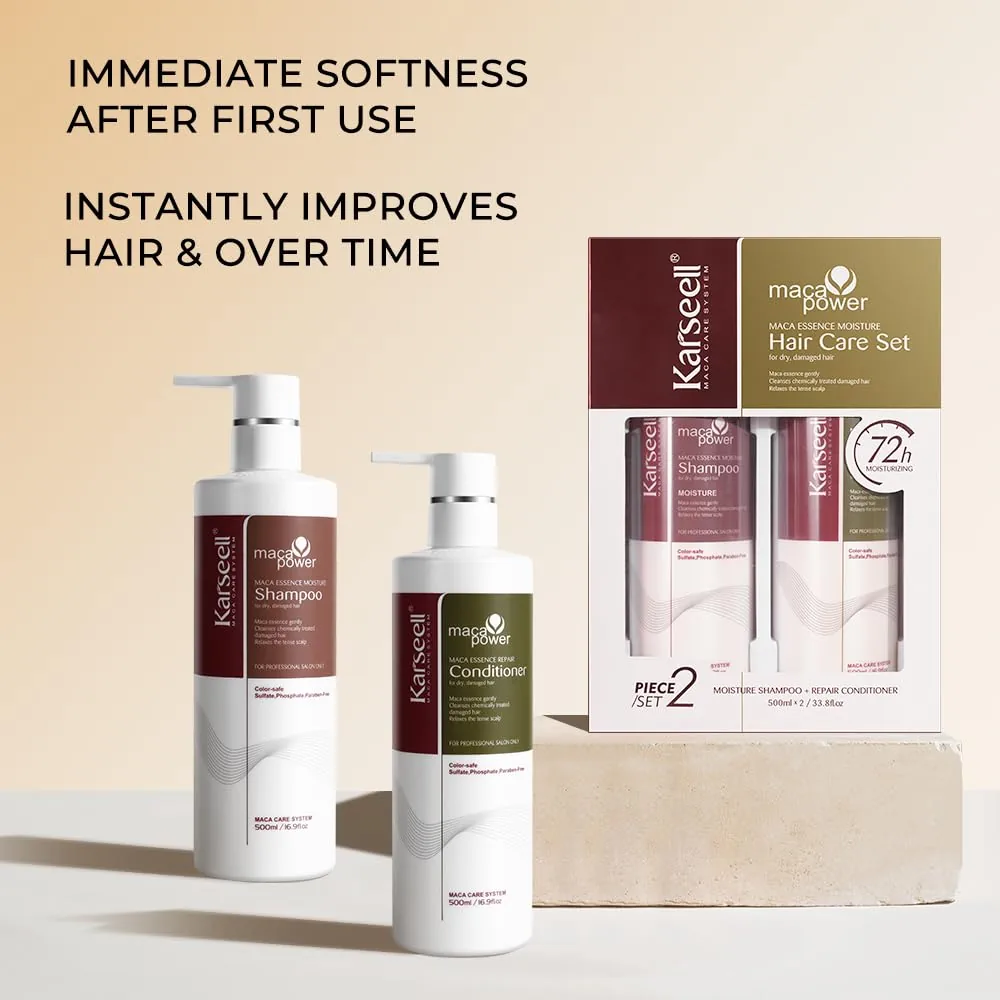
For most people, a moisturizing shampoo is the foundation of a healthy hair routine. These formulas cleanes gently while depositing nourishing ingredients that support hair health from the very first step. Avoid shampoos with harsh sulfates if your hair is color-treated, chemically processed, or naturally dry, as these can accelerate color fading and strip essential moisture.
The proper shampoo technique: Concentrate shampoo on your scalp, where oil and dead skin cells accumulate. Use your fingertips — not your nails — to gently massage the scalp in circular motions. This stimulates blood flow to the hair follicles and ensures a thorough cleanse without causing mechanical damage. Rinse thoroughly with lukewarm water; hot water can be overly drying.
Step Two: The Condition — Why Every Healthy Hair Routine Needs It
Conditioner is not an optional add-on — it is an essential component of any comprehensive hair care routine. After shampooing, your hair’s cuticle is slightly raised, making it the perfect time to deposit moisture, proteins, and conditioning agents directly into the hair strand.
The best shampoo and conditioner combination for your hair type creates a synergistic effect where each product enhances the performance of the other. Shampoo cleanses and opens the cuticle; conditioner penetrates and closes it, locking in the benefits.
When applying conditioner, focus primarily on the mid-lengths and ends. These areas are the oldest and most damaged parts of your hair. Avoid applying conditioner directly to your scalp, as this can lead to excess oiliness and clogged pores. For intensive moisture, consider using a deep conditioner once a week in place of your regular conditioner.
Step Three: The Treatment — When and How to Use Hair Masks
If your hair care routine were a house, shampoo and conditioner would be the foundation — solid and necessary, but not where the magic happens. Hair masks are the renovation that transforms a serviceable structure into something extraordinary. They deliver concentrated active ingredients that can actually repair damage, restore elasticity, and rejuvenate hair at a structural level.
The key to using hair masks effectively is frequency and timing. Most people benefit from a deep conditioning hair mask treatment once every 7-10 days. Applying a mask more frequently than twice a week can lead to protein overload, especially if the mask contains strong protein ingredients. Applying less frequently means missing the cumulative benefits of regular deep conditioning.
For maximum absorption, apply your hair mask to clean, towel-dried hair. Comb it through with a wide-tooth comb to ensure even distribution from roots to tips. Cover your hair with a shower cap and, if possible, apply gentle heat using a warm towel or a hooded dryer for 15-20 minutes. This heat opens the cuticle and allows the active ingredients to penetrate more deeply, dramatically increasing the treatment’s effectiveness.

Step Four: Sealing and Protecting — The Role of Hair Oil
After cleansing, conditioning, and treating your hair, the final step in your healthy hair routine is sealing. Hair oil serves as the protective seal that locks in all the moisture and nutrients you have just deposited. Without this sealing step, much of the benefit from your shampoo, conditioner, and treatment can simply evaporate.
The collagen and argan oil combination is particularly effective for this sealing role because argan oil is rich in oleic and linoleic fatty acids that closely resemble the natural lipids in healthy hair. Collagen fills in microscopic gaps in the hair cuticle, while argan oil seals over it, creating a double layer of protection that is both nourishing and protective.
Apply 2-4 drops of hair oil to the mid-lengths and ends of your hair, focusing especially on any areas that feel dry or look frizzy. For an extra-intensive treatment, mix a drop of oil into your hair mask before applying it. This creates an occlusive layer that traps the mask’s active ingredients against your hair for deeper penetration.
Building Your Daily vs. Weekly Routine
A truly comprehensive hair care routine differentiates between daily maintenance and weekly deep treatment. Your daily routine should be streamlined: shampoo and condition every 2-3 days, apply a small amount of hair oil as needed for shine and frizz control. Keep it simple and sustainable.
Your weekly routine is where the real transformation happens. Once a week, replace your regular conditioner with a deep conditioning hair mask. Before shampooing, apply a pre-shampoo oil treatment to protect your hair from stripping. After washing, use a leave-in conditioner or detangling spray to make combing easier and reduce mechanical breakage.
Remember that the best routine is one you can stick to consistently. A five-step routine you follow every week is infinitely more effective than a ten-step routine you abandon after three days. Start with the basics, master them, and gradually add more targeted treatments as your hair adapts and improves.
Frequently Asked Questions About Hair Care Routines
How long does it take to see results from a new hair care routine?
Most people begin to notice improvements within 2-3 weeks of consistently following a proper hair care routine. Shinier, more manageable hair often appears within the first week, while significant improvements in hair strength and reduced breakage typically take 6-8 weeks. The hair growth cycle means that truly transformative results — where new healthy hair replaces damaged lengths — may take 3-4 months to become visible.
Should I wash my hair every day?
For most people, daily washing is not necessary and can actually be counterproductive. Washing too frequently can strip the scalp of its natural oils and disrupt the skin barrier, potentially triggering increased oil production as a compensatory mechanism. Every 2-3 days is a good general guideline, though those with very oily scalps may need more frequent washing with a gentle, sulfate-free formula.
How do I know if my hair needs protein or moisture?
The simplest test: if your hair feels mushy, limp, or stretchy when wet, it likely needs protein. If it feels dry, brittle, or straw-like, it needs moisture. Both deficiencies can cause frizz and breakage, but they require different approaches. Products containing collagen and argan oil together address both needs simultaneously, making them ideal for most people who cannot easily determine their hair’s exact needs.
Is it okay to skip conditioner if I use a hair mask?
Hair masks and regular conditioners serve overlapping but not identical purposes. Conditioner is formulated for daily use and provides lightweight, consistent moisture after every wash. Hair masks are concentrated treatments designed for periodic use. Using a mask once a week is not a substitute for daily conditioning — think of them as complementary rather than interchangeable.
How can I protect my hair while sleeping?
Switch to a silk or satin pillowcase to reduce friction that causes frizz and breakage while you sleep. If you have long or thick hair, loosely tie it in a braid or pineapple style to prevent tangling. For those with very fragile or processed hair, wearing a silk bonnet at night provides the maximum protection against both friction and moisture loss.
Conclusion
Building the ultimate hair care routine for healthier hair is not about finding the most expensive products or following the most elaborate multi-step process. It is about understanding your hair, choosing products that address its specific needs, and applying them consistently in the right order. Cleanse thoroughly but gently. Condition to restore moisture and smooth the cuticle. Treat deeply to repair damage at a structural level. Seal to lock in all the benefits you have just delivered.
The results will not appear overnight, but they will appear. Within weeks, your hair will feel different — softer, more manageable, more resilient. Within months, you will notice less breakage, fewer split ends, and significantly improved shine and elasticity. This is the compounding power of consistency applied to hair care.
Start tonight. Build your routine one step at a time. Your future hair will thank you.

