
Why Dry Hair Needs More Than Surface Moisture
Dry hair is one of the most common hair complaints, affecting every hair type from fine and straight to thick and coily. Understanding why hair becomes dry is the first step toward treating it effectively, and it goes far beyond simply not using enough conditioner.
Hair dryness originates from three primary sources: environmental damage, chemical damage, and mechanical damage. Environmental damage comes from sun exposure, wind, dry indoor air, and pollution. These factors strip the hair of its natural oils and degrade the protein structure of the cuticle over time. Chemical damage includes bleaching, dyeing, perming, relaxing, and the frequent use of sulfates in shampoos. Each of these processes either removes the hair’s natural protective lipids or alters its protein structure. Mechanical damage results from brushing, heat styling, and even the type of water you wash with. Hard water, in particular, leaves mineral deposits that coat the hair shaft and prevent moisture from penetrating.
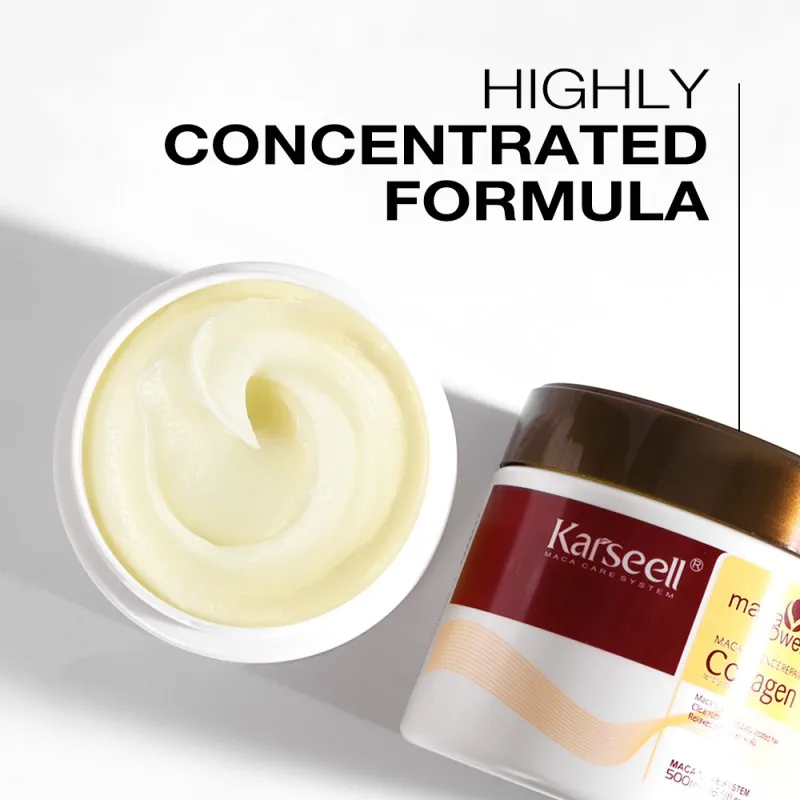
The key to treating dry hair is not simply adding moisture on top. It requires a multi-layered approach: removing the sources of dryness, replenishing lost proteins and lipids, and sealing the cuticle to prevent future moisture loss. The Karseell Collagen Hair Mask is designed around this three-part approach.
Understanding How Hydration Works in Hair
The word “hydration” in hair care is often used loosely, but it has a specific meaning. Hair absorbs water from its environment, including from the air and from the products applied to it. This process is called moisture adsorption, and it is governed by humidity levels and the hair’s porosity.
At high humidity, highly porous hair absorbs so much water that the hair shaft swells, the cuticle lifts, and frizz develops. At low humidity, moisture evaporates from the hair shaft, causing it to contract, lose elasticity, and become brittle. The goal of a good deep conditioning treatment is to reduce porosity so that the hair maintains a consistent moisture level regardless of the environment.
The glycerin in the Karseell Collagen Hair Mask addresses this by acting as a humectant that attracts water molecules from the air and holds them within the hair shaft. The argan oil then acts as an occlusive, creating a thin barrier on the cuticle surface that prevents that moisture from evaporating. Together, they create a balanced moisture system rather than just a temporary surface shine.
The Role of Hydrolyzed Wheat Protein in Hair Repair
Hydrolyzed wheat protein is one of the most underappreciated ingredients in hair care, yet it is one of the most effective for dry and damaged hair. Its benefits work on multiple levels.
At the surface level, hydrolyzed wheat protein forms a film over the cuticle that smooths rough edges, reduces static, and adds a subtle sheen. This film is flexible and lightweight, meaning it does not weigh hair down or create a heavy, greasy feel.
At the structural level, the smaller protein fragments can penetrate below the cuticle into the cortex. Here, they bond to the hair’s existing keratin structure and reinforce it from within. This is called internal repair, and it is the key difference between a mask that simply coats the surface and one that genuinely repairs the hair.
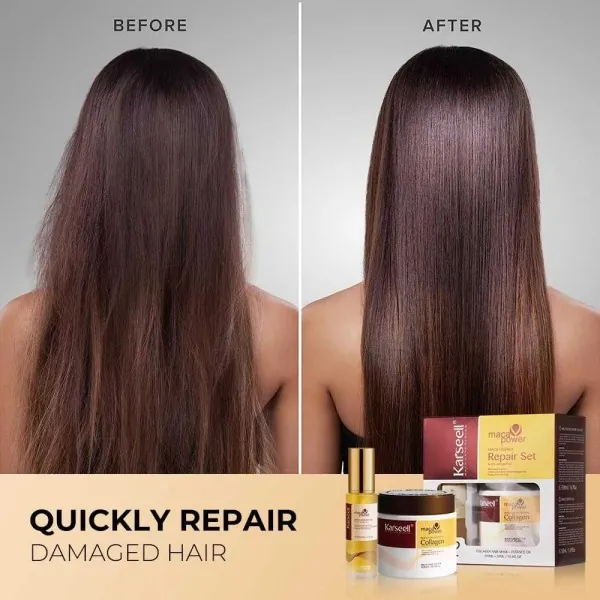
For dry hair, this internal repair is transformative. It restores the elasticity that dry hair loses, allowing it to stretch and bounce back rather than snapping when stressed. Over time, with consistent use, the cumulative effect of internal repair is measurably stronger, more resilient hair.
Common Mistakes That Worsen Dry Hair
Even with an excellent product like the Karseell Collagen Hair Mask, certain habits can undermine your efforts to treat dry hair.
Over-washing with harsh shampoos strips the natural oils that would otherwise protect and moisturize the hair. If you wash daily, consider switching to every other day or using a sulfate-free, moisturizing shampoo like the Karseell Maca Essence Shampoo as an alternative.
Skipping heat protection before styling accelerates dryness and damage significantly. Every time you use a flat iron, curling iron, or blow dryer without protection, you are driving moisture out of the hair shaft and causing the protein structure to temporarily weaken.
Neglecting the ends of your hair is a common oversight. The oldest part of your hair, the ends are the most damaged and the most in need of moisture. Apply the mask generously to the ends each time, even if you use less product on the mid-lengths.
Using hot water in the shower opens the cuticle and drives moisture out of the hair. Finish your shower with a cool water rinse to close the cuticle and lock in whatever moisture the mask has delivered.
Frequently Asked Questions
How often should I use the Karseell Collagen Hair Mask for dry hair?
For moderately dry hair, once a week is sufficient. For extremely dry, damaged, or color-treated hair, twice a week is recommended for the first month, then reduce to once weekly for maintenance.
Can I use the mask on my scalp if my scalp is dry?
The mask is formulated for the hair strand, not the scalp. For a dry, flaky scalp, look for a dedicated scalp treatment serum. Applying the mask to the scalp can create buildup that worsens certain scalp conditions.
Will the mask make my fine hair feel heavy?
The Karseell Collagen Hair Mask is lightweight when used in appropriate amounts. Fine hair should use a smaller quantity and always rinse thoroughly. The collagen and argan oil in this mask are lighter-weight ingredients compared to many hair butters and heavy oils.
How long does it take to see results?
Most users notice improved softness and reduced frizz after the first application. For significant structural improvement in dry, brittle hair, allow 4 to 6 weeks of consistent weekly use.
Can I apply the mask to dry hair instead of wet hair?
Applying to damp, freshly shampooed hair is the most effective method because the cuticle is already slightly open from washing, allowing better penetration of the active ingredients.
Is this mask suitable for chemically relaxed or texlaxed hair?
Yes. Relaxed and texlaxed hair is extremely dry and benefits greatly from the deep hydration and protein repair that the Karseell Collagen Hair Mask provides.
Argan Oil: Nature’s Moisture Sealer for Dry Hair
Argan oil is one of the most prized hair care ingredients in the world, and for good reason. Native to Morocco, argan oil is pressed from the kernels of the argan tree, a species that has been designated by UNESCO as a protected tree due to its ecological importance and the traditional practices around its harvest.
In the context of dry hair, argan oil works primarily as an occlusive agent. After the glycerin in the Karseell Collagen Hair Mask has drawn moisture into the hair shaft, the argan oil creates a thin, lightweight barrier on the cuticle surface that prevents that moisture from evaporating. This combination of humectant (glycerin) and occlusive (argan oil) is the gold standard for effective hydration in hair care.
What sets argan oil apart from other oils used in hair care is its fatty acid profile. It is rich in oleic acid (an omega-9 fatty acid that deeply penetrates the hair shaft) and linoleic acid (an omega-6 fatty acid that strengthens the cuticle and reduces water loss). This dual-action fatty acid composition makes argan oil effective for both internal hydration and external sealing.
Additionally, argan oil is rich in vitamin E (tocopherol), one of the most potent natural antioxidants. When applied to the hair, vitamin E neutralizes free radicals from UV exposure, pollution, and chemical treatments that would otherwise degrade the hair’s protein structure and accelerate dryness.
The result of using argan oil regularly in your hair care routine is hair that feels noticeably softer, looks shinier, and maintains its moisture balance even in challenging environmental conditions like dry air, sun exposure, or frequent heat styling.

