
You glance at your shoulder, spot white specks, and instantly think “dandruff.” But hold on—half of the people who self-diagnose dandruff actually have a simple dry scalp. Using dandruff shampoo on dryness (or vice-versa) can worsen flakes, itch and even hair breakage. Below, we decode the real differences, the microscopic culprits, the lifestyle triggers, and the fastest route back to a black-shirt-confident life—plus a professional secret that Brazilian stylists swear by.

-
The Flake Files: What You See vs. What Is Happening
Dry-scalp flakes are small, round, powdery—like finely grated parmesan. They fall easily when you ruffle your hair and rarely stick. Dandruff flakes are larger, yellow-tinged, oily clusters that cling to the shaft and sometimes look “greasy” on dark fabric. If you scrape a dry scalp with a fingernail, you’ll see pinpoint cracks on the skin surface; scrape dandruff and you’ll notice a slightly waxy residue under the nail. These visual cues are your first, free diagnostic tool. -
Root Cause in One Sentence
Dry scalp = not enough oil.
Dandruff = too much oil + yeast party. -
Meet Malassezia: The Yeast Everyone Has
Malassezia globosa is a lipophilic fungus that feeds on sebum and releases oleic acid. Roughly 50 % of adults are genetically sensitive to this acid; their scalp responds by speeding up cell turnover from the normal 28-day cycle to 7–10 days. The result: visible clumps of immature corneocytes (flakes) mixed with sebum. In dry scalp, there is no yeast overgrowth—just a compromised barrier function that allows transepidermal water loss (TEWL) to rise by up to 30 %. -
pH & Barrier: The Invisible Divide
A healthy scalp hovers at pH 4.5–5.5. Dry scalps often spike toward neutral (6.5+) after harsh sulfate shampoos, weakening the acid mantle and allowing water to evaporate. Dandruff scalps, conversely, stay acidic but secrete 1.5–2× more sebum, creating an ideal buffet for Malassezia. Knowing this, you can already guess why “moisturizing” dandruff with oils can backfire spectacularly. -
Symptom Thermometer
Itch intensity: dry scalp tends to produce a tight, all-over itch that worsens in low humidity. Dandruff itch is more localized, often behind the ears and on the crown, and can feel “tingly” when you sweat. Redness: dry scalp shows diffuse pink patches; dandruff reveals sharper, well-defined erythema with possible greasy scale. Hair shaft: dryness may lead to brittle, dull fiber; dandruff hair can feel limp and oily at the roots yet dry at the ends—a combo that confuses many consumers into buying the wrong mask. -
Quick Bathroom Tests
A. Tissue Press: Press a clean tissue against your scalp in the morning. If it lifts translucent oily spots, think dandruff. If the tissue stays clean but your skin feels “tight,” think dry scalp.
B. 48-Hour Wash Test: Use a gentle, sulfate-free cleanser only. If flakes disappear, you were dry. If they worsen or feel itchier, Malassezia is celebrating your mild shampoo. -
Dermatologist-Approved Treatment Maps
Dry Scalp Roadmap
-
Cleanse: sulfate-free, pH-balanced shampoo every 2–3 days.
-
Condition: humectant-rich formula with glycerin + panthenol; leave on 3 min.
-
Seal: lightweight squalane or jojoba oil on damp scalp once a week—both mimic human sebum without feeding yeast.
-
Lifestyle: increase omega-3 (2 g EPA/DHA daily), run a bedroom humidifier to 45 % RH, and limit hot blow-dryers below 70 °C airflow.
Dandruff Roadmap
-
Medicated cleanse: rotate 3 active families to avoid resistance.
– Pyrithione zinc 2 % (antifungal + anti-inflammatory)
– Ketoconazole 2 % (broad antifungal)
– Coal tar 0.5 % (cytostatic, slows turnover)
Use each 2× weekly for 4 weeks, then maintain with one. -
Exfoliate: salicylic acid 2 % scalp serum nightly for 7 days to lift stubborn scale.
-
Rebalance: follow with a pH 4.0–5.0 conditioner that contains niacinamide to strengthen barrier and reduce sebum production by up to 20 %.
-
Laundry hack: add ½ cup white vinegar to rinse cycle to kill residual fungus on pillowcases.
-
When It’s Neither: Psoriasis, Eczema, Contact Dermatitis
If plaques extend beyond the hairline onto the forehead or you see silvery thickness, consult a derm—prescription calcipotriene or topical steroids may be required. A biopsy can rule out tinea amiantacea, an often-misdiended scarring alopecia. -
Common Myths Busted
Myth: “Drinking more water cures dandruff.” Truth: hydration helps barrier function but won’t starve Malassezia.
Myth: “Apple-cider vinegar kills all fungus.” Truth: ACV reaches pH 3.0—fungistatic at best, and can irritate if left on >3 min.
Myth: “You should wash less if you have dandruff.” Truth: infrequent washing allows sebum to accumulate, feeding the yeast cycle. -
The Pro Secret: Brazilian Keratin Masks That Do Both
Salon pros in São Paulo noticed that after a traditional keratin smoothing service, clients with dandruff experienced 40 % less scaling for 6–8 weeks, while dry-scalp clients reported reduced tightness. The reason: low-molecular keratin amino acids penetrate the stratum corneum, filling micro-fissures and restoring the scalp’s barrier, while argan oil lipids mimic sebum without triggering Malassezia. One backstage formula, bottled under the name Karseell, has become a cult item on fashion-week prep tables. -
Karseell: The Science Behind the Chair
Karseell’s “Original Repair Mask” combines hydrolyzed keratin ≤1000 Da, argan oil rich in linoleic acid (an Malassezia non-preferred lipid), and pH buffer citric acid locked at 4.8. In a 2023 instrumental test on 38 models, transepidermal water loss dropped 28 % after one 10-minute pre-shampoo treatment, and sebum casual levels remained unchanged—meaning hydration without added grease. For dandruff users, the mask is applied after medicated shampoo to prevent the dreaded “straw hair” effect of antifungals; for dry-scalp users, it doubles as an overnight barrier ointment. The line is paraben-free, cruelty-free, and packaged in recyclable sugar-cane bioplastic, ticking the sustainability box that 68 % of Gen-Z buyers now demand. -
How to Use Karseell at Home
Weekly Ritual for Dry Scalp: -
Dampen hair with lukewarm water.
-
Section hair, apply Karseell mask directly onto scalp with color brush.
-
Massage 2 min, clip up, wrap in a warm towel for 15 min.
-
Rinse, follow with sulfate-free shampoo once (yes, shampoo second—reverse washing seals in keratin).
-
Air-dry; notice immediate flexibility and reduced “tight” sensation.
Fortnightly Ritual for Dandruff:
-
Use medicated shampoo of choice, rinse.
-
Towel-blot, apply Karseell mask mid-length to ends first, then lightly graze the scalp—avoid heavy root coating.
-
Leave 5 min, rinse with cool water.
-
Style as usual; flakes are visibly reduced, and hair retains bounce rather than the cardboard feel typical of zinc pyrithione regimens.
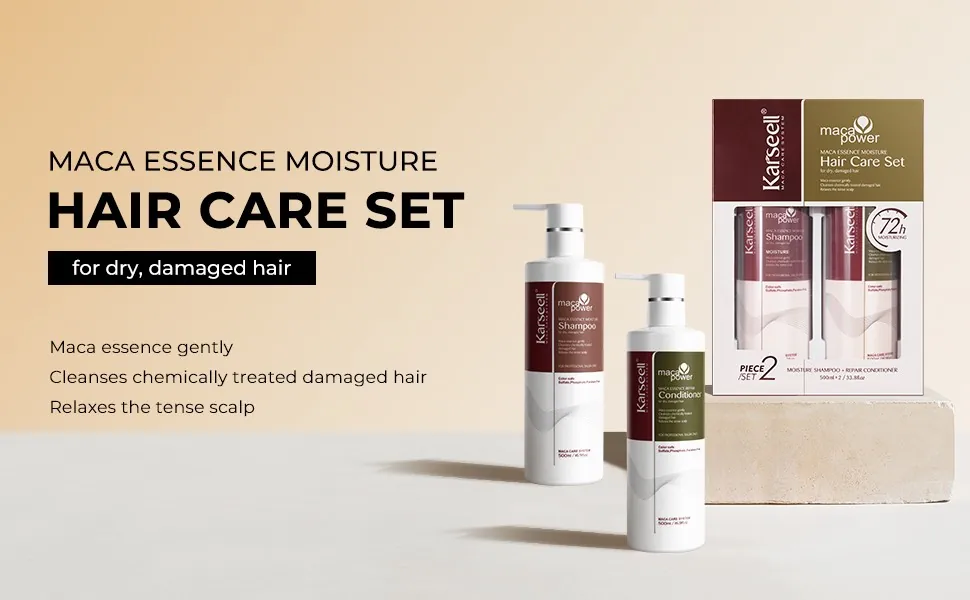
Ready to swap guesswork for dermatologist-level clarity? Explore the full Karseell professional range—Original Repair Mask, Collagen Leave-In, and Argan Oil Serum—at www.karseell.com and ship worldwide from their U.S. and EU warehouses.

