
Your hair deserves more than a quick rinse and a coat of conditioner. If you have ever wondered what separates a truly transformative hair treatment from your everyday routine, the answer lies in one word: hair mask. This guide covers everything you need to know about hair masks — what they are, how they work, which types to choose, and exactly how to use them for salon-quality results at home.
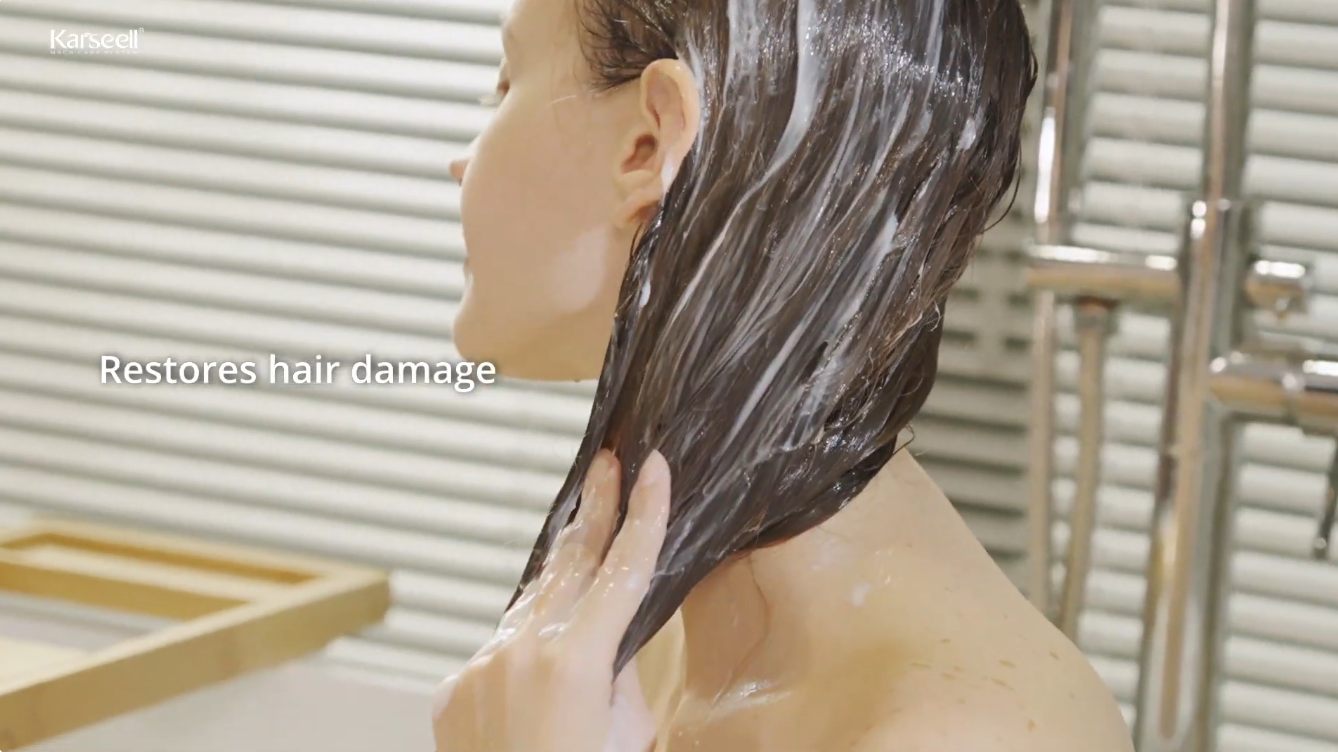 Deep conditioning hair masks penetrate the hair shaft for transformative results.
What Is a Hair Mask?
A hair mask — also called a deep conditioning treatment or intensive hair treatment — is a highly concentrated, nutrient-rich formula designed to penetrate the hair cuticle and repair damage from within. Unlike standard conditioners that sit on the surface of the hair strand, a quality hair mask works at a deeper level, delivering active ingredients directly into the cortex of each hair fiber.
Hair masks are typically thicker and more emollient than regular conditioners. They contain higher concentrations of conditioning agents, proteins, oils, and humectants that can repair breakage, restore moisture, and improve elasticity over time. Think of a hair mask as the difference between moisturizing your skin with a light lotion versus applying a rich overnight cream — both have value, but the concentrated formula does far more heavy lifting.
Why Should You Use a Hair Mask?
Your hair faces a daily onslaught. Heat styling, UV exposure, chemical treatments, pollution, and even just brushing all take their toll. Over time, the cuticle layer becomes worn, the internal structure weakens, and you end up with dry, brittle, frizzy hair that refuses to behave.
A hair mask can reverse this cycle. Here is what a consistent hair mask routine can do:
- Restore moisture: Hydrates parched hair strands and reduces brittleness
- Repair damage: Fills in gaps in the cuticle caused by heat, color, or mechanical damage
- Strengthen hair: Reinforces the protein structure to reduce breakage and split ends
- Improve elasticity: Makes hair more pliable and less prone to snapping
- Enhance shine: Smooths the cuticle surface to reflect light beautifully
- Protect color: Many masks include ingredients that lock in salon color and prevent premature fading
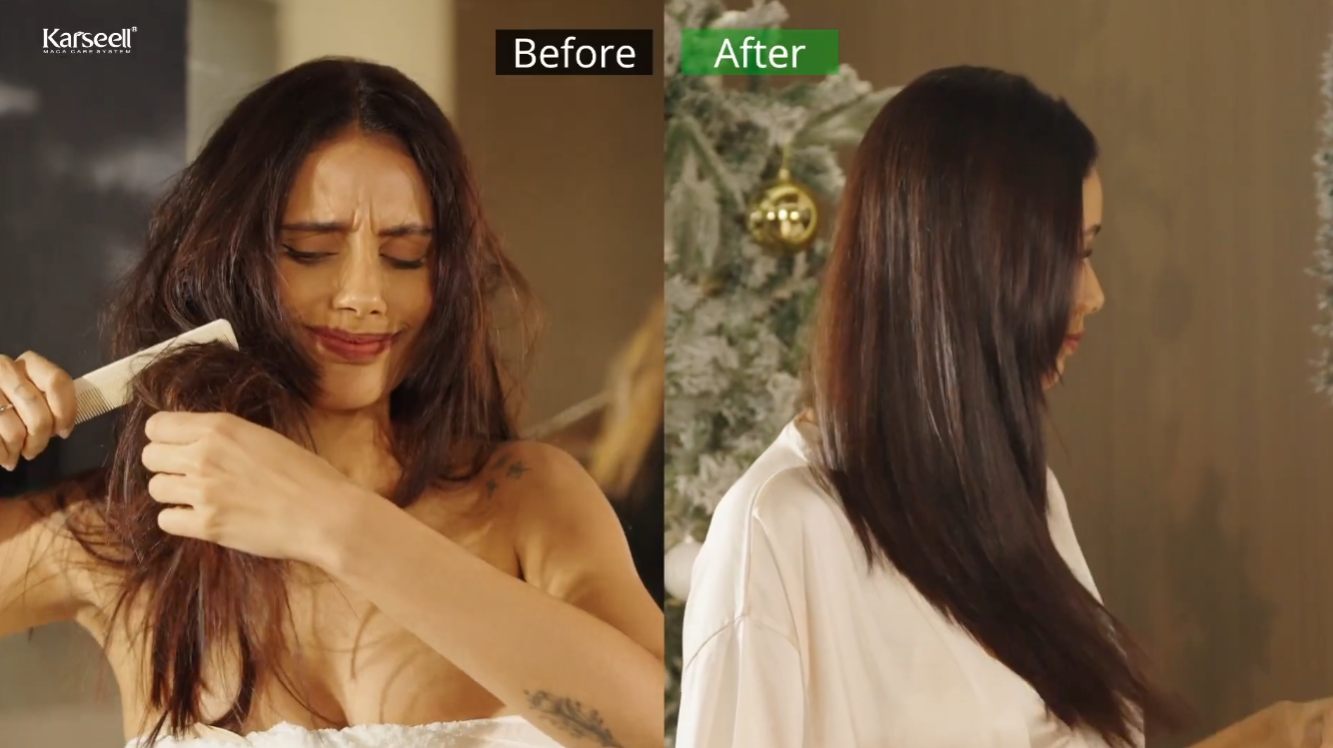 Consistent use of hair masks can dramatically transform damaged hair over time.
Different Types of Hair Masks
Not all hair masks are created equal. The right choice depends entirely on your hair unique needs. Here is a breakdown of the most common types:
Moisturizing Hair Masks
Designed for dry and dehydrated hair, these masks are packed with humectants like glycerin, hyaluronic acid, and natural oils that draw moisture into the hair shaft. They are ideal for coarse, thick, or textured hair that tends to absorb and retain less water.
Protein Hair Masks
These masks contain hydrolyzed proteins — keratin, collagen, silk amino acids, or rice protein — that temporarily patch up damaged areas of the hair cuticle. Protein masks are essential for chemically treated, over-bleached, or heat-damaged hair. Use with caution: overdoing protein treatments can actually make hair stiff and brittle, a phenomenon known as protein overload.
Repair/Reconstruction Masks
The heaviest-duty category, reconstruction masks are formulated for severely damaged hair. They combine deep-penetrating oils, proteins, and ceramides to rebuild the internal structure of the hair strand. Great for post-bleach recovery or hair that has been through multiple chemical processes.
Color-Enhancing Masks
These masks do double duty: they condition the hair while depositing color pigments. Purple masks neutralize brassy yellow tones in blonde and silver hair. Blue masks cancel out orange tones in dark blonde to light brown hair. Brown and caramel masks add depth and richness to brunette hair. They are an excellent way to extend the life of your salon color between appointments.
Clarifying Hair Masks
A less common but important type, clarifying masks use ingredients like kaolin clay or apple cider vinegar to draw out product buildup, chlorine, and mineral deposits. They are particularly useful for swimmers or anyone who uses heavy styling products daily.
Hair Mask vs. Conditioner: What Is the Difference?
This is one of the most frequently asked questions in hair care, and the answer lies in the depth of action:
| Feature | Regular Conditioner | Hair Mask |
|---|---|---|
| Consistency | Light, liquid | Thick, cream-based |
| Depth of penetration | Surface level (cuticle) | Deep (cortex) |
| Concentration of active ingredients | Low to moderate | High |
| Time to work | 30-60 seconds | 5-30 minutes |
| Frequency of use | After every wash | 1-3 times per week |
| Primary function | Detangle and smooth cuticle | Repair, restore, and deeply nourish |
| Best for | Maintenance and daily care | Targeted treatment and recovery |
The short version: conditioner maintains your hair on a daily basis, while a hair mask is the intensive treatment that addresses deeper problems. You do not have to choose one or the other — in fact, the best hair care routines use both.
Hair masks offer deeper penetration and more concentrated care than standard conditioners.
How to Use a Hair Mask: A Step-by-Step Guide
Getting the most out of your hair mask comes down to technique. Follow these steps for maximum benefit:
Step 1: Start with Clean Hair
Wash your hair with a gentle shampoo first. This removes surface oils and buildup so the mask active ingredients can penetrate directly into the hair fiber. You do not need a clarifying shampoo unless there is heavy buildup — a mild, sulfate-free shampoo works best.
Step 2: Ring Out Excess Water
Your hair should be damp but not dripping wet. Squeeze out excess water gently with a microfiber towel. If hair is too wet, the mask will simply slide off rather than being absorbed. If it is too dry, the hair will not absorb the moisture effectively either.
Step 3: Apply Generously
Section your hair into four parts for thorough application. Work the mask from mid-length to ends — the oldest and most damaged part of your hair. You can apply a small amount to the roots if your scalp is dry, but avoid heavy products near the scalp if you have oily hair or are prone to buildup.
Step 4: Let It Work
Allow the mask to sit for the time recommended on the product label. Most masks require 5-20 minutes. For extra penetration, wrap your hair in a warm towel or wear a shower cap — the gentle heat opens the cuticle and allows deeper absorption.
Step 5: Rinse Thoroughly
Use cool or lukewarm water to rinse. Cool water helps seal the cuticle, locking in the moisture and nutrients from the mask. Finish with a cold water rinse for 30 seconds if your hair can handle it — your hair will thank you with extra shine.
Step 6: Style as Normal
After rinsing, you may not need conditioner. Follow with your usual styling products, but consider using less heat for a while to let the mask benefits fully take hold.
How Often Should You Use a Hair Mask?
Frequency depends on your hair condition and the type of mask:
- Deeply damaged or bleached hair: 2-3 times per week
- Color-treated hair: 1-2 times per week
- Dry or coarse hair: 1-2 times per week
- Normal to healthy hair: Once per week for maintenance
- Oily hair: Once per week or every two weeks, focusing on mid-lengths and ends
- Protein masks: No more than once a week — over-proteinizing can cause brittleness
Listen to your hair. If it starts feeling stiff, waxy, or straw-like, you may be over-doing it or using a protein-heavy mask too frequently.
Hair Masks for Different Hair Types
Your hair type determines not just what kind of mask you need but also how you should apply it:
Fine Hair
Fine hair can easily become weighed down by heavy masks. Look for lightweight, water-based formulas with ingredients like glycerin and aloe vera rather than heavy butters. Apply primarily to the mid-lengths and ends, avoiding the roots.
Thick, Coarse, or Curly Hair
This hair type has the most to gain from rich, emollient masks. Look for formulas with shea butter, coconut oil, or avocado oil. These textures need heavy moisture to stay manageable and defined. Covering with a shower cap and applying heat for 20-30 minutes is ideal.
Color-Treated Hair
Color-stripping is a real concern with some masks. Choose products specifically labeled as color-safe. Color-depositing masks — like purple masks and brown hair masks — are particularly valuable for maintaining your hue between salon visits.
Natural and Textured Hair
Natural and highly textured hair types often have higher porosity, meaning they absorb moisture quickly but also lose it fast. Regular deep conditioning with protein-rich masks and occlusive oils helps maintain moisture balance and reduce breakage during styling.
Common Hair Mask Mistakes to Avoid
- Leaving it on overnight: Unless the product specifically says it is safe to do so, overnight masks can lead to over-softening and breakage, especially in fine hair.
- Using protein masks too often: More than once a week can cause protein overload, leaving hair stiff and prone to snapping.
- Applying to dirty hair: Buildup on the hair shaft acts as a barrier, preventing the mask from penetrating.
- Skipping the rinse: Residue left behind can attract dirt and make hair look greasy.
- Using the wrong mask: A protein mask on already protein-overloaded hair, or a heavy oil mask on fine hair, can worsen the problem.
What to Look for in a Quality Hair Mask
Not sure how to choose? Look for these key ingredients:
- Hydrolyzed proteins (keratin, collagen, silk amino acids) — repair and strengthen
- Natural oils (argan, coconut, jojoba, avocado) — nourish and add shine
- Humectants (glycerin, hyaluronic acid, honey) — draw and retain moisture
- Ceramides and lipids — rebuild the hair natural lipid barrier
- Panthenol (vitamin B5) — improves elasticity and moisture retention
Avoid masks with excessive alcohols (cetearyl alcohol is fine, but isopropyl alcohol is not), artificial fragrances at the top of the ingredient list, and sulfates if your hair is already damaged.
Our Recommended Hair Masks
Looking for a place to start? Browse our curated collection of hair masks formulated for every hair type and concern. From intensive repair treatments to gentle daily options, we have the perfect match for your hair needs.
Frequently Asked Questions
Can I use a hair mask instead of conditioner?
While you can skip conditioner when using a hair mask, they serve different purposes. Conditioner is designed for daily, quick use, while a hair mask provides intensive treatment. For best results, use both — shampoo, then mask, then no conditioner needed (unless your hair needs extra smoothing at the ends).
Should I use a hair mask on wet or dry hair?
Always apply a hair mask to towel-damp, freshly shampooed hair. Wet hair allows the active ingredients to penetrate more effectively than dry hair, where the cuticle is more tightly closed.
Can I use a hair mask every day?
This depends on the type of mask. Lightweight moisturizing masks may be suitable for daily use, but most intensive masks are designed for 1-3 times per week. Overusing protein masks, in particular, can lead to brittleness. Read our full guide on daily hair mask use.
How long should I leave a hair mask on?
Most hair masks require 5-20 minutes. Follow the product instructions. If you are using heat (a warm towel or shower cap), you can often shorten the time. Never exceed 30-45 minutes unless the product explicitly states it is safe.
Do hair masks help with hair loss?
A hair mask improves the health and elasticity of existing hair strands, which can reduce breakage-related thinning. However, it cannot stimulate new hair growth or address genetic hair loss. For underlying scalp health, consider targeted treatments instead.
Can I make a DIY hair mask at home?
Yes — common ingredients like honey, avocado, coconut oil, and yogurt can make effective DIY masks. However, commercial masks are formulated with precise ingredient concentrations and include preservatives for safety and efficacy. For targeted results, professional formulations often outperform DIY alternatives.
The Bottom Line
A hair mask is not a luxury — it is a fundamental part of any serious hair care routine. Whether you are dealing with damage from color treatments, heat styling, environmental stress, or simply the daily grind, the right mask applied at the right frequency can bring your hair back from the brink. Find the perfect mask for your specific hair type and make deep conditioning a non-negotiable part of your routine.


One Comment