


Continue Reading: Expert Guide
Why Colored Hair — Especially Red — Needs Extra Care and Attention
Few hair colors make as bold a statement as vibrant red. From rich burgundy to fiery copper to vivid crimson, red hair commands attention, expresses individuality, and radiates confidence. But anyone who has ever colored their hair red knows that this stunning color comes with a significant trade-off: red is notoriously the fastest-fading hair color, often losing its vibrancy within just a few weeks of a salon visit. Understanding why red hair requires such dedicated care begins with understanding the unique chemistry of red hair color molecules and the structural changes that occur in hair during the coloring process. The faster you understand the problem, the faster you can build an effective strategy to combat it.
Red hair color is created using large color molecules known as pheomelanin mimickers. Unlike smaller color molecules used in blonde or brown dyes, which can nestle deep within the hair shaft cortex, red pigment molecules are too large to penetrate deeply. They sit primarily on the surface of the hair shaft and within the cuticle layer, which means they are far more vulnerable to being washed away, rubbed off, or faded by environmental exposure. Every time you shampoo, the surfactants in your shampoo literally lift some of those red pigment molecules from the hair surface and carry them down the drain. UV radiation from sunlight penetrates the hair shaft and oxidizes the red pigment molecules, causing them to break down and shift toward an orange or muddy brown. Even the minerals in hard water can react with red dye molecules and alter their color, leaving hair looking brassy and faded.
The structural damage caused by the coloring process compounds this challenge. To deposit red pigment into the hair, colorists must open the hair cuticle and often use a higher-volume developer than for other colors, because red requires more processing to achieve the desired vibrancy. This aggressive cuticle opening leaves the hair shaft more porous, more prone to moisture loss, and more vulnerable to all of the color-fading factors described above. The result is a perfect storm: red hair is colored with less durable molecules, through a more damaging process, and then subjected to daily washing and environmental exposure that accelerates fading. Without dedicated care, a gorgeous salon red can become a washed-out auburn in a month, leaving you feeling like your investment was wasted.
How Color-Depositing Masks Work: Science, Mechanics, and Real Benefits
Color-depositing hair masks are one of the most effective tools available for maintaining vibrant red hair between salon visits, and understanding how they work can help you use them more effectively and set realistic expectations for the results they can deliver. Unlike traditional conditioners that focus purely on moisturizing and smoothing, color-depositing masks combine conditioning agents with highly concentrated color pigments that literally add pigment molecules back onto the hair shaft with every application.
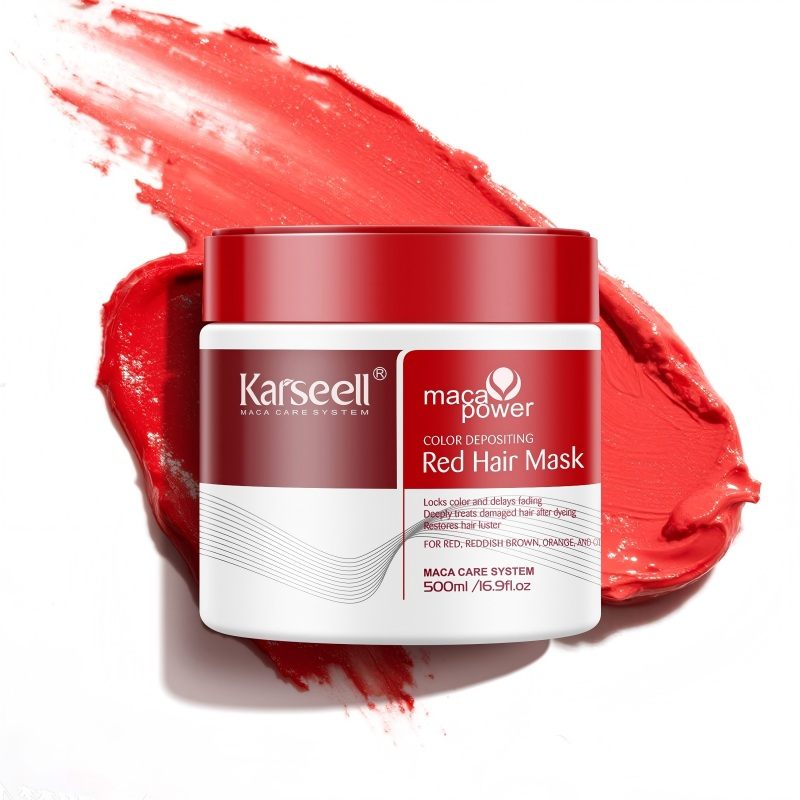
The key difference between a color-depositing mask and a regular deep conditioner lies in the formulation. A color-depositing mask such as Karseells red hair mask contains direct dyes — pigments that do not require an oxidizing developer or ammonia to work. These dyes are already in their colored form and can bond directly to the protein structure of the hair shaft through a combination of ionic attraction and physical adhesion within the hair cuticle layer. Because the hair cuticle is already raised from the coloring process, it acts almost like a microscopic sponge, absorbing these pigment molecules and holding them in place until the next several washes gradually release them — providing weeks of refreshed color from a single treatment session.
The conditioning agents in a color-depositing mask serve two important purposes. First, they improve the hair health and appearance by replenishing moisture, smoothing the cuticle, and reducing breakage — all of which also helps the color look better by presenting a smoother, more light-reflective surface. Second, the conditioning agents help soften the hair cuticle layer so that the pigment molecules can penetrate more effectively. This means that every time you use a color-depositing mask, you are simultaneously adding color and improving the hair receptiveness to the next application, creating a cumulative effect that builds vibrancy over time with consistent use.
It is important to note that color-depositing masks are not bleaches or permanent dyes — they are designed to enhance and refresh existing color rather than change it dramatically. If your red hair has faded to a very light auburn or strawberry blonde, a color-depositing mask will not turn it back to vibrant crimson in one application. However, with consistent weekly use, the pigments will gradually rebuild the color depth and vibrancy, extending the life of your salon color by weeks or even months and significantly reducing the frequency of expensive touch-up salon appointments.
Karseell Red Hair Mask: A Deep Dive Into Formulation and Performance
Karseells red hair color depositing mask represents the brands commitment to combining effective color maintenance with genuine hair health care. The product was developed specifically to address the dual challenge of red hair: keeping the color vibrant while preventing the dryness, brittleness, and damage that are common side effects of the coloring process. Here is what makes this product stand out from the crowded field of color-refreshing treatments.
The cornerstone of Karseell red hair masks effectiveness is its concentrated red pigment complex. Unlike some color-depositing products that use diluted or low-quality dyes that produce muddy, inconsistent results, Karseells formulation uses highly concentrated direct dyes in multiple red and copper tones that work together to create a rich, dimensional, and natural-looking red. This multi-tone approach is important because true red hair is never a flat, single-note color — it contains undertones of deeper crimson, lighter copper, and warmer scarlet that give it depth and movement. By incorporating this complexity into the mask pigment profile, Karseell ensures that the refreshed color looks salon-quality rather than flat or artificial.
The conditioning side of the formula is equally impressive. Karseells red mask incorporates a rich blend of moisturizing and repairing ingredients including argan oil, which provides deep hydration and shine enhancement, and hydrolyzed keratin, which helps rebuild the protein structure of the hair shaft. For hair that has been colored red, maintaining protein integrity is especially critical, because the coloring process weakens the hair disulfide bonds — the molecular structures that give hair its strength and elasticity. By replenishing lost keratin with each application, Karseells mask helps prevent the breakage and thinning that often plague color-treated hair over time.
How to Maintain Vibrant Red Hair at Home Between Salon Visits
Maintaining vibrant red hair between salon visits is a combination of strategic product choices, adjusted washing habits, and lifestyle modifications that collectively work to slow color fading and keep your red looking fresh and dimensional for as long as possible. The following guide covers everything you need to know to get the most out of your salon color investment.
Wash Less Frequently:
This is the single most impactful change you can make for red hair color retention. Each wash removes some of the red pigment from your hair shaft, so reducing your washing frequency directly extends the life of your color. If you currently wash daily, try stretching to every other day. If you exercise frequently, use a dry shampoo on non-wash days to absorb oil at the roots without a full water-based wash that strips color. Karseells sulfate-free shampoo, which is gentle enough for regular use, should be your go-to cleanser when you do wash — its color-safe formulation will remove buildup and sweat without the aggressive stripping action of sulfate-containing shampoos that accelerate color fading.
Use Cold or Lukewarm Water:
Hot water opens the hair cuticle widely, allowing color molecules to escape more easily and moisture to evaporate. Switching to lukewarm water for washing and finishing with a cold water rinse can make a meaningful difference in color retention. The cooler temperature seals the cuticle, locking in both the red pigment and the moisture that keeps hair looking healthy and shiny. This simple habit, requiring no additional products or expense, is one of the most effective color-preserving techniques available.
Protect Your Hair from UV Radiation:
Sunlight is one of the most potent accelerators of red hair fading. UV radiation penetrates the hair shaft and oxidizes the red pigment molecules, breaking them down and shifting the color toward orange or brown. Protect your hair by wearing a hat on sunny days, using hair care products that contain UV filters, and avoiding prolonged sun exposure when possible. Karseells styling products and leave-in treatments are formulated with UV-protectant ingredients that create an invisible shield against sun damage.
Minimize Heat Styling:
Heat styling tools accelerate color fading by opening the cuticle and promoting oxidation of the pigment molecules within the hair shaft. Every time you blow-dry, straighten, or curl heat-styled red hair, you are essentially cooking the color molecules and speeding up the fading process. Where possible, embrace heat-free styling methods — air drying, braiding, heat-free curling techniques — and always use a heat protectant spray when you do need to style with heat.
Frequently Asked Questions About Color-Depositing Masks for Red Hair
Q: How often should I use a color-depositing red hair mask?
For most people, using a color-depositing mask once per week is sufficient to maintain vibrant red hair between salon appointments. However, the ideal frequency depends on how quickly your color fades, how often you wash your hair, and how vibrant you prefer your red to be. If you wash your hair frequently or if your hair fades very quickly, you may benefit from using the mask twice per week until your color reaches your desired vibrancy, then scaling back to weekly maintenance. Conversely, if you wash your hair infrequently and your color lasts well, you may find that using the mask every 10 to 14 days is sufficient. Always start with the recommended frequency and adjust based on your observations.
Q: Will a red color-depositing mask make my hair too dark or muddy?
This is a very common concern, particularly for those who have had negative experiences with at-home color kits that produce overly dark or unnatural-looking results. Karseells red hair mask is formulated specifically to avoid this issue — it is designed to refresh and enhance existing red color rather than deposit a heavy, opaque layer of pigment that could darken or muddy the tone. When used as directed, the mask will add depth and vibrancy to your red without significantly darkening it. The key is to apply the mask starting from the mid-lengths and ends, where color fading is most apparent, rather than from the roots.
Q: Can I use a color-depositing mask on hair that is not already red?
Color-depositing masks are most effective on hair that already has some red tone — whether from a professional salon color, a home color kit, or naturally red hair. On hair that has no red tones whatsoever, the red pigment in the mask will have very little visible effect because there are no complementary red or copper undertones for it to enhance. However, Karseells red mask can still be beneficial on non-red hair as a deep conditioning treatment — the conditioning agents are effective on any hair type, even if the color-enhancing effect is minimal without existing red tones to work with.
Q: How long does it take for a color-depositing mask to work?
Most users notice a subtle but visible improvement in their red hair vibrancy immediately after the first application, with more noticeable results after 2 to 3 uses. For hair that has faded significantly, it may take 4 to 6 weekly applications to fully restore the desired color depth. The key to achieving and maintaining optimal results is consistency — using the mask regularly, rather than sporadically, allows the pigments to build up cumulatively and maintain a consistent level of vibrancy that closely resembles fresh salon color.
Q: Should I use a color-depositing mask instead of my regular conditioner?
A color-depositing mask should complement rather than replace your regular conditioner. While Karseells red mask does contain excellent conditioning ingredients, it is specifically formulated to deposit color pigments as its primary function. For daily or every-wash conditioning, continue using Karseells regular conditioner or a dedicated color-safe conditioner that focuses purely on moisture and repair. Reserve the color-depositing mask for your weekly deep treatment session, when you can leave it in for the recommended time and allow the pigments and conditioning agents to work at maximum effectiveness.

