
There is a reason purple shampoo has become a staple in every blonde bathroom, but its thicker, more potent cousin — the purple hair mask — takes brass neutralizing to a whole new level. If you have ever paid good money for a salon blonde only to wake up a week later looking like you stuck your head in a swimming pool, this guide is for you.
For context on how hair masks work in general, start with our Complete Guide to Hair Masks.
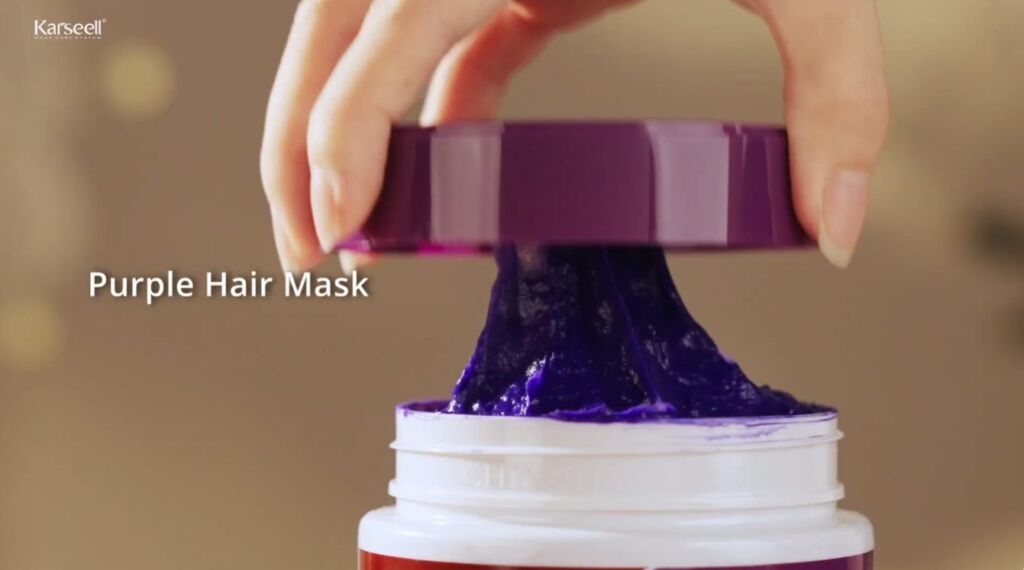 Purple hair masks deposit violet pigments to neutralize unwanted warm tones in blonde, silver, and gray hair.
The Science Behind Purple Pigment: How Color Complementary Works
Understanding why purple masks work requires a quick lesson in color theory. On the color wheel, purple sits directly opposite yellow. This is not a coincidence — it is the principle of complementary colors.
When you bleach hair, you remove the natural melanin pigments. Depending on your starting level and the bleach process, residual warm pigments — yellow and orange — become visible. These warm tones are what we call “brassiness.”
Purple pigment neutralizes yellow on contact. When violet tones sit on top of yellow tones, they cancel each other out visually, leaving behind a cooler, more ashy, and more platinum appearance. The same principle applies to blue and orange — which is why blue shampoos and masks are popular for darker blonde to light brown hair.
The Color Wheel and Hair Toning
| Unwanted Tone | Neutralizing Color | Best Product |
|---|---|---|
| Yellow | Purple / Violet | Purple mask or shampoo |
| Orange | Blue | Blue mask or shampoo |
| Red-Orange | Green | Green-tinted products |
What Is a Purple Hair Mask?
A purple hair mask is a deep conditioning treatment that combines the toning power of violet pigments with the nourishing benefits of a traditional hair mask. Unlike a purple shampoo, which you rinse out quickly, a purple mask sits on your hair for several minutes — allowing the pigment to penetrate more deeply and the conditioning agents to work simultaneously.
The result: hair that is both cooler in tone and more hydrated, stronger, and shinier. This dual-action formula makes purple masks particularly appealing because you address two problems — brassiness and dryness — in a single treatment.
Who Should Use a Purple Hair Mask?
Ideal Candidates
- Platinum and icy white blonde hair — the most classic use; purple masks maintain that crisp, silver-white look
- Ash blonde hair — keeps the cool, smoky undertones from turning warm
- Gray and silver hair — prevents yellowing that naturally occurs as silver hair ages
- Highlighted or balayage hair — evens out inconsistent tones across lighter and darker sections
- Beach blonde or sandy blonde — keeps golden tones from crossing into orange territory
- Anyone who uses purple shampoo — a mask delivers deeper toning and conditioning results in a single treatment
Who Should Be Cautious
- Dark brown or black hair — purple pigment will not show and the risk of unexpected tones outweighs any conditioning benefit
- Natural, unbleached blonde hair — if your natural blonde is warm-toned, purple may make it look gray or ashy rather than enhancing it
- Porous, over-bleached hair — proceed with caution as it absorbs pigment more intensely; test on a small section first
How to Use a Purple Hair Mask
Step-by-Step Instructions
- Start with clean, damp hair: Shampoo as normal, then squeeze out excess water. The hair should be damp but not soaking wet.
- Section your hair: Divide your hair into four sections for even application.
- Apply the mask generously: Work the purple mask through each section, concentrating on the areas with the most brassiness — usually the crown, around the face, and the ends.
- Time it carefully: Leave the mask on for 5-15 minutes. The longer you leave it, the more toning effect. Watch the clock — leaving it on too long can give hair a purple or gray cast.
- Use heat for deeper toning: A shower cap or warm towel can help the pigment penetrate more deeply and the conditioning agents work more effectively.
- Rinse thoroughly: Use cool water to rinse. Check that the water runs clear before stepping out — residual purple pigment can transfer to clothing or bedding.
- Assess and repeat: If the toning effect is not strong enough, use again next wash day. If it is too strong, wait an extra week before your next application.
Section your hair for even application and better toning results.
How Often Should You Use a Purple Hair Mask?
Frequency depends on how quickly your hair turns brassy and how light your base color is:
- Platinum/silver hair: Once every 5-7 days to maintain cool tones
- Ash blonde: Once every 7-10 days
- Highlighted or balayage: Every 7-14 days, focusing on the lighter sections
- Gray or silver hair: Every 7-10 days to prevent yellowing
Using a purple mask too frequently can result in an ashy, gray, or purple tint to your hair — the opposite of what you want. Start conservative and increase frequency only if needed.
Purple Mask vs. Purple Shampoo: Which Is Better?
Both have their place in a blonde hair care routine:
- Purple shampoo: Use every wash or every other wash for maintenance. Less potent, gentle on hair, easy to incorporate into daily routine.
- Purple mask: Use weekly or bi-weekly for intensive toning and conditioning. More potent, deeper penetration, addresses both brassiness and damage simultaneously.
For the best results, use both: purple shampoo for regular maintenance and a purple mask once a week for deep toning and conditioning treatment.
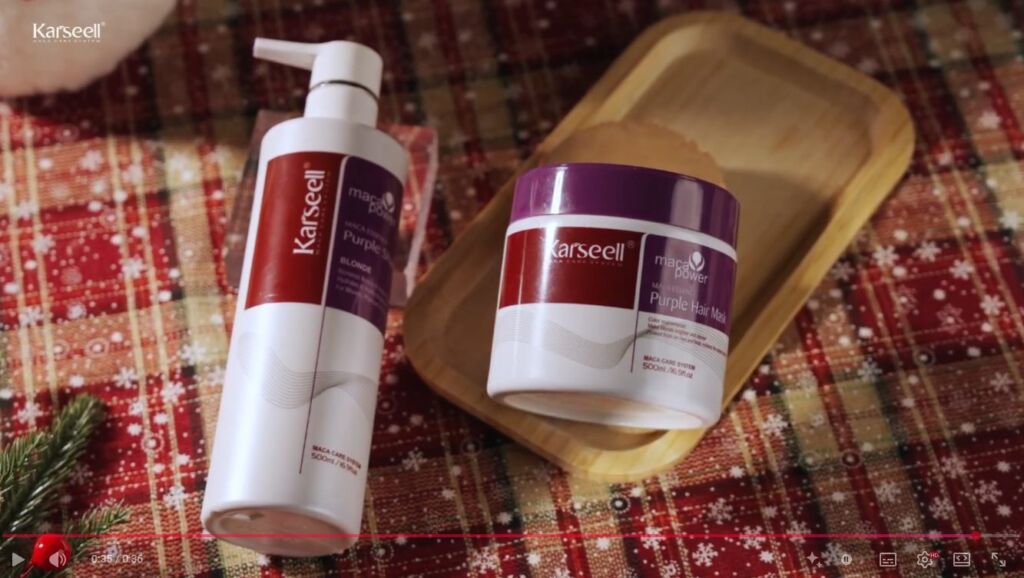
Choosing the Right Purple Mask
Not all purple masks are equal. Here is what to look for:
- Conditioning ingredients: The mask should be doing double duty. Look for argan oil, keratin, or collagen alongside the purple pigment.
- Concentration of violet pigment: Read reviews and look for the strength of the toning effect. Some masks are very subtle; others are much more potent.
- Color-safe formula: Ensure the mask will not strip your existing color.
- No parabens or sulfates: Gentler formulas are better for already-compromised bleached hair.
Frequently Asked Questions
Can a purple hair mask stain my hair?
When used correctly, no. Purple masks are designed to deposit just enough pigment to neutralize yellow tones without staining. However, if you leave it on for too long or use it too frequently, you can end up with a purple or gray tint. Always follow the product instructions and start with shorter application times.
Will a purple hair mask work on dark blonde or brown hair?
It may provide subtle neutralization of warm tones, but purple pigment shows most dramatically on light blonde to platinum hair. For darker blonde to light brown hair with orange tones, consider a blue mask instead, which targets orange more effectively.
Can I use a purple mask on extensions or wigs?
Yes — synthetic hair extensions can develop the same brassy yellow tones as natural hair when exposed to sun and styling. A purple mask can refresh their appearance. Check the product is safe for your type of extensions first.
How long does the toning effect last?
This depends on how quickly your hair turns brassy, which varies by individual and by how often you wash, style with heat, or expose your hair to sun and chlorine. Expect to need a purple mask treatment every 1-2 weeks for maintenance.
The Bottom Line
A purple hair mask is one of the most powerful tools in a blonde or silver-haired person is arsenal. It tackles the two biggest challenges facing color-treated light hair — unwanted warmth and dryness — in a single treatment. Used correctly, it can extend the life of your salon investment by weeks and keep your blonde looking fresh, cool, and vibrant. Explore our full range of toning and color-enhancing hair masks and find the perfect purple mask for your hair.

